• Welcome to Photrio!
    Registration is fast and free. Join today to unlock search, see fewer ads, and access all forum features.
    Click here to sign up

The value of bubbles in an archieval print washer

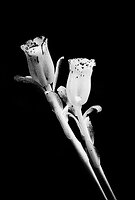
Indian ghost pipe plant.

H
Indian ghost pipe plant.

  • 3
  • 1
  • 28
2026-01-136.jpg

A
2026-01-136.jpg

  • 0
  • 0
  • 33

Forum statistics

Threads
202,941
Messages
2,847,836
Members
101,548
Latest member
mdlewingt
Recent bookmarks
0

Mainecoonmaniac

Member
Allowing Ads
Joined
Dec 10, 2009
Messages
6,295
Format
Multi Format
I got a used Kostiner archival printer washer and it has an aerator inlet. It leaks when I turn off the washer due to back pressure. I'm thinking of not using the aerator inlet. Do bubbles make print washing more efficient?
 
The only way to know for sure is to do a residual hypo test with and without the aerator. I suspect it will be OK without it if you are washing for 60 minutes.
 
Bubbles can make print washing less efficient if the bubbles stick to the surface of the film or paper and remain at the same location. There is no water exchange. With the right amount or type of bubbles that do not stick, they can make washing more efficient.

This may seem a cop out but the only way to know is to run the retained hypo test.

PE
 
I got a used Kostiner archival printer washer and it has an aerator inlet. It leaks when I turn off the washer due to back pressure. I'm thinking of not using the aerator inlet. Do bubbles make print washing more efficient?

No, they don't but,they can actually hurt,because no fresh water can get to the print where the bubble clings to the film or paper.I treat hem neither friend nor foe because I empty the wash water a couple of times during the wash cycle, which gets id of them and allos fresh water to get to the areas they'protected':smile:I wouldn't worry too much about them.as long as you stick to two-bath fixing and HCA you'll be fine:wink:
 
Wow I'm humbled. PE and Ralph Lambrecht answered my questions. From what I learned from this thread, bubbles don't add any value to print washing. I'm going to remove the aerator. A thousand thanks to both of you!
 
I've a used film washer (for steel reels) with an aerator; I have guessed it is there to increase turbulence. I don't seem to have bubble problems, but always wondered if the aerator (or rather, bubbling) was mandatory.
Thanx for asking the question.
 
Interesting in this context may be that no only Kostiner added bubbling effect to their washer but Jobo too implemented this feature in their film washing aid (Cascade).
 
I remember back in the day, the ciba chrome developing machine had a nitrogen bubble system, if my memory serves.

Does anyone else know of Ted Zuber? He was big into ciba at the time. I think he designed that developing machine for large ciba's. he lived local to me and was the instructor for several photo courses at the community college.

Back to washing bubbles: One would have to check if the bubbles spend any time sticking to the print surface. (Evidently they did not in the ciba chrome developing machine.)
 
The way I understand it the aerator is there to make bubbles that push away other bubbles so fresh water can reach every bit of the film or paper. All water has some air in it and this can collect on tiny areas of the surface being washed. The bubbles in aerated wash water knock those accumulated bubbles free. Nitrogen systems perform two functions: One is the same as the aeration systems and the other is agitation... they use nitrogen because it's inert.
 
This reminds me of a commercial photo studio that shot 8x10 chromes and processed the film in a hand line E6 that had a nitrogen burst system. The transparencies were just beautiful.
 
It depends on how the bubbles act. As noted above, they create turbulence which is good. If they cling, this is bad.

PE
 
There are two articles (Mysteries of the Vortex) from the old magazine Photo Techniques, available (in a not ideal format) at:

http://www.film-and-darkroom-user.org.uk/forum/showthread.php?t=296

and part 2 is at:

http://www.film-and-darkroom-user.org.uk/forum/showthread.php?t=344

and it's a while since I read it but if my aging memory serves well there was a comment in there that said something like turbulence didn't make much if any difference because the diffusion took place mostly in the paper, not on the actual surface. I could be wrong, as it does seem logical that turbulence would accelerate the removal of thiosulphate and other fixing intermediate molecules.
 
Well, John, to start with, diffusion does not make a substantial appearance in RC "paper", only in FB paper. And second, turbulence does make a difference by breaking up the bubbles that form on the emulsion surface preventing outward diffusion of chemistry. Those little air bubbles act as traps for any chemistry under them from getting out.

So, even in the best of experiments there can be a lot left out in them or in short comments such as yours.

One big problem is that if the bubbles are small, it is difficult to test for retained silver or hypo. The best way is to just run a high speed test (high temp and humidity) or let your print keep for about 5 - 10 years. Then you start to see brown "measles" all over the print that follows the pattern of the bubbles. So, unless the article did one of these, then IMHO the results are questionable.

PE
 
Bubbles are good only in beer, champagne and shampoo. :smile: Often features like this one are more useful in making the consumer buy the product than for any advantage they produce.
 
Last edited by a moderator:
There is poo, shampoo and real poo and a lot more if I put my mind to it.

We used dispersers to break up the bubbles for the best effect. If they stuck to any surface, it was very brief and random.

So, we did use it for whatever beneficial effect it could add to a process.

PE
 
Poo is for folks who can't afford real shampoo. I always wandered why my papa called me sh*t-head.
 
Sorry, I retract my post #14. I was thinking of a different style print washer. I should have checked out the design before commenting.
 
There are two articles (Mysteries of the Vortex) from the old magazine Photo Techniques, available (in a not ideal format) at:

http://www.film-and-darkroom-user.org.uk/forum/showthread.php?t=296

and part 2 is at:

http://www.film-and-darkroom-user.org.uk/forum/showthread.php?t=344

and it's a while since I read it but if my aging memory serves well there was a comment in there that said something like turbulence didn't make much if any difference because the diffusion took place mostly in the paper, not on the actual surface. I could be wrong, as it does seem logical that turbulence would accelerate the removal of thiosulphate and other fixing intermediate molecules.

This article was written by Martin Reed who was the founder of Silverprint in London. Martin carried the flag for analogue fibre-based work at a time when the major manufacturers were trying to force everyone into using resin papers. Martin's article is very worthwhile reading for anyone who wants to understand the correct washing of fibre prints. Martin, together with Randall Webb, wrote Spirits of Salts: Working Guide to Old Photographic Processes which, in the UK, is something of a bible for alternative processes.

So once again, a thorough read of the Mysteries of the Vortex article is strongly recommended for all serious partitioners. Some of it's content may well surprise you!

Bests,

David.
www.dsallen.de
 
Thanks you

So once again, a thorough read of the Mysteries of the Vortex article is strongly recommended for all serious partitioners. Some of it's content may well surprise you!

www.dsallen.de

I will read the article and I'm sure I'll be surprinsed. My goal is to use less water due to the California drought. That's what spurred me to get the print washer.


I love fiber base paper. It's the only think I'll print with other than RC paper for contact sheets. I bought a box of 250 sheet 8x10 RC from Ilford that I rarely use. It's from the days I printed for clients that needed prints for reproduction.

Best,
Don
 
I will read the article and I'm sure I'll be surprinsed. My goal is to use less water due to the California drought. That's what spurred me to get the print washer.


I love fiber base paper. It's the only think I'll print with other than RC paper for contact sheets. I bought a box of 250 sheet 8x10 RC from Ilford that I rarely use. It's from the days I printed for clients that needed prints for reproduction.

Best,
Don

In Part Two, Test 8 Martin addresses this very issue:

It shows it is possible to wash to an archivally good standard in only one tank of wash water with no addition, drainage or exchange, as long as the tank is sufficiently large. This also indicates why a wash based on exchanges of water rather than running water can be effective, and why washing regimens which alternative agitation with still water soaking also work well. This result has especially far-reaching implications for darkroom workers who want to use fibre paper but who live in areas where fresh water is in severely short supply [see “The ideal archival washer (yet to be manufactured)” under “Conclusions” below].

He went on to build and sell a washer similar to “The ideal archival washer (yet to be manufactured)” - and very good are they too!!

Bests,

David.
www.dsallen.de

 
Last edited by a moderator:
The article was very imformative

In Part Two, Test 8 Martin addresses this very issue:

It shows it is possible to wash to an archivally good standard in only one tank of wash water with no addition, drainage or exchange, as long as the tank is sufficiently large. This also indicates why a wash based on exchanges of water rather than running water can be effective, and why washing regimens which alternative agitation with still water soaking also work well. This result has especially far-reaching implications for darkroom workers who want to use fibre paper but who live in areas where fresh water is in severely short supply [see “The ideal archival washer (yet to be manufactured)” under “Conclusions” below].

He went on to build and sell a washer similar to “The ideal archival washer (yet to be manufactured)” - and very good are they too!!

Bests,

David.
www.dsallen.de
David Vestal's experiment was mind blowing using so little water. But being aware of water efficient workflows when printing is important.

I've loaded the article to my Evernote.
 
Perhaps someone could confirm this. I though with nitrogen burst tanks, the purpose of the burst of nitrogen was to quickly raise and lower the level of developer as the method of agitation -- the bubbles of inert nitrogen take up space, temporarily increasing the volume of developer (actually just the level of the developer in the tank). The bubbles rise and leave the developer, bringing the developer back down to the original level. Thus the developer is being moved around the film for even development.

I suppose the movement of the bubbles also stir the developed a little.
 
I thought nitrogen was used for agitation

Perhaps someone could confirm this. I though with nitrogen burst tanks, the purpose of the burst of nitrogen was to quickly raise and lower the level of developer as the method of agitation -- the bubbles of inert nitrogen take up space, temporarily increasing the volume of developer (actually just the level of the developer in the tank). The bubbles rise and leave the developer, bringing the developer back down to the original level. Thus the developer is being moved around the film for even development.

I suppose the movement of the bubbles also stir the developed a little.

I've never used a nitrogen burst system. But I thought there was a curtain of bubbles that helped move exhausted chemistry away from the film allowing fresh chems to move in. I did use a nitrogen Jobo based system that used nitrogen to pump chemistry into pots where it's heated. The system processed E-6, C-41, EP-2 and Kodak R-2000. The last two processes no longer exists.
 
Nitrogen burst was used for agitation. The air bubbles did this by several means, both lifting and stirring the solution.

PE
 
Photrio.com contains affiliate links to products. We may receive a commission for purchases made through these links.
To read our full affiliate disclosure statement please click Here.

PHOTRIO PARTNERS EQUALLY FUNDING OUR COMMUNITY:


Ilford ADOX Freestyle Photographic Stearman Press Weldon Color Lab Blue Moon Camera & Machine
Top Bottom