• Welcome to Photrio!
    Registration is fast and free. Join today to unlock search, see fewer ads, and access all forum features.
    Click here to sign up

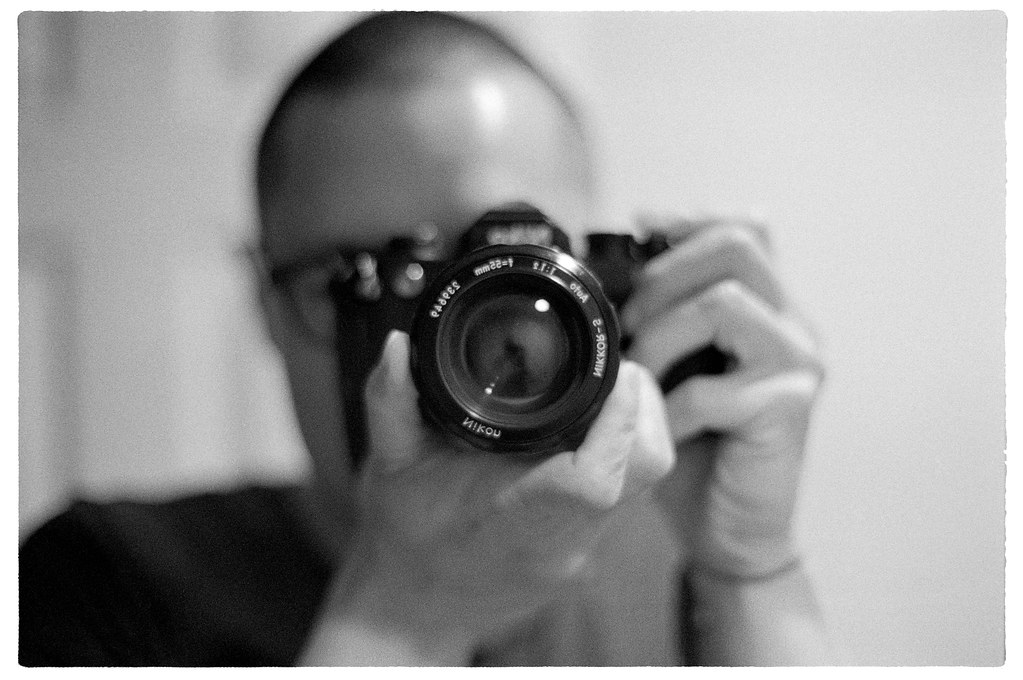
The Nikon 1.2's

Recent Classifieds

Forum statistics

Threads
202,816
Messages
2,845,858
Members
101,544
Latest member
johnsaigon0
Recent bookmarks
1
Joined
Aug 9, 2011
Messages
3,605
Location
On a boat.
Format
Multi Format
Why does the Nikon 55mm 1.2 sell for a few hundred, while the 58mm 1.2 sells for a few thousand?

 
If you're referring to the original Noct-Nikkor, I think it was considered exotic, dating back to the days when aspherical lens elements were difficult to produce, maybe had to be done by hand. Probably more of a collectable today than anything else.
 
Two possible answers to have others elucidate on;

1) Perceived value, in rareness, collect-ability, which is no always the same as rarity, filter size.

2) Actual performance.

It'll be interesting to hear what others have actually experienced, as I want a fast kit lens for my F, etc.
 

I don't see what it's referencing....where's the aberration?

You may not be familiar with the word, sagittal coma flare. It is an aberration that a point image locating on the periphery of an image frame makes an image like a bird spreading its wings as shown in Sample 3.

sample3_thumb.jpg
 
I think it would be clearer if the article's author had used "UFO" instead of bird wings.
 
So is this what they are talking about?
avb.png
 
Nico van Djik's website is a wealth of information about the 55/1.2:
http://www.nicovandijk.net/website55.htm

I've not tried the 58/1.2, but I have a Nikkor-S Auto 55mm f/1.2 (factory AI'd), the Version 3 produced around 1971-72. It is soft wide open at f/1.2, but when stopped down, you can get very sharp results. Here are few examples wide open with ORWO N74+, which is admittedly quite grainy compared to other ISO 400 B&W stocks.


The picture with the mannequin shows out of focus highlights, not the sagittal coma Mr Ohshita is talking about.

These crops from the lower right of his images of Ginza street show the difference. Look at the tail-lights. The first is from the 58/1.2 and the second from the 50/1.2 with "bird wing" highlights - in-focus, but aberrated.

inset_58_12.jpg

Nikon 58/1.2 from Mr Ohshita

inset_50_12.jpg

Nikon 50/1.2 from Mr Ohshita
 
Well, that's certainly a better example. Thanks Mr. Ohshita.

Great name, BTW.
 
Last edited:
Look at the tail-lights. The first is from the 58/1.2 and the second from the 50/1.2 with "bird wing" highlights - in-focus, but aberrated.

Well that's interesting.

Not interesting enough for me to fork out $3,000... but interesting.
 
I think I read, but have no experience, that the 58mm f1.2 Noct-Nikkor was a desired lens by astrophographers.
 
I think I read, but have no experience, that the 58mm f1.2 Noct-Nikkor was a desired lens by astrophographers.

It certainly was, one of the advantages of the hand-ground aspherical element was reduction in coma which is a major concern for Astro work. The NOCT-Nikkor was very much a specialty lens, if you needed it, there was nothing else on the market comparable, if you didn't, the 50/1.2 or 55/1.2 were much cheaper and more than capable of most uses.

The 28/1.4 AF-D similarly was a unique lens with similar manufacturing limitations (hand-ground asphericals)
 
It’s more than just rarity, though that enters into it, certainly.
The second page of this review, with Imatest numbers, explains one reason why photographers are willing to part with the money to have one. https://photographylife.com/reviews/nikon-noct-nikkor-58mm-f1-2 Center sharpness wide open.
Some portraits made with the Noct, if utilizing the thing it does well, don’t really look like anything else. It’s the combination of extreme levels of center sharpness wide open with unusually rapid fall off from the center. Not really a lens to choose as an all rounder, a bit of a one trick pony, but it’s a heck of a trick, a class of one. Like the Nikkor 200/2, it’s got a definite look.
The advent of mirrorless cameras which made nailing focus wide open much easier than it ever was with film bodies has probably driven up the value of the lens as well, simply by making it more usable.
Embarrassed to say I own the Nikon 50/1.2 Ai-s, the 58/1.2 Ai-s Noct, and a Noctilux 50/1, and none of them produce images which look like they came from one of the others when shot wide open, which is pretty much the only point of f/1.2 lenses.
The 50/1.2 is certainly the best value.
 
I consider all this conjecture to be pure sophistry, what I would ask myself is " are you such a great photographer that you and your potential viewers of the images you are able to shoot with them able to appreciate the difference that paying an extra thousands of $ would make ?.
 
I consider all this conjecture to be pure sophistry, what I would ask myself is " are you such a great photographer that you and your potential viewers of the images you are able to shoot with them able to appreciate the difference that paying an extra thousands of $ would make ?.

I’m a Sophist? Day’s not even half done and already somebody’s calling me unappetizing names on the internet:smile: That didn’t take long.
FWIW, I own and use the lenses, so it’s not conjecture. But, as always, what something is “worth” to a given individual is subjective, not objective, and isn’t bound up with “what can you sell your pictures for” unless you want it to be. Personal pleasure has value also.
 
I consider all this conjecture to be pure sophistry, what I would ask myself is " are you such a great photographer that you and your potential viewers of the images you are able to shoot with them able to appreciate the difference that paying an extra thousands of $ would make ?.

You don't have to be a great photographer to appreciate this lens. The easiest example to give is with astrophotography. If that's your thing, even the most mediocre photographer would appreciate a lens that shows stars as stars, not blurry blobs.
 
You don't have to be a great photographer to appreciate this lens. The easiest example to give is with astrophotography. If that's your thing, even the most mediocre photographer would appreciate a lens that shows stars as stars, not blurry blobs.
f 1.2 lenses are also good for photographing black cats in coal cellars and how often does one need to do that ?, and who does astro photography with a 50 mm lens ?.
 
Last edited:
I don't own this lens and never will, but:
- astrophotography with fast normal to wide lenses is how all of those glamor shots of the Milky Way or northern lights above a foreground scene are made.
- I don't see the point in scolding other people about their lens choices or calling them sophists. Why increase negativity here for no benefit?
 
f 1.2 lenses are also good for photographing black cats in coal cellars, and how often does one need to do that ?, and who does astro photography with a 50 mm lens ?.

So you don't know anything about astrophotography, yet claim this lens has no purpose.
 
tenor.gif
 
It certainly was, one of the advantages of the hand-ground aspherical element was reduction in coma which is a major concern for Astro work. The NOCT-Nikkor was very much a specialty lens, if you needed it, there was nothing else on the market comparable, if you didn't, the 50/1.2 or 55/1.2 were much cheaper and more than capable of most uses.

The 28/1.4 AF-D similarly was a unique lens with similar manufacturing limitations (hand-ground asphericals)
I've got the 28 1.4 AF-D, It's a wonderful lens. Amazing. Starting to come down a bit due to a new 28 1.4, which I hear is very good.
 
Photrio.com contains affiliate links to products. We may receive a commission for purchases made through these links.
To read our full affiliate disclosure statement please click Here.

PHOTRIO PARTNERS EQUALLY FUNDING OUR COMMUNITY:



Ilford ADOX Freestyle Photographic Stearman Press Weldon Color Lab Blue Moon Camera & Machine
Top Bottom