

• Welcome to Photrio!
    Registration is fast and free. Join today to unlock search, see fewer ads, and access all forum features.
    Click here to sign up

Temperature control heresy and a new temperature compensated timer

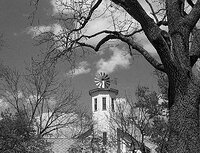
Tree with Big Shadows

Tree with Big Shadows

  • 2
  • 0
  • 59
Everal Barn

A
Everal Barn

  • 3
  • 1
  • 68

Forum statistics

Threads
203,455
Messages
2,855,008
Members
101,851
Latest member
Si_Voltage
Recent bookmarks
0

tim48v

Partner
Allowing Ads
Joined
Jul 6, 2015
Messages
305
Location
Erie, Colorado
Format
Large Format
We're looking into building a temperature compensated timer specifically for our SP-445. Basically, it would monitor the temperature and adjust the time according to the standard processing tables.

We'd like your feedback; you can take the poll via the newsletter: http://conta.cc/2koMQOr

And yes, it could easily be adapted to other tanks/trays.
 
I all ways wanted one of those comp. process timers, but they are rare and expensive and no longer made, so if you made one , and they are as good as your film devel.tanks I'd buy it. I do not have a smart phone so must be a self contained unit with sensor.
 
Last edited:
I've had them; used them and they are not important. you want to make a timer do one like the zone VI timer that counts up with a footswitch
the compensating part is NOT necessary...too many different films and formulas. you can't possibly encompass them all in one machine and why would you want to?? temperatures fluctuate; anyone knows that..I readjust manually...with a thermometer
 
I am on my second ZoneVI compensating timer and have used one for at least 30 years. Please remember that they were not designed only for film developing, they have settings for print and for film. Tray temperatures vary much more over a printing session, and repeatability is critical as you go through the iterations of burning and dodging while printing. As for your "base point" algorithm, I'm not sure how much it adds. I have found my developing times through experimentation using the ZoneVI timer, e.g. I know that for me, HP5+ tray develops normally in PMK at 11:45 on the timer; base temperature is almost irrelevant.
 
As far as doing prints having the darkroom at a constant temperature is just as effective ..I've done it both ways and can make consistent repeatable prints without the timer...
 
As I develop my films in your tank and put it in a temp controlled water bath it keeps my results stable and repeatable. Soo I'm not interrested in this device.

Much higher on my wishlist is an affordable F-Stop timer. Hard to find and very expensive.
 
Actually, the film/chemistry combo doesn't matter. It all comes down to how fast molecules react at a given temperature. Note that Ilford's temperature/time table applies to ALL their films and chemistry. Same for everyone else. The equation has been well known for at least a century.

Obviously, the time required at a given temperature varies with film and chemistry. But given the time required at a given temperature, you can determine the time at any other temperature.
 
This sounds like a solution looking for a problem.
 
As far as print making is concerned if you use the development to completion method then temperatures from 65F to 85F are adjusted for because you develop by inspection not by time. Some time ago I watched a film in which Edward Weston was showing a student how he worked. It was easy to see that his darkroom was positively Spartan. No clock on the wall, no timer in sight and the only time he used a thermometer was when developing film.

For film I always use a water bath works perfectly fine. These timers are a bit like fishing lures that are mainly designed to catch fishermen not fish. :smile:
 
I do not do RA4 prints, just monochrome. I find as I work to a final print, temperature is of no concern. I develop Ilford VC papers for 1:30 and no further change takes place. For Kenrmere 2:00. Yes, at 20C exposure time for a specific Dmax will be different than say 25C. So if I start with developer at room temp and within an hour of test strips, burning and dodging reach a set of desired exposures based on just letting development go to finality I do not need to worry about temperature of the developer.

Now, the next day when room temperature is different I might need to tweak the times a bit. I expect that.
 
I've never found temperature compensation to be an issue. However, I agree with another poster here that a good, inexpensive f-stop timer would be great. I'm now building one based on polyglot's design, but it is an oft neglected project due to my desire to maintain my employment and maintain my photography addiction. But I swear I'll finish the project. Unless someone makes a good one that isn't too damn expensive.
 
I've used a temperature compensating timer for several years now.

They are a good thing. I think of it as taking a variable out of the equation... Temperature and time become more trustworthy.

In my lab notes I write 68 degrees and the planned development time.

Then I develop until the timer chimes... I don't have to write down what the temperature really was or what the real time was, because the result is the same, whether the actual temperature was 67 or 70... whether the real time was 9 minutes or 11 minutes... the extent of development... the measured CI (contrast index)... is the same.

A temperature compensating timer is a good thing. It helps improve consistency. And it does it without making you work harder.
 
  • wiltw
  • wiltw
  • Deleted
  • Reason: I misunderstood
I've used a temperature compensating timer for several years now.

They are a good thing. I think of it as taking a variable out of the equation... Temperature and time become more trustworthy.

In my lab notes I write 68 degrees and the planned development time.

Then I develop until the timer chimes... I don't have to write down what the temperature really was or what the real time was, because the result is the same, whether the actual temperature was 67 or 70... whether the real time was 9 minutes or 11 minutes... the extent of development... the measured CI (contrast index)... is the same.

A temperature compensating timer is a good thing. It helps improve consistency. And it does it without making you work harder.

But if developer manufacturer fails to publish a table of times vs. tempertures, and instead only lists a table of Paper vs. 'Recommended developer time at 68F', what do we load for compensating information?!
Kodak publishes no time-temperture for Dektol apart from 'at 68F' , Ilford publishes no time-temperature apart from 'at 68F' for Multigrade, Bromophen, or PQ Universal developers.

And assuming first that at 68F = 2.0 min and at 80 degrees = 1.5 min. is the prospective compensating timer going to interpolate that if the developer is at 73 degrees the time would be adjusted to 1.75 min?
 
Last edited:
But if developer manufacturer fails to publish a table of times vs. tempertures, and instead only lists a table of Paper vs. 'Recommended developer time at 68F', what do we load for compensating information?!
Kodak publishes no time-temperture for Dektol apart from 'at 68F' , Ilford publishes no time-temperature apart from 'at 68F' for Multigrade, Bromophen, or PQ Universal developers.

And assuming first that at 68F = 2.0 min and at 80 degrees = 1.5 min. is the prospective compensating timer going to interpolate that if the developer is at 73 degrees the time would be adjusted to 1.75 min?

Zone VI and Curt Palm provide example curves for film and paper.

I don't vary my temperatures significantly from 68.

And on top of all that... I don't even bother to change the curve back and forth when I switch from film to paper.
 
Photrio.com contains affiliate links to products. We may receive a commission for purchases made through these links.
To read our full affiliate disclosure statement please click Here.

PHOTRIO PARTNERS EQUALLY FUNDING OUR COMMUNITY:


Ilford ADOX Freestyle Photographic Stearman Press Weldon Color Lab Blue Moon Camera & Machine
Top Bottom
