• Welcome to Photrio!
    Registration is fast and free. Join today to unlock search, see fewer ads, and access all forum features.
    Click here to sign up

Taking the DF96 plunge

Recent Classifieds

Forum statistics

Threads
202,890
Messages
2,847,106
Members
101,531
Latest member
F2_User
Recent bookmarks
0

Horatio

Member
Allowing Ads
Joined
Mar 13, 2020
Messages
979
Location
South Carolina
Format
Multi Format
Got my first batch today. Can’t wait to see how it does. I haven’t processed any film in a couple of years.

 
Success! Processed the first roll. It's drying right now. I'll post some of the exposures later.
 
I couldn't get the stuff to work for me--everything turned out very very thin. It sounds like you had better luck. What film did you use?
 
Ultrafine 400, bulk roll, rated at 200. The negatives may be thin. I haven't examined them closely yet. Too many distractions this evening.
 
I never really managed to figure out the purpose of a monobath developer. You get to save 5 minutes or so in exchange for awkward and limited development control. What's the reason you chose this approach, @Horatio?
 
I lack a proper darkroom setup, @koraks. That and curiosity. Another member here has gotten good results with this monobath, so I thought I'd give it a try.
 
I've used DF-96 as well, and was pretty happy with it -- it was a big help before I had my full darkroom setup, since I could develop film with just a changing bag, daylight tank, and a bottle of monobath (plus running water and wetting agent for washing/drying). I prefer the better control with separate chemicals in general, but if I were going on a long road trip I'd be very tempted to take my 1x120 size Paterson tank, changing bag, and a couple bags of dry-mix DF-96 along so I can bring back developed negatives instead of unprocessed film.

For that last purpose, while I haven't tried it, I've read that you can develop C-41 film in B&W chemistry and later apply rehalogenating bleach and redevelop with C-41 to recover the color information. Whether that gets good color, I don't know -- but I might experiment with it if I'm ever up for a few weeks on the road with a camera...
 
I had good results with a homebrew HC-110 based monobath, near twenty years ago. Good enough that my formula got modified for at least one commercial monobath and for the "goop" in New55 positive/negative instant packets.

DF-96 is easier and is proven to keep well (I never tested my HC-110 monobath for keeping, only used it one-shot). Also, getting it as dry chemicals saves shipping cost (water is heavy) and lets you keep it around unmixsed until you need it.
 
I never really managed to figure out the purpose of a monobath developer. You get to save 5 minutes or so in exchange for awkward and limited development control. What's the reason you chose this approach, @Horatio?

They are particularly useful for applied purposes, I did some research into them and experimenting, before formulating one for possible commercial use. It was suggested that I market it for amateur use.

They give the best results when balanced for specific emulsions. They were quite popular (in a novel way) in the early to mid 1960s, Ilford marketed Monophen, and there was a Tetenal one as well, I don't think Monophen was sold for very long it was released in 1960 but I think it had gone by 1970, the Tetenal one was around a lot longer.

Ian
 
for applied purposes

Going out on a limb, would that have involved use cases where very rapid turnaround was key? E.g. press photography, or maybe even pre-press work in a production printing environment? I'm struggling to think of solid rationales for amateur applications where saving a couple of minutes doesn't seem to be very important. I can sort of see something in the argument of the ease of storage and use of a single working solution instead of two, but then again, I wonder how those marginal advantages relate to the disadvantages - as you implied, a degree of tailoring to a specific emulsion, and perhaps also shorter working stock life vs. two separate solutions (but I'm not sure on that part).
 
Press/photojournalism photography was high on the list. You could develop 35 mm film with no other equipment than a water glass and a pencil with eraser on the end. Fill the glass with monobath, drop in the 35 mm cassette (unopened) with the leader locked by a rubber band, and use the pencil to rotate the spool opposite directions. By the nature of a monobath, timing wasn't critical and uneveness from slow infiltration of the developer into the cassette was also countered by the self-timing nature. Developing the day's film in the night's hotel room was the target market for the monobaths of the 1960s.
 
Going out on a limb, would that have involved use cases where very rapid turnaround was key? E.g. press photography, or maybe even pre-press work in a production printing environment? I'm struggling to think of solid rationales for amateur applications where saving a couple of minutes doesn't seem to be very important. I can sort of see something in the argument of the ease of storage and use of a single working solution instead of two, but then again, I wonder how those marginal advantages relate to the disadvantages - as you implied, a degree of tailoring to a specific emulsion, and perhaps also shorter working stock life vs. two separate solutions (but I'm not sure on that part).

No, it was when I had a company applying photographs to vehicles. That involved spraying emulsion to vehicle paint surfaces, exposing the processing. The idea was to simplify processing if the idea was franchised. A Monobath is not particularly temperature dependant working between 16ºC - 26ºC, so that cuts two variables.

Some photojournalists used Monobaths, processing in the cassette, then negatives were wired back to their newspaper.

Ian
 
Ultrafine 400, bulk roll, rated at 200. The negatives may be thin. I haven't examined them closely yet. Too many distractions this evening.

When I said "thin" it wasn't a maybe, it was "exposing PanF+ 50 at EI800 and underdeveloping thin" like you had to tilt the film back and forth to see the image. a complete loss.

For the people asking why, I'll just throw in why I was looking at it. Obviously I can't speak for Horatio. I was preparing for overseas travel, and I had an idea--DF96 is available in powder form which can go in my luggage without worry. I could buy a full daylight loader and develping tank (the LabBox was still available for sale at the time) I knew with current TSA rules I could get my film to my destination without CT scanning, but I wasn't confident about the return trip. So I had the idea that I could a buy a LabBox and a couple extra reels which would allow me to develop up to three rolls a day every evening, so when it was time to fly back everything would be developed and not subject to CT damage. I'd probably have some unshot rolls that would get killed by return CT but unshot rolls are replacable, shot rolls are not.

Of course all of the above could be done with a selection of powder based dev and fix (I was also considering those Tentenal tablets), but when my iPhone tells me that I'm averging 29,000 steps a day, 5 minutes vs 15 minutes per roll is a very big deal. Unfortunately since DF96 was such a flop, I didn't take it any further and after four almost empty rolls. I dumped the chems and found a different solution.
 
four almost empty rolls

That seems like a systematic error -- DF-96 doesn't work well at normal B&W temps; you have to balance the rates of development (mainly controlled by temperature) against fixing (mainly adjusted by agitation). What you're describing sounds like too much agitation at too-low temperature (tipping the balance toward fixing before enough development).

OTOH, if it's not working for you with the way you work, then it's not for you.
 
That seems like a systematic error -- DF-96 doesn't work well at normal B&W temps; you have to balance the rates of development (mainly controlled by temperature) against fixing (mainly adjusted by agitation). What you're describing sounds like too much agitation at too-low temperature (tipping the balance toward fixing before enough development).

OTOH, if it's not working for you with the way you work, then it's not for you.

Thanks for that tip, Donald! I probably overagitated my first roll, using 350ml in a Lab Box and constant agitation.
 
constant agitation

For some film and EI combinations, at the correct temperature, constant agitation is fine -- check the chart that comes with the film (or is available free on Cinestill's web site) -- but you have to have the right film and exposure and temperature to get away with it.
 
That seems like a systematic error -- DF-96 doesn't work well at normal B&W temps; you have to balance the rates of development (mainly controlled by temperature) against fixing (mainly adjusted by agitation). What you're describing sounds like too much agitation at too-low temperature (tipping the balance toward fixing before enough development).

OTOH, if it's not working for you with the way you work, then it's not for you.

Since temp is one of the only variables you have access to, I tried it in a number of different temps within the stated range. Agitation was done how I agitate pretty much any B&W film—30sec then 10 sec every minute. I suspect part of the problem was I was testing with Foma, which clears in fixer VERY fast. So for all intents and purposes, the fixer was far more active than the developer. OTOH Cinestill doesn’t call out anything special about the Foma films and lists then as compatible.
 
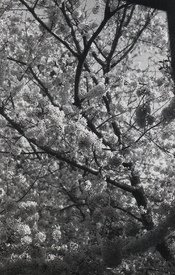
Here's a scan of one of the negatives. Turned out better than expected. I'll scan some more tomorrow.
 

Attachments

  • Cherry-blossoms.jpg
    Cherry-blossoms.jpg
    869.5 KB · Views: 83
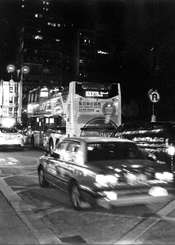
I developed a roll with monobath(I guess I'm lucky; this monobath formula works with Fomapan 100), and it was quite surprising to complete the process directly in a paper cup, provide images without the need for reels or developing tanks in darkroom/changing bag. I imagine that people who used monobath in the past only needed a small packet of liquid. They could rinse the film under a nearby faucet, within just 5 minutes, the journalist could decide whether the assistant should rush back with the film, or whether the test shots turned out as he expected.

I've also heard of people using monobath for DIY instant photo. They use monobath formulated for paper, and after taking a photo, they directly develop the negative photo or re-taking it to positive.
 

Attachments

  • ABC00191_DxO_副本.jpg
    ABC00191_DxO_副本.jpg
    1.9 MB · Views: 96
  • ABC00197_DxO_副本.jpg
    ABC00197_DxO_副本.jpg
    1.2 MB · Views: 82
Last edited:
  • Yezishu
  • Yezishu
  • Deleted
  • Reason: repeat
I developed a roll with monobath(I guess I'm lucky; this monobath formula works with Fomapan 100), and it was quite surprising to complete the process directly in a paper cup, provide images without the need for reels or developing tanks in darkroom/changing bag. I imagine that people who used monobath in the past only needed a small packet of liquid. They could rinse the film under a nearby faucet, within just 5 minutes, the journalist could decide whether the assistant should rush back with the film, or whether the test shots turned out as he expected.

I've also heard of people using monobath for DIY instant photo. They use monobath formulated for paper, and after taking a photo, they directly develop the negative photo or re-taking it to positive.

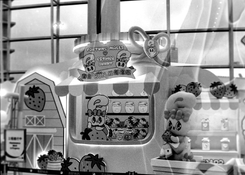
So you left the film in the cassette? Did it stick together in places? Love the "Esther Bunny", BTW.
 
So you left the film in the cassette? Did it stick together in places? Love the "Esther Bunny", BTW.

Yes, there are 11 sheets of film in my cassette(Someone say that up tp 24 sheets of film also works). After shooting, I left 2 cm of flim leader and fixed it outside the cassette with narrow tape. Use tweezer to rotate the cassette core back and forth while adding the developer. I believe that temporary sticking doesn't affect much in my case because the monobath isn't time-sensitive, and no signs of underdevelopment. Hope this helps.
The esther bunny is actually pink and looks great.
 
Last edited:
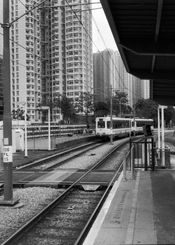
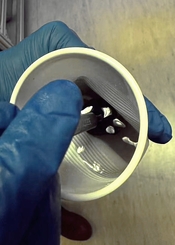
This time I used Fomapan 400(18 exp) in cassette, with a paper cup, and a tweezer. Once the solution(not DF96, another formula on hand) was prepared, the monobath operation was surprisingly simple, maybe crude... yet still acceptable.
 

Attachments

  • ABC01156_g2p0006_副本.jpg
    ABC01156_g2p0006_副本.jpg
    2 MB · Views: 113
  • ABC01157_g2p0007_副本.jpg
    ABC01157_g2p0007_副本.jpg
    1.9 MB · Views: 86
  • ABC01173_g2p0023_副本.jpg
    ABC01173_g2p0023_副本.jpg
    1.9 MB · Views: 90
  • 微信图片_20250423120539.jpg
    微信图片_20250423120539.jpg
    361.6 KB · Views: 106
Photrio.com contains affiliate links to products. We may receive a commission for purchases made through these links.
To read our full affiliate disclosure statement please click Here.

PHOTRIO PARTNERS EQUALLY FUNDING OUR COMMUNITY:



Ilford ADOX Freestyle Photographic Stearman Press Weldon Color Lab Blue Moon Camera & Machine
Top Bottom