
• Welcome to Photrio!
    Registration is fast and free. Join today to unlock search, see fewer ads, and access all forum features.
    Click here to sign up

Super-saturated Pt/Pd coatings

IMG_1285.jpeg

D
IMG_1285.jpeg

  • 0
  • 0
  • 17
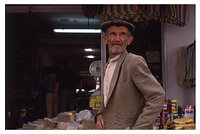
Man in market place

A
Man in market place

  • 0
  • 0
  • 45

Forum statistics

Threads
203,124
Messages
2,850,152
Members
101,684
Latest member
Deepfins
Recent bookmarks
1
Not sure what you mean here, but I do know that the more pt/pd in the solution, the lower the contrast and better chance of fogging.
 
Not sure what you mean here, but I do know that the more pt/pd in the solution, the lower the contrast and better chance of fogging.

Thanks. To clarify, super-saturated solutions are heated to high temperatures so that a greater load of iron and platinum/palladium can be deposited on the paper without increasing the water content of the coating. Sort of like double-coating but without the hassle of multiple applications. Intuitively this should increase the Dmax because there is greater density of platinum/palladium in the shadows. But as I said, I've not tried it so I'm hoping to find someone who has.
 
Could be interesting. Sounds like time to try some 4x5 contact prints. How high does it need to be heated, do you think?
 
Could be interesting. Sounds like time to try some 4x5 contact prints. How high does it need to be heated, do you think?

The simple answer is, "I have no idea". The thought experiment is straightforward though. B&S quote their Potassium Chloroplatinite as being a 20% solution, and this is fully dissolved at room temperature. By mixing Potassium Chloroplatinite powder into very hot water it should be possible to dissolve more than 20% w/v. I don't know how hot "very hot" is nor do I know how much more "more than 20%" is. The same approach should work for the other solutions in the mix.

The challenge I foresee is keeping everything hot enough to avoid crystallisation during coating, exposure and development. And of course the benefits, if any, could be outweighed by the difficulty and cost.
 
Intuitively is right, but in practice you will find it fogs and does not increase DMAX. This is because with the higher concentration of metal, it begins to reflect back light no matter the exposure, thus creating a base fog that has a slight shiny appearance, less contrast, and quite the drain on the wallet. I've seen this numerous times at B+S. If you want increased DMAX that is very apparent and real, try some fumed silica.
 
Intuitively is right, but in practice you will find it fogs and does not increase DMAX. This is because with the higher concentration of metal, it begins to reflect back light no matter the exposure, thus creating a base fog that has a slight shiny appearance, less contrast, and quite the drain on the wallet. I've seen this numerous times at B+S. If you want increased DMAX that is very apparent and real, try some fumed silica.

Thanks - I guess that you've saved me a lot of hassle :smile:
 
Just trying to save you some money and frustration! Go ahead and experiment, but I also found this to be true when doing kallitypes, etc. Our theory is that more = less.

(there was a url link here which no longer exists)

There's a write up on fumed silica. Using it in it's dry form makes it super easy to roll on and it has a dramatic effect on DMAX that makes PT/PD printers consider reprinting their entire portfolio!
 
I've had much better luck applying the fumed silica wet rather than dry. I even went so far as to buy a cheap blender to mix it. But otherwise, my experience with it is on a par with what Mr. Klain says - it produces a notable boost to Dmax and overall contrast increase. And applying it wet doesn't add THAT much time to the coating process. I find it dries to a coatable surface within minutes.
 
I've had much better luck applying the fumed silica wet rather than dry. I even went so far as to buy a cheap blender to mix it. But otherwise, my experience with it is on a par with what Mr. Klain says - it produces a notable boost to Dmax and overall contrast increase. And applying it wet doesn't add THAT much time to the coating process. I find it dries to a coatable surface within minutes.

What's your mixing ratio, if you don't mind my asking? Thanks.
 
I've had much better luck applying the fumed silica wet rather than dry. I even went so far as to buy a cheap blender to mix it. But otherwise, my experience with it is on a par with what Mr. Klain says - it produces a notable boost to Dmax and overall contrast increase. And applying it wet doesn't add THAT much time to the coating process. I find it dries to a coatable surface within minutes.

I on the other hand find it much easier to coat dry. It is so easy to do that I now always use the silica even with my test strips. It takes so very little powder to brush on that the most common problem is from trying to put on too much. My first try wet produced streaks so that was the last I tried it. The dry method is too easy.
Dennis
 
I've had much better luck applying the fumed silica wet rather than dry. I even went so far as to buy a cheap blender to mix it. But otherwise, my experience with it is on a par with what Mr. Klain says - it produces a notable boost to Dmax and overall contrast increase. And applying it wet doesn't add THAT much time to the coating process. I find it dries to a coatable surface within minutes.

How do you mix it? Quantities? Suggestions? I am thinking one could do up several sheets for future coating.
Thanks for your observations.
 
Heh, funny. I tried it a few times wet and always ended up with streaks and stuck with dry after that. I don't even know a good base to being with.

Regarding archival quality: fumed silica is pure silica, which in effect, should have no, to little effect on the paper itself, nor the metals in the print. Granted, it's so new who really knows? We did do a trusty NM test where we tape a print to a door facing the southern sky, which here in NM is always sunny and at 7000', quite harsh. No fading or issues after a handful of days, which usually will destroy some of the older RC paper emulsions, etc. Not scientific, but confidence inspiring.
 
In my search for better papers for Pd/Pt printing I also tried fumed alumia dry or wet applied. It gave better contrast and Dmax with several papers but bad mids and highlights (like too much restrainer). The fumed alumina suspended quite easily in Ethanol and that suspension has to be diluted with a lot of water (otherwise it soaks completely through the paper).
I am not so sure that more sensitizer increases Dmax. I investigated some prints under a stereo microscope and found often only the very top fibers get coated but in the mids it is apparent that some fibers get no or only very little Metal deposited. This explains the mottled mid tones. Papers like Buxton or Herschel have not that effect. I also investigated coated but not developed paper and found that different fibers within the paper surface have absorbed different amount of sensitizer. I have to make more of these studies but I think the goal is to get all the fibers absorb the sensitizer. Simply adding more will likely only act as a filter during exposure without contributing to image density.
 
Last edited by a moderator:
Photrio.com contains affiliate links to products. We may receive a commission for purchases made through these links.
To read our full affiliate disclosure statement please click Here.

PHOTRIO PARTNERS EQUALLY FUNDING OUR COMMUNITY:


Ilford ADOX Freestyle Photographic Stearman Press Weldon Color Lab Blue Moon Camera & Machine
Top Bottom
