• Welcome to Photrio!
    Registration is fast and free. Join today to unlock search, see fewer ads, and access all forum features.
    Click here to sign up

Stupid question about tri-color

MIT. 25:35

MIT. 25:35

  • 0
  • 0
  • 0
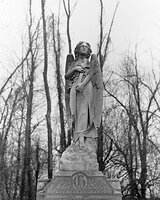
Lutheran Cemetery Angel

H
Lutheran Cemetery Angel

  • 0
  • 0
  • 28

Recent Classifieds

Forum statistics

Threads
202,945
Messages
2,847,958
Members
101,550
Latest member
Paris-Belle
Recent bookmarks
0

EASmithV

Member
Joined
Aug 22, 2008
Messages
1,985
Location
Virginia
Format
Large Format
Alrighty. Say I shoot three 4x5 negatives. One through a Green, Red, and Blue filter. I then take these images, contact print them onto halftone film. I take the corresponding contact prints/slides and then dye them red, green, and blue, with respective to the filter used. I take these three dyed clear positives, overlay them perfectly, and... Will it make a color positive?
 
It should. I've done this digitally and it worked pretty well.
 
You'll want cyan, magenta, and yellow dye. If curious, look up the dye transfer process, it should answer your questions.
 
Yes. It works. In fact there is a pseudo Kodachrome process in which you can use couplers to get positive dye images and by laminating the 3 images you have, in effect, a real Kodachrome.

PE
 
Yes. It works. In fact there is a pseudo Kodachrome process in which you can use couplers to get positive dye images and by laminating the 3 images you have, in effect, a real Kodachrome.

PE

I'm probably going to get in way over my head, but in laymans terms, how would one make the dye copulers, and how would they function?
 
The process uses 3 color developers with 3 color couplers. These chemicals are outlined in a number of books, patents and also were sold by Kodak for those doing the Kodachrome process. I have posted generic structures here before, but if you want me to, I can look them up again.

There is a C, M and Y coupler set and the cyan is normally a 4 chloro phenol, the magenta is normally a pyrazolone and the yellow is an aceto-acetate.

PE
 
Are there people that regularly create their own Kodachromes, or is it more of an idea?

And where did you post it? In a topic, or as an article?
 
The idea is well known and was the basis for making single color test coatings of Kodachrome. It was published in a textbook on color photography in the 40s by Leadly and Stegmeyer. It was the basis for early color processes and is used to demonstrate Kodachrome.

I did not originate this. I am aware, quite aware of it having been done by many since the days of Mannes and Godowsky. They refined it to make a tripack coated as one film and that is their contribution.

Early examples were exposed in a 3 color camera, and developed to yield a positive 3 color image.

PE
 
In the printing industry, the halftone screens are rotated differently so the dots don't overlay each other.
 
Here is someone that has done tri-color, the site is in French but a Google translation is here:

http://translate.google.com/transla...t-trichromie.html&sl=fr&tl=en&history_state0=

Original French Page:
http://www.galerie-photo.com/test-trichromie.html

Instructions on how to make Autotype Trichrome Carbro prints (including recipes) + other methods to reproduce colour:
http://www.oldandsold.com/articles21/color-photography-3.shtml

or you can try 3 layer Gum Bichromate prints as here:
http://www.alternativephotography.com/articles/art121.html

I think that all the processes are somewhat difficult to do in a home darkroom except the gum bichromate the problem is achieving an acceptable color balance.


nn :smile:
 
you could shoot the film with the cmy filters
and send the film off to dr5 and have chromes made from your film
and then dye them, and stack them if it would save you the half tone step.

have fun
john
 
Photrio.com contains affiliate links to products. We may receive a commission for purchases made through these links.
To read our full affiliate disclosure statement please click Here.

PHOTRIO PARTNERS EQUALLY FUNDING OUR COMMUNITY:



Ilford ADOX Freestyle Photographic Stearman Press Weldon Color Lab Blue Moon Camera & Machine
Top Bottom