
• Welcome to Photrio!
    Registration is fast and free. Join today to unlock search, see fewer ads, and access all forum features.
    Click here to sign up

Spots on negatives?

feeling grey

A
feeling grey

  • 0
  • 0
  • 25
Inconsequential

H
Inconsequential

  • 2
  • 0
  • 38

Recent Classifieds

Forum statistics

Threads
201,800
Messages
2,830,393
Members
100,961
Latest member
pisimimail
Recent bookmarks
0

Dani

Member
Joined
May 19, 2015
Messages
216
Location
USA
Format
Multi Format
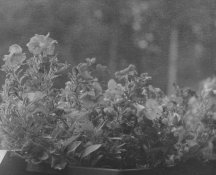
I'm puzzled with this images. Could it be that my fixer is on it's way out? I've reused it for some time now. I don't use Photo Flo and instead use dish soup, a couple of drops, and so far I haven't had any problems at all.

Another puzzling thing is that the degree of those spots vary quite a lot. If 100% crops would help I can add those.
Thanks a lot in advance!
 

Attachments

  • _MG_0945.jpg
    _MG_0945.jpg
    1,011.7 KB · Views: 306
  • _MG_0947.jpg
    _MG_0947.jpg
    817.1 KB · Views: 293
  • _MG_0944-Edit.jpg
    _MG_0944-Edit.jpg
    956.9 KB · Views: 303

MattKing

Moderator
Moderator
Allowing Ads
Joined
Apr 24, 2005
Messages
55,167
Location
Delta, BC Canada
Format
Medium Format
Dish soap has a surfactant plus a whole bunch of other stuff (like perfumes!) not designed for photographic purposes. Photo-flo is essentially just surfactant.

What fixer are you using, how many rolls have you run through your fixer, what is the dilution and volume, how long ago did you mix it, are you using a stop bath, are you using a wash aid, how are you washing your film and for how long.
 

jimjm

Subscriber
Allowing Ads
Joined
May 2, 2007
Messages
1,239
Location
San Diego CA
Format
Multi Format
Test your fixer and stop using dish soap! Dish soap has all types of other additives that may leave residue on your film.

If you don't want to test your fixer, just make a new batch - it's worth the (small) cost to avoid ruining your film. Each time you fix a roll, the strength of the fixer becomes less, so you need to increase the fixing time for the next roll. Once the fixer becomes saturated with silver, it's pretty much useless.
 

bdial

Subscriber
Joined
Jan 2, 2005
Messages
7,516
Location
North East U.S.
Format
Multi Format
+ another on the dish soap, at the recommended dilution of 1 to 200 if you buy a bottle of Photo-flo now, you might be leaving it to your kids before you've finished it.:wink:

As for the fix, if you're "...using it for some time now...", but don't know how long that time is, or how much film has been run then it could very well be spent. Also, the time required for fixing changes as its capacity is used. The usual method is to double the clearing time until the clearing time is double what it was when the fix was fresh. However, T-grain films like Kodak TMax and Ilford Delta need additional fixing time.

Fortunately, fixer problems are usually easy to recover from. Try mixing a fresh batch and re-fixing the negs and see if the spots disappear.
 

Sirius Glass

Subscriber
Joined
Jan 18, 2007
Messages
50,814
Location
Southern California
Format
Multi Format
Dish soap is a really bad idea. Dish soup is much worse. Get PhotoFlo and follow the instructions. By the way the cost of PhotoFlo will not break your budget.
 

paul ron

Member
Allowing Ads
Joined
Jan 22, 2004
Messages
2,709
Location
NYC
Format
Medium Format
hahaha and while at the store, buy some new fixer.

try mixing enough fixer for your session, it does go bad in a very short time. my rapid fixer starts to percipitate in a couple weeks. i make one liter at a time now instead of the whole gallon so im sure its fresh each time.
 
OP
OP

Dani

Member
Joined
May 19, 2015
Messages
216
Location
USA
Format
Multi Format
Thanks everybody! I'll stop using liquid dish soap, in its defense it's a natural liquid soap with no fragrance and no dyes but yes I'll order Photo-flo.

Dish soap has a surfactant plus a whole bunch of other stuff (like perfumes!) not designed for photographic purposes. Photo-flo is essentially just surfactant.

What fixer are you using, how many rolls have you run through your fixer, what is the dilution and volume, how long ago did you mix it, are you using a stop bath, are you using a wash aid, how are you washing your film and for how long.

Let's see, the fixer I'm using is Eco Pro Neutral Fixer, I've run probably 8-9 rolls, the dilution is the recommended 1+4 in 1L. I mixed it probably 4 months ago, maybe a little more. I'm using Eco Pro Stop Bath and no washing aid. I've been using the Iiford inversion method.

The film was Delta 3200 rated at 800, expired May 2014 kept in the freezer until a week ago.
 

Gibran

Member
Allowing Ads
Joined
Jan 10, 2006
Messages
147
Format
Medium Format
Thanks everybody! I'll stop using liquid dish soap, in its defense it's a natural liquid soap with no fragrance and no dyes but yes I'll order Photo-flo.


Let's see, the fixer I'm using is Eco Pro Neutral Fixer, I've run probably 8-9 rolls, the dilution is the recommended 1+4 in 1L. I mixed it probably 4 months ago, maybe a little more. I'm using Eco Pro Stop Bath and no washing aid. I've been using the Iiford inversion method.

The film was Delta 3200 rated at 800, expired May 2014 kept in the freezer until a week ago.

My guess is you are seeing a moisture issue with the film. This can happen if film is not properly sealed before it's put in the freezer and I think it can also happen due to condensation when the film is subjected to rapid temperature changes.
 

winger

Subscriber
Allowing Ads
Joined
Jan 13, 2005
Messages
3,980
Location
southwest PA
Format
Multi Format
My guess is you are seeing a moisture issue with the film. This can happen if film is not properly sealed before it's put in the freezer and I think it can also happen due to condensation when the film is subjected to rapid temperature changes.

This is part of what I was thinking, too. The images look similar to others that have had moisture problems.

Also - what temperature were all the stages? It almost has a look of reticulation, though that isn't as easy to have happen. If your temps change rapidly during processing (the chemicals and water washes shouldn't vary by more than 5 degrees F and keeping them at the same is best), you can get reticulation.

And... Delta3200 is going to show the effects of age sooner than something like HP5 or Delta100. Faster films need to be used sooner. Two years isn't horrible, but for a 3200 iso it's far from optimal and some of this could be fogging from age.

(yes, make some fresh fixer and try refixing. Use dish soap for dishes and photo-flo for photos)
 

Bob Carnie

Subscriber
Allowing Ads
Joined
Apr 18, 2004
Messages
7,735
Location
toronto
Format
Med. Format RF
I see a lot of dark squigllys is this what we are talking about. If these are printing dark then they have nothing to do with photoflow which would show up as white scum or streaks.

Almost looks like some sort of pressure on the film creating a minus density which then prints dark, or not enough initial agitation.

they look like little dark worms.
 

antmar

Member
Allowing Ads
Joined
Dec 13, 2011
Messages
174
Location
Athens Greece
Format
Multi Format
I've seen this on my negatives too, If the negative is old 120 and expired or not properly stored could be from the backing paper.
At least at film this was the case cause I had two films in the same tank and happened only to the expired one. I could even see the texture of the paper.
 
OP
OP

Dani

Member
Joined
May 19, 2015
Messages
216
Location
USA
Format
Multi Format
Thank you everybody! I've been very busy and with little time lately. I've gotten as far as testing the fixer and it cleared the piece of leader in 30 seconds! I was very surprised.
I'm thinking of shooting a test roll and see if it'd do the same thing once I develop it, then I have another roll of Delta 3200, same conditions and I'll develop it in a freshly mixed fixer and then I'll just do the two bath fixer technique.
 

Rick A

Subscriber
Allowing Ads
Joined
Mar 31, 2009
Messages
10,031
Location
Laurel Highlands
Format
8x10 Format
Eco Pro Neutral fixer has a high capacity, and a long shelf life, but you should filter it as you pour it back into the storage container.
 
OP
OP

Dani

Member
Joined
May 19, 2015
Messages
216
Location
USA
Format
Multi Format
That's a great idea, thank you! would you use a coffee filter for that?
 
OP
OP

Dani

Member
Joined
May 19, 2015
Messages
216
Location
USA
Format
Multi Format
I shot a roll of HP5 yesterday and used the same chemicals I used for the images with the spots. Now it seems that it was just a bad roll because these ones came out fine. I'll shoot the other Delta 3200 from the same batch and see what happens. Thank you again, I've learned a ton!

_MG_0968-Edit.jpg

_MG_0972-Edit.jpg
 

Harry Stevens

Member
Allowing Ads
Joined
Dec 18, 2014
Messages
424
Location
East Midland
Format
Multi Format
Been using 1or2 drops of dish soap since 1978 and how the hell one or two drop in 500ml of water contains anything in any quantity to damage film I do not know. Seems the extras are a preservative and a antimicrobial ingredient in my 40p bottle of dish soap, so seems my 40p 500ml bottle stabilizes as well thenl.:smile::smile:


Last edited:
Photrio.com contains affiliate links to products. We may receive a commission for purchases made through these links.
To read our full affiliate disclosure statement please click Here.

PHOTRIO PARTNERS EQUALLY FUNDING OUR COMMUNITY:


Ilford ADOX Freestyle Photographic Stearman Press Weldon Color Lab Blue Moon Camera & Machine
Top Bottom