
• Welcome to Photrio!
    Registration is fast and free. Join today to unlock search, see fewer ads, and access all forum features.
    Click here to sign up

Splitgrade Printing with Soft Negatives

Cigar again

H
Cigar again

  • 0
  • 0
  • 5
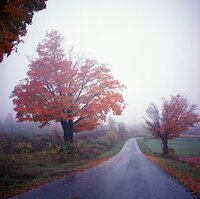
Rainy Day Trees

A
Rainy Day Trees

  • 7
  • 1
  • 102

Recent Classifieds

Forum statistics

Threads
203,158
Messages
2,850,733
Members
101,705
Latest member
kyuut
Recent bookmarks
3

Ben 4

Member
Allowing Ads
Joined
Sep 20, 2005
Messages
287
Location
Lancaster, P
Format
Medium Format
After about ten years of printing vc papers the standard way, I decided to try splitgrade printing (using just grade 0 and grade 5 filtration) for the first time a couple of weeks ago. Much to my surprise, I was making better prints almost instantly! I had most success with negatives that I would describe as "brilliant": high contrast outdoor scenes in bright sun, some with snow.

But I have yet to get a satisfactory splitgrade print from a low contrast neg. My attempts have been muddy, low contrast disappointments. I think I know where the problem lies: in scenes without strong highlights, I'm having difficulty estimating the grade 0 exposure. I'm sure that this is a matter of practice, but I would welcome any tips from the experienced splitgrade printers out there!

If it matters, I'm using the approach outlined on Les McLean's website (and described in many posts here as well): calculating the grade 0 exposure first, then proceeding to grade 5.

--Ben
 
I'm using the opposite approach, finding the grade 5 exposure first and then proceeding with grade 0, it is working fine for me with normal and soft negatives.

Tom
 
If you are ending up low contrast prints isn't a too short high grade exposure more likely?

Or are you thinking you are going too long with the low exposure?

For me the low grade exposure should be a little short of what you'd expect. The high grade exposure will finish it off.
 
Nick, I think I'm overdoing the grade 0 exposure. But I might be wrong. From my brief experience with splitgrade printing I have concluded (correctly?) that too much grade 0 muddies up the print in a way that no amount of grade 5 exposure will fix. I guess I need to learn to recognize what a correct low contrast exposure looks like when made on a brightish midtone instead of a highlight. Perhaps it would help to go back to the negataives used for some of my successful prints and do grade 0 test strips on the lighter midtones so I can see what I might be shooting for? I think I might give that a try!
 
When I attended Les's workshop on Split Grade Printing and in subsequent readings and conversations with Les he has always said Split Grade Printing will not benefit EVERY negative. There are negatives that do not perform well from this method. Remember "a little yellow goes a long way".
 
If the low exposure test looks like the way you'd want the print to look then you've gone too far.
 
I'm using the opposite approach, finding the grade 5 exposure first and then proceeding with grade 0, it is working fine for me with normal and soft negatives.

Tom
This is the method I use for printing soft negs. But for normal to hard negs, I swap the system around.
 
I have a few negs that respond only to hard light. Try that without the soft light and see if they work better. It is not a requirement that a soft filter be used.

lee\c
 
I find that I print better when I do the grade 5 exposure first.

You might also look up threads about selenium intensification of negative to boost contrast.

Also, sometimes bleaching with a potassium ferricyanide solution brightens up the local contrast in a muddy print.
 
Split grade printing will not work well with a negative of low density range...think of it this way...if optimal print contrast is attained with hard filtration exposure, what good would soft light filtration added to it accomplish? In the aforementioned example, soft filtration will only serve to decrease print contrast.
 
In my opinion it is best to start with the # 5 filter when you have a SOFT negative and vise versa. It makes sense because a soft negative requires a exposure that is PRIMARILY #5 and the soft filter will merely fill in the blanks in the highlights. BTW use a # 1 filter if you want high contrast highlights..

Regards
Shawn
 
When I'm faced with a negative lacking contrast I make my first test using grade 5 only and never apply any grade 0. Such a negative is the result of a number of things: low contrast subject matter: insufficient exposure resulting in very thin shadows: correct exposure but insufficient development. Each negative requires slightly different treatment at the printing stage. My approach when faced with "thin" negatives is to start by testing with grade 5 only. The logic I apply here is that the neg lacks contrast and grade 5 is the maximum contrast grade. This is not a perfect scenario and careful timing of the exposure is required to hold detail in the shadow area, consequently, this usually requires some dodging in those areas when making the final print. Quite often and because of the high contrast of grade 5 the highlight area can be difficult to print but I've always reduced this problem by using post flashing as the last step in making the print. I think that those in APUG who have seen the demonstration will confirm that this approach works.


Bruse (Camclicker) and others posting in this thread made a very valuable comment in saying that when split grade printing too much soft exposure results in muddy highlights. In many years of teaching this method of printing I have noticed that this is generally the problem newcomers to the system have.

For those interested I am currently writing a more advanced article on split grade printing which will appear on my website shortly. I'll make a post on APUG to advise when it is published.
 
Thanks to All

Many thanks to all who made suggestions. I will try using grade 5 first with these negatives and see where it takes me. And I'll look forward to reading your updated article Les.

For what it's worth, the negatives are well exposed, but happen to have been made in cloudy, low contrast conditions without any strong highlights. I can certainly print them conventionally, but splitgrade was such a revelation with some of my other images that I was eager to see what it could do for these.
 
This has been a valuable thread for me as well. "Hard first for soft negatives" was a lightbulb moment.
 
Photrio.com contains affiliate links to products. We may receive a commission for purchases made through these links.
To read our full affiliate disclosure statement please click Here.

PHOTRIO PARTNERS EQUALLY FUNDING OUR COMMUNITY:


Ilford ADOX Freestyle Photographic Stearman Press Weldon Color Lab Blue Moon Camera & Machine
Top Bottom
