
• Welcome to Photrio!
    Registration is fast and free. Join today to unlock search, see fewer ads, and access all forum features.
    Click here to sign up

Split development

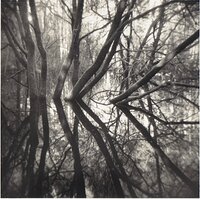
Flooded woodland

Flooded woodland

  • 15
  • 2
  • 111
Babylon

D
Babylon

  • 3
  • 1
  • 94

Recent Classifieds

Forum statistics

Threads
202,843
Messages
2,846,377
Members
101,561
Latest member
SBurns28804
Recent bookmarks
0

silvercloud2323

Member
Allowing Ads
Joined
Oct 4, 2018
Messages
188
Location
Europe
Format
35mm
Hi,

In David Vestal's book ' The craft of photography' i read the following

Contrast Control by Split Development.


You use a tray of normal developer (Dektol,


for instance, or D-72 ) and a tray of soft


developer ( Selectol-Soft or GAF 120), but


you do not mix them . The print spends some


time in each . This is an unwieldy technique,


but it can produce both weird and beautiful


prints .


How it works. The first devel oper dominates


th e print, and the second one modifies


it. If you put the print in the normal developer


first, it tends to be relatively contrasty;


with soft developer first, if both developers


have equal time, the contrast drops


Has anyone experience with this technique and is possible to use Rodinal the high contrast developer??
 
This was how Kodak sold Selectol and Selectol Soft developers. It works, with a paper like the great old paper Ektalure. Modern VC papers make such methods a bit less needed.
In the old days I played with this. Selectol Soft has very poor keeping quality.
 
This was how Kodak sold Selectol and Selectol Soft developers. It works, with a paper like the great old paper Ektalure. Modern VC papers make such methods a bit less needed.
In the old days I played with this. Selectol Soft has very poor keeping quality.
Hi

Do you have any experience it producing weird and beautiful results ?
 
Split-developing prints was an often-used technique to achieve intermediate contrast on graded papers.

The idea is to divide the developing time between soft-working and more contrasty developers. Adjusting the time in each gave you a range of contrasts between grades.

The idea was to use a standard, rather contrasty developer as "normal" and then use a tray of softer-working developer to get less contrasty prints if the standard developer alone was too contrasty on, say grade 3 paper, but too soft on grade 2.

One then started with a 50/50 split, half the development time in the soft-working developer first, followed by the other half in the standard, more contrasty, developer. The proportions could then be adjusted if more or less contrast was needed.

Typical soft working developers are/were: Kodak Selectol Soft, Ansco 120, and Ilford ID-3. There are others too.

I used this technique often when printing on graded papers. The results were gratifying, but not anything "wierd."

Now that I'm printing mostly on VC papers and have a dichroic head that offers continuous contrast adjustment, I rarely need to use split development. I imagine it could be used with VC papers if one were using the contrast filters and really needed a contrast between the half-grade steps the filters are in.

And, if one uses graded papers still (I have some left and contact printers often use Lodima or Lupex that just comes in one grade), then split development is still a useful technique.

Best,

Doremus
 
Has anyone experience with this technique and is possible to use Rodinal the high contrast developer??

Rodinal is a poor paper developer, right? Most film developers are and would be more suited as the slow part of the show. I've heard of folks trying this idea with film. Try it out and report back.
 
Rodinal is a poor paper developer, right?

Yes. It has poor tray life and is relatively expensive in dilutions that would make sense as a paper developer (e.g. 1+5). I also wonder if it will stain the base of FB paper as it oxidizes, and if it does, how well this stain would wash out. Overall, I don't see much value in rodinal for print development. It sort of works in a pinch (I tried it once), but it's really a last-resort option.

Do you have any experience it producing weird and beautiful results ?

Frankly, I wonder how accurate the 'weird and beautiful' comment really is, not to mention that 'weird' and 'beautiful' are highly subjective terms to begin with. I'd be inclined to point you in the direction of lith printing if you want 'weird and beautiful'. Start e.g. here https://www.alternativephotography.com/the-lithprint-process/ But there are plenty of online resources on the techniques and materials used.
 
Like others, I used this method occasionally. I don't know if its needed anymore. I also found that I could make small changes in contrast by agitating the print for part of the development time and letting it sit still for the remainder.
 
Hi,

In David Vestal's book ' The craft of photography' i read the following

Contrast Control by Split Development.


You use a tray of normal developer (Dektol,


for instance, or D-72 ) and a tray of soft


developer ( Selectol-Soft or GAF 120), but


you do not mix them . The print spends some


time in each . This is an unwieldy technique,


but it can produce both weird and beautiful


prints .


How it works. The first devel oper dominates


th e print, and the second one modifies


it. If you put the print in the normal developer


first, it tends to be relatively contrasty;


with soft developer first, if both developers


have equal time, the contrast drops


Has anyone experience with this technique and is possible to use Rodinal the high contrast developer??


This was only really relevant with graded papers so you could modify contrast somewhat between grades.

As others have noted here, the preferred method these days is to use VC paper and adjust the amount of soft- and cold light to get the paper gradation you want.

Even better is the use of split VC printing (there are many references on the web). This allows you to change the effective paper grade in different parts of the print by varying the soft-to-cold light ratios as you expose, burn, and dodge.
 
Split-developing prints was an often-used technique to achieve intermediate contrast on graded papers.

The idea is to divide the developing time between soft-working and more contrasty developers. Adjusting the time in each gave you a range of contrasts between grades.

The idea was to use a standard, rather contrasty developer as "normal" and then use a tray of softer-working developer to get less contrasty prints if the standard developer alone was too contrasty on, say grade 3 paper, but too soft on grade 2.

One then started with a 50/50 split, half the development time in the soft-working developer first, followed by the other half in the standard, more contrasty, developer. The proportions could then be adjusted if more or less contrast was needed.

Typical soft working developers are/were: Kodak Selectol Soft, Ansco 120, and Ilford ID-3. There are others too.

I used this technique often when printing on graded papers. The results were gratifying, but not anything "wierd."

Now that I'm printing mostly on VC papers and have a dichroic head that offers continuous contrast adjustment, I rarely need to use split development. I imagine it could be used with VC papers if one were using the contrast filters and really needed a contrast between the half-grade steps the filters are in.

And, if one uses graded papers still (I have some left and contact printers often use Lodima or Lupex that just comes in one grade), then split development is still a useful technique.

Best,

Doremus


Many photographers work the other way around, starting in the Contrast developer, then transferring to the Soft. I just checked and that's how John Blakemore worked. I keep ID-3 on my darkroom shelf as a two part developer which gives it a very long shelf life, actually the formula (for single solution ID03) is the same as D-165/Selectol Soft.

I also often make up Ilford ID-14 which is a Press Contrast developer, it gives more contrast than PQ Universal/ID-62 or Dektol, I have quite a bit of graded paper at the moment.

Ian
 
Hi, I'm just starting out with lithography. So far, it is difficult for me. I visited the Alternative Photography website. There are really a lot of great resources there

Welcome to Photrio! Are you starting out in straight (drawing/painting) lithography, or photo lithography? Lithography is not to be confused with Lith printing... I haven't done photo lithography for many, many years!
 
Many photographers work the other way around, starting in the Contrast developer, then transferring to the Soft. I just checked and that's how John Blakemore worked. I keep ID-3 on my darkroom shelf as a two part developer which gives it a very long shelf life, actually the formula (for single solution ID03) is the same as D-165/Selectol Soft.

I also often make up Ilford ID-14 which is a Press Contrast developer, it gives more contrast than PQ Universal/ID-62 or Dektol, I have quite a bit of graded paper at the moment.

Ian
Ian,

I've done split developing both ways; starting with the low-contrast developer and vice-versa. I don't know if it makes a whole lot of difference. I've still got some graded paper that I often wish I could squeeze a bit more contrast out of. I'll give ID-14 a try next time I need to. Thanks.

Doremus
 
David Vestal advocated the use of Ansco 120 as the low-contrast developer; he said that it lasted longer in the tray than the (otherwise similar) Selectol-Soft. So that's what I used when I was using graded papers in the '80s and '90s.
Photographer's Formulary offers several low-contrast developers; I used one last year successfully to enlarge some older negatives that were both overexposed and overdeveloped (don't do that!). Sadly I didn't keep the data sheet and don't remember which one it was!
 
Last edited:
David Vestal advocated the use of Ansco 120 as the low-contrast developer; he said that it lasted longer in the tray than the (otherwise similar) Selector-Soft. So that's what I used when I was using graded papers in the '80s and '90s.

The longer tray life is probably due to the increase level of Metol, in Agfa Ansco 120, these developers collapse when the Bromide level inhibits the activity of the Metol, it's the same with MQ developers.

I remember in the late 1960s and very early 70s on a two or three hour printing session I'd have to replace the D163 developer at least once, sometimes twice with fresh developer. D72/Dektol wasn't made or sold here in the UK back then, D163 like D72 was a Universal developer.

Ian,

I've done split developing both ways; starting with the low-contrast developer and vice-versa. I don't know if it makes a whole lot of difference. I've still got some graded paper that I often wish I could squeeze a bit more contrast out of. I'll give ID-14 a try next time I need to. Thanks.

Doremus

I suspect the reason it makes little difference which way around you use the two developers is due to their collapse due to Bromide build up before the cross dilution/mixing has a significant impact on their composition.

Back around 1980 I used to occasional help a commercial/advertising photographer when he had to produce long print runs, typically 100+ prints off each negative, we used Ilford PQ Universal and it just never collapsed like an MQ developer.

Ian
 
I know that litho printing and lithography are two different things, but I'm still a bit confused.

They share a similar name, because the photographic printing version came from an accidental discovery - that the developers intended for lithographic processes in a printshop - where people get books and newspapers printed - cause some photographic papers to develop using infectious development, which gives you the "lith" look.
 
Photrio.com contains affiliate links to products. We may receive a commission for purchases made through these links.
To read our full affiliate disclosure statement please click Here.

PHOTRIO PARTNERS EQUALLY FUNDING OUR COMMUNITY:


Ilford ADOX Freestyle Photographic Stearman Press Weldon Color Lab Blue Moon Camera & Machine
Top Bottom
