• Welcome to Photrio!
    Registration is fast and free. Join today to unlock search, see fewer ads, and access all forum features.
    Click here to sign up

slide film processed in b/w chemistry ?

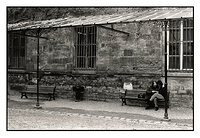
Amour - Paris

A
Amour - Paris

  • 0
  • 0
  • 48
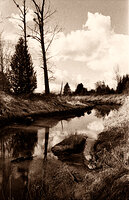
Bend in the river

H
Bend in the river

  • 2
  • 0
  • 68

Recent Classifieds

Forum statistics

Threads
203,235
Messages
2,851,854
Members
101,740
Latest member
Andrewford
Recent bookmarks
0

removed account4

Subscriber
Allowing Ads
Joined
Jun 21, 2003
Messages
29,810
Format
Hybrid
i know what happens when
one processes color negative film
in black and white chemicals,
but what happens to slide film ?

has anyone done this, and what were the results like ?
thanks !
john
 
That's exactly right, and it's completely unusable for anything.
 
You get a yellow, foggy, B&W negative as I said above. What gave you the idea that there was no image at all?

It is, IMHO, totally unusable for anything though. :sad:

PE
 
i guess the "unusable for anything" part made me believe there was no image,
since i could always find a use for an image on a piece of film...
 
Give it a try. I use to develop E6 film in C-41, swapping Acufine, for the first developer. Got outrageous high ISO numbers, with massive grain. Fun fun fun.:D

That sounds like something I should try. I am still looking for a way to get a "Scotch 1000" look out of current slide film.
 
Why does it turn yellow if there are no color developing agents in (most) B&W developers?
 
Even in chromogenic materials where the imaging dyes come only into existence there are other coloured materials that exist and may be visible in the final product.

So you have in the majority of C-41 films coloured couplers intended for automatic masking, thus intended to survive processing.
In E-6 this mask is omitted, but, as in C-41 materials, there are coloured filter layers that will turn colourless whilst processing.

If the neccessary yellow filter is made out of colloid silver, it will be bleached in the bleach bath typical to most colour processes. However in single step b&w processing, as intented by the OP there is no bleaching, and a yellow layer will remain.

Though, in case the filter layer is made out of dyes, they may turn colourless during processing.
 
well, 2 nites ago i processed some sensia slide film in caf130
and they look promising. the grain is nice and the negative area not too dense
... i have a whole bunch of fuji sheets and big K quickloads to test this with.
i am excited because i am film and coffee rich, and money for processing poor :smile:

thanks for the encouragement !
john
 
If it was practical, it would have been a commercial product. If is was usable but not commercially practical, it would have been posted here.

Steve
 
If it was practical, it would have been a commercial product. If is was usable but not commercially practical, it would have been posted here.

Steve

except for not getting a color image
it seems to be a usable option,
especially since between 4 + 6$ / sheet
to process 4x5 and 5x7 color sheets isn't a usable option
( and i have a bunch of it ) ...
 
Totally unusable

You get a yellow, foggy, B&W negative as I said above. What gave you the idea that there was no image at all?

It is, IMHO, totally unusable for anything though. :sad:

PE

That's exactly right, and it's completely unusable for anything.

If it was practical, it would have been a commercial product. If is was usable but not commercially practical, it would have been posted here.

Steve

It depends :errm: :

Zero Image 4x5 Ektar 100G slide film accidently exposed and developed in D76 1:1 as if it was HP5 :whistling:

dn3_310.jpg


After the mishap, I bleached and redeveloped the "negative" in a two bath ferricyanide/thiourea sepia toner. This got rid of most of the foggy anti-halo? layer and thus made a significant difference... giving a reasonably printable negative. Above image printed on Kentmere Fineprint VC Glossy and sepia toned.

The "negative" now looks like this:

attachment.php


I split grade printed the negative on the Kentmere Fineprint paper with the following settings:

8 seconds, F11, grade 4
28 seconds, F11, grade 2.5
burned in the centre portion (as I did with all my Amsterdam pinhole images), for about another 50 seconds at grade 2.5.

As you can see, not exceptional figures...

Marco
 
Last edited by a moderator:
Why waste or risk a good latent photograph? If you have film to waste, send it to me.

Steve
 
steve

what you suggest is a waste of a latent photograph
is the opposite for me. it is another option
to work with camera made and hand made images.

people similar things to me when
i make photograms on azo paper
" why are you wasting that azo paper, send it to me "
 
Marco;

You did a good job and got an amazing result. I stand by what I said though, in the sense that the OP said he got nothing and I suggested that he should have gotten a yellow foggy negative good for nothing. I think you have shown us that you did get what I suggested, but by very good DR technique, you turned this poor negative into something quite useful and which gave you a very nice result.

It is good to learn what can be done when someone goes beyond what I have personally done and seen. It is good to learn how to "rescue" the film. Congratulations on a very nice extension for us to process our slides. I would not have believed that the yellow filter layer and the fog could be overcome.

PE
 
Yellow? Unusable???

Havent you guys heard about scanners and photoshop?

Scan the yellow, and push a button and you have B&W pictures.....

or why fool arond with C41, I have a hunch Caffenol-C might do the trick, but not with 1000 ISO more likely box speed or 2x box speed.

Have a look at the Caffenol group.
 
Erik;

I recognize the utility of scanners in this case, but since it is an analog site, I did not wish to get into the scanning issue. Of course you can make a perfectly acceptable print from such a negative using a mixed workflow. I do that myself.

So, my answer should have been "unusable with current analog materials and an analog workflow" . My apologies.

PE
 
Marco;

You did a good job and got an amazing result. I stand by what I said though, in the sense that the OP said he got nothing and I suggested that he should have gotten a yellow foggy negative good for nothing.
PE

ron


my original posted question was " what happens"
you and frank that it was "good for nothing" and "unusable" ...
i took those terms to suggest there was nothing
on the film, no negative, nothing ( any image on film is useful ).

what i said was i used caffenol c and i got promising results,
the film was not too dense, and had nice grain ..
i never said there wasn't a yellow hue.
when did i say i got "nothing" ??

i am used to "fog" from using caffenol C
so the film had a yellow cast through it, much
like ektachrome has when unfiltered.

your suggestion that things are good for nothing are kind of funny.
there is always a use for things like this, maybe not what you would use them for
but there is always a use.

there are many people that believe using coffee based developers
are " good for nothing" and " useless " and i find this funny as well.

 
What I like about John's work is his desire to push the possibilities. I think telling him something is useless, or impossible, just pushes his buttons... He seems to find a way to make unique images where others won't tread. It's one of the reasons I look forward to seeing his gallery images.
 
Sorry John.

I got confused with the OP. Someone else had posted that they got nothing and I confused your post and that one. I did not go back and look at your OP. My bad again.

A process such as this... Any B&W developer/Any tail end involving rinse, stop, fix, wash of any sort, will give a foggy yellow negative. The fog is due to the way reversal emulsions are made to force speed and clear out the dmin. The yellow is due to the yellow absorbing interlayer in the film.

Marco, OTOH, has shown me something I did not know and that is the ability to improve the result by additional process steps. This gave him a super result! I learned something, but that does not mean that I would do it myself. Kind of expensive and time consuming.

It was also pointed out that you could use a hybrid work flow. Of course, I knew that but avoided the issue for the sake of APUG and merely commented on it from a fully analog POV.

This created the ambiguity in my answer and the misconceptions it caused. By all means, try it as an art form. It will undoubtedly give you some unusual, and perhaps usable results. The film will form a negative yellow image, no question that the developer, any developer will work. It involves a matter of finding the right time for the developer.

PE
 
no prob ron ..

i just find that people may read " useless" and never bother
to see for themselves if it really IS useless.
photography, like everything else is experimentation,
if we don't experiment we don't ever learn.

thanks eddie !

john
i hate that mistaken identity thing :whistle:
 
Yes, I'm forgetting that in my old age I guess. The key is "experiment" even if the initial results are of dubious use.

PE
 
Photrio.com contains affiliate links to products. We may receive a commission for purchases made through these links.
To read our full affiliate disclosure statement please click Here.

PHOTRIO PARTNERS EQUALLY FUNDING OUR COMMUNITY:


Ilford ADOX Freestyle Photographic Stearman Press Weldon Color Lab Blue Moon Camera & Machine
Top Bottom