
• Welcome to Photrio!
    Registration is fast and free. Join today to unlock search, see fewer ads, and access all forum features.
    Click here to sign up

Signing prints...

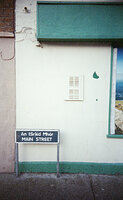
An tSráid Mhór

A
An tSráid Mhór

  • 1
  • 0
  • 39
IMG_1285.jpeg

D
IMG_1285.jpeg

  • 0
  • 0
  • 37

Forum statistics

Threads
203,125
Messages
2,850,218
Members
101,690
Latest member
nisherii
Recent bookmarks
0
Joined
Aug 9, 2011
Messages
3,605
Location
On a boat.
Format
Multi Format
If you give away or sell prints is it customary to sign the print, or the back of the print?

If so, what is the best instrument to use for signing B&W paper? My first thought was a grease/china pencil, but I thought that might smear/rub off. My second thought was a felt tip permanent marker, but then I thought it may seep through. Other felt tip markers may rub off. Then I thought paint pen. Any suggestions?
 
Graphite is archival and time proven.

If you dry mount your prints, obviously signing on the back of the print isn't good. But I have been warned against dry-mounting by museum conservationists, so I don't and sign on the back. But those that do usually sign on the back of the mount board instead.
Some also sign on the front, which works with graphite if you use matte paper. Glossy not so much.

I don't see too many signed prints in museums, for example. So signing on the verso is probably more 'correct'. But correct is boring. Wherever you decide to sign, make sure to use graphite (or some other guaranteed archival writing utensil).

- Thomas
 
I always sign the front of the print with a type of marker that will not smear or fade. However, since my signature is hidden by the matting, I also sign a label on the back of the back board of the framing. Hope this is helpful.

Don
 
If dry mounted, and signing priority is one reason to mount, sign on the mount.

If print only, print with a margin big enough to sign in. Prints may also be hinge mounted with tape and overmatted, allaying permanent mounting concerns. If no margin exists, sign on the back. Pencil should work with fiber. With plastic prints, color or monochrome, it really doesn't matter what you sign with as long it doesn't smear or fade (faster than the print :laugh:).
 
Last edited by a moderator:
i sign and date the overmat,
and sign the back of the print in pencil
( if it is a black and white photograph )
if it is plak mounted i sign the front with
a thin tipped sharpie type marker
and the back in pencil
 
I believe Alfred Stieglitz was asked this question and he took the young man outside, pointed into the world and asked "Did God sign this?" Something along that line, anyway.

But I am not God, so I sign lightly on the front with a #3 pencil in small writing. The back of the print (in pencil again) gets the title, date, edition info (if any), signature and copyright info. The same info gets put on the back of the mat, but w/o signature.
 
So its basically about as varied as everyone's darkroom processes then? The only common denominator seems to be the pencil.
 
Last edited by a moderator:
I would like to sign everything, if I could. I've seen quite a few interesting and novel ways of signing photographic works, all which have withstood the test of time.

Blind Stamps
Block Stamps
Painted signature
Quill pen signature
Pencil signature in print margin
Pencil signature on backing board
Sharpie type pen on the print
And also "signatures in the print (exposed as part of the print)". This is a method that I am currently most interested in trying.
 
Last edited by a moderator:
I have experimented with this, and have found that for my own work, I find any signature that is visible to the viewer when the print is in final presentation form to be not only a distraction from the visual impact of the photograph, but for me uncomfortably immodest, bordering on pretentiousness.

I make a small (about 2"x3") sticker with my name, contact info, and the location and date of the exposure on the back of the acid free spacer board that's behind the mount board, so it's visible from the back of the framed print. I doubt if the sticker is archival, but I figure there's enough archival stuff between the hinge mounted print and the sticker that I can't get too worked up about it.

Dave
 
I have had the good fortune to work with the Estate of Andre Kertesz. This has been a real eye opener regarding the world of of collectible photographs. My opinion now is, pencil if possible, and the more info on the back the more the collectors like it. As far as signing on the front, I don't -- I feel like Dave Martini, above, that it can be a distraction. I once had a painting teacher say, "Think of the signature as still another color, and consider it carefully.

Regarding mounting on board, it is strongly frowned upon in most instances. As artists, though, we have the final say, and it may not always be creatively satisfying to follow the dictates of commerce and convention.
 
Well, the OP's question is in regards specifically to signing prints. Mounting and provenance are other (very important) matters.


LOVED THIS!

"Even if you do not consider your work to be of particular merit, others may, and for reasons you may not have anticipated – perhaps long after you've passed (see this, or google "Uncle Earl Ansel Adams")."
 
The trimmed print is dry mounted. I sign the backing board on the front lower right corner below the image, and my studio stamp with the print title and information is on the back.
 
Photrio.com contains affiliate links to products. We may receive a commission for purchases made through these links.
To read our full affiliate disclosure statement please click Here.

PHOTRIO PARTNERS EQUALLY FUNDING OUR COMMUNITY:


Ilford ADOX Freestyle Photographic Stearman Press Weldon Color Lab Blue Moon Camera & Machine
Top Bottom
