

• Welcome to Photrio!
    Registration is fast and free. Join today to unlock search, see fewer ads, and access all forum features.
    Click here to sign up

Should HC 110-b give ultra-big grain for Fortepan 400?

Filling In

H
Filling In

  • 1
  • 2
  • 39
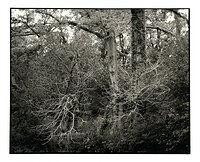
Painted Hills # 3.jpg

H
Painted Hills # 3.jpg

  • 4
  • 0
  • 86

Recent Classifieds

Forum statistics

Threads
203,208
Messages
2,851,450
Members
101,726
Latest member
Peter1111
Recent bookmarks
0

SchwinnParamount

Member
Allowing Ads
Joined
Nov 29, 2004
Messages
1,776
Location
Tacoma, WA
Format
4x5 Format
Has anyone souped the Forte 400 from Freestyle in Kodak HC-110, dilution B?

This film was exposed at 400, given 9 minutes at 68%. Agitation was 10 seconds every 30 seconds. Yes, that's prolly more agitation than is recommended for the developer.

The contrast was nice... very nice. But the grain was super icky. On the other hand, the grain was super cool. It depends on what you're after, I suppose.

So, grain. Anybody else notice this?
 
Last edited by a moderator:
I only have experience with this film in 4x5 format, and even at that size I got pretty accentuated grain at 11x14 print size, relatively anyway. I liked the film, and the grain is gorgeous. HC-110 isn't exactly shy about grain either, gives sort of a 'gritty' appearance. I wish the film was still around.
 
HC-110 dilution B at normal exposure and normal time should give very nice and unobtrusive grain when stacked up against any other standard Kodak developer. If anything, it is too smooth for my taste sometimes.

However, if the film itself is a particularly grainy film, then of course HC-110, or any other developer, can only do so much to minimize it.

Graininess is heavily affected by film type, exposure, and development. You are using a 400 film, which is relatively grainy, plus any exposure issues (especially overexposure) will increase the grain even more. Additionally, if you agitated 10 seconds out of every 30, that is twice as much agitation as was used by Kodak when they tested for their recommended small tank times, so it has the effect of overdevelopment, which increases graininess.

I am guessing 1. that Forte 400 is a grainy film, and 2. that you overdeveloped it quite a bit by following the 1/3-of-the-developing-time agitation regimen instead of the 1/6-of-the-developing-time regimen recommended by Kodak (and Ilford, for that matter).

I would try again, but this time expose carefully with an incident meter if you have one available. If not, use a grey card. Meter the card and open up one half stop from what the recommended f stop is. When developing, make extra certain that all your chemicals are about the same temperature, and for agitation try either 5 seconds out of every 30 or 10 seconds out of every 60. You should get less graininess by doing all this. If it is still too much, you can try a different 400 film, or move to a 100 film if the light will allow it.
 
Last edited by a moderator:
Forte 400...I used to love that film when J&C sold it as Classic Pan 400. It took quite a few rolls to get dialed in. Strange and lovely stuff. It has much bigger grain than any of the modern ISO 400 films (like Tri-X, HP5+, Neopan400). It also seems to be a thicker emulsion than any of the comparable modern films and so often does not appear to be as sharp.


My notes, for 35mm, say...

Forte / Classic Pan 400
EI 250~400
HC-110B, 20 degrees C, 8 minutes with gentle agitation.

---- however, I got better results with ----

D-23 - 6mins followed by 2% borax solution after bath for 4mins.

Keep working with it.
 
Wirelessly posted (BlackBerry9000/4.6.0.167 Profile/MIDP-2.0 Configuration/CLDC-1.1 VendorID/102 UP.Link/6.3.0.0.0)

And to reiterate Keith, you did double time on agitation which is more than likely where the grain came from. Want golf balls, add another 30 seconds dev time including another 10 second agitation.
 
Last edited by a moderator:
You may have micro reticulation which causes grain clumping and makes it far worse.

It's a myth that agitation itself causes grain, it does increase the rate of development and over developed negatives do have more grain.

Ian
 
[increased agitation] does increase the rate of development and over developed negatives do have more grain.

...which is what was stated above. Where are the people who believe that agitation frequency directly affects grain? I've never heard that.

Additionally, the fact that more agitation leads to more rapid development is so much of a given that it can be stated that for a given developing time, increasing the periods of agitation increases graininess, and this would not be an incorrect or misleading statement.

Even so, any chances of implication were decidedly eliminated by the way in which I explained it above (basically the same as you explained it).

What I wrote (boldface added):

"Graininess is heavily affected by film type, exposure, and development. You are using a 400 film, which is relatively grainy, plus any exposure issues (especially overexposure) will increase the grain even more. Additionally, if you agitated 10 seconds out of every 30, that is twice as much agitation as was used by Kodak when they tested for their recommended small tank times, so it has the effect of overdevelopment, which increases graininess.

"I am guessing 1. that Forte 400 is a grainy film, and 2. that you overdeveloped it quite a bit by following the 1/3-of-the-developing-time agitation regimen instead of the 1/6-of-the-developing-time regimen recommended by Kodak (and Ilford, for that matter)."

I don't see how anyone could get any "myth" or "implication" of agitation directly affecting graininess from this.
 
Last edited by a moderator:
I miss Forte/Classicpan 400. I usually exposed anywhere between 250 to 400 ISO and developed with HC110 Dil B for about 9 min only I did 10 seconds gentle agitation every minute. That film had grain you could tee off with and I miss the tonality.
 
The implication however was that it's agitation that increases Grain size.

Ian

Where? Chris' post? I did not get that implication at all (nor a myth).
 
Last edited by a moderator:
As all your posts in this thread, particularly post #7 which I quoted in full, have been edited it's rather irrelevant.

However I was NOT referring to ANY of your comments, I had in fact completely over-looked your post so I apologise for that. I was referring rather to the implicit over simplification that agitation causes grain in Chris' post this is an assumption that has been made by others on APUG before without linking it to increased development.

Ian
 
Thanks for the help guys. Over-agitation, I get it. On the other hand, it sounds as though my choice of developer and dilution was not un-wise. I posted one of the less contrasty images of a rose in the standard gallery. If I had a flat-bed scanner, I'd have posted the print. Instead, I posted a scan from my Nikon film scanner.
 
FWIW, that is not all that grainy or high in contrast IMO.

(...and it is overdevelopment via overagitation :wink:)
 
Last edited by a moderator:
Thanks for the help guys. Over-agitation, I get it. On the other hand, it sounds as though my choice of developer and dilution was not un-wise. I posted one of the less contrasty images of a rose in the standard gallery. If I had a flat-bed scanner, I'd have posted the print. Instead, I posted a scan from my Nikon film scanner.


No. not over agitation. Your agitation is not significantly different from that recommended by Kodak for HC-110....it might explain slightly more contrast but, not bigger grain. ( I say this from 30+ rolls experience with the exact film/developer combo). Most likely....it is just the characteristic of the film that you are un-accustomed to. Next most likely are: 2) over development (like 2F/2F has said) and...3) over exposure.


from experience, this film is significantly more sensitive to over exposure and over development than Tri-X (for example). To some people, that is a good thing. To others, not so much. More dilute HC-110 will only result in more pronounced grain. If the grain does not appeal to you, you probably will be better off switching to one of the modern alternatives (Tri-X, HP5+, Neopan 400)...as this film simply has different grain than the modern competitors.

recommendation: Rate it at EI-400 or EI-200 with a yellow/green filter (B+W 060, or Wratten #11). Dev in HC-110B for not more than 8 minutes at 20 degrees C.

Also, it does not scan well. Real prints look much better.
 
No. not over agitation. Your agitation is not significantly different from that recommended by Kodak for HC-110....it might explain slightly more contrast but, not bigger grain. ( I say this from 30+ rolls experience with the exact film/developer combo). Most likely....it is just the characteristic of the film that you are un-accustomed to. Next most likely are: 2) over development (like 2F/2F has said) and...3) over exposure.


from experience, this film is significantly more sensitive to over exposure and over development than Tri-X (for example). To some people, that is a good thing. To others, not so much. More dilute HC-110 will only result in more pronounced grain. If the grain does not appeal to you, you probably will be better off switching to one of the modern alternatives (Tri-X, HP5+, Neopan 400)...as this film simply has different grain than the modern competitors.

recommendation: Rate it at EI-400 or EI-200 with a yellow/green filter (B+W 060, or Wratten #11). Dev in HC-110B for not more than 8 minutes at 20 degrees C.

Also, it does not scan well. Real prints look much better.


What I love about this film is the tones it gave me. I am willing to accept additional grain... as long as my technique optimizes grain size to an "ideal fortepan 400 grain".

Regarding exposure, I used my F100 in matrix exposure mode (I think... earlier, I had the camera in spot mode. Did I switch?) I think my exposure was on. I will need to go out with another role and do a more thoughtful test.

So, I developed for 9 minutes which is obviously more than you've done for 30 rolls. My experience tells me that the difference in development time can result in blown out highs (check out the "rose in park" image - standard gallery).
 
Schwinn, The rose in park photo looks pretty good to me. Actually, really good. I don't know that I'd call that blown highlights. There appears to be detail in the rose petals...It is hard to tell ...is there detail there in the negative? If so, maybe it can be eeked out in the print? The grain too looks about like what I would expect from Forte 400. I think you did fine.

I too loved the tones...and the spectral response of this film is unlike any thing else I've ever worked with.

Enjoy.
 
I used to use Forte back when Freestyle sold it rebranded. The very worst combo I ever found in all of film/dev so far is Forte + HC110. Ugly, ugly grain clumps.
 
Photrio.com contains affiliate links to products. We may receive a commission for purchases made through these links.
To read our full affiliate disclosure statement please click Here.

PHOTRIO PARTNERS EQUALLY FUNDING OUR COMMUNITY:


Ilford ADOX Freestyle Photographic Stearman Press Weldon Color Lab Blue Moon Camera & Machine
Top Bottom
