
• Welcome to Photrio!
    Registration is fast and free. Join today to unlock search, see fewer ads, and access all forum features.
    Click here to sign up

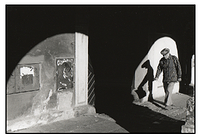
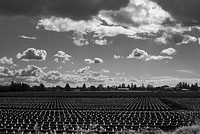
second try at lith, lots of color but lacking that lith contrast

Shadow play

A
Shadow play

  • 5
  • 1
  • 29

Forum statistics

Threads
201,229
Messages
2,820,849
Members
100,602
Latest member
51Spartan
Recent bookmarks
0

rx7speed

Member
Allowing Ads
Joined
Dec 23, 2009
Messages
35
Format
35mm
can't seem to get that wonderfull lith contrast and dark blacks. been a couple weeks so I don't remember the exact details but I believe the dilution might of been the problem as I used I think 10+10+800 (though could of been 20+20+800) using rollei creative lith. exposure was in the realm of 2.5min and development took for damn ever at around 6-7min for it to even start showing and then just tapered off without seeming to want to get any darker.

my first try while I managed to get darker darks I also was using a dilution of around 20+20+400 and quite a bit shorter exposure times but managed to get no color out of the prints and to me at least looks a little more blah in comparison even though it does have a bit more contrast and deeper darks to it.

how do I keep the color yet get the darks a bit deeper? would a two step development of a stronger dilution to get the blacks followed by a real weak lith dilution to get the color work or should I change tactics here and try something else instead?

here are my examples. have some from my first batch if you want me to upload those as well.

http://www.flickr.com/photos/rx7speed/sets/72157623313172665/

as a side question what would you call the color on these prints?
 

bdial

Subscriber
Joined
Jan 2, 2005
Messages
7,507
Location
North East U.S.
Format
Multi Format
I don't know the linage of the Promaster paper, but it may not be a good paper for Lith. You may want to try some Foma or Adox Variotone.
One method for working with un-lithable papers (for example, Ilford MG) is to develop the paper in normal developer, then bleach it and re-develop in lith.
Otherwise, more exposure and/or a slightly stronger developer solution might help, but a paper switch might get you farther faster.
 

Dan Henderson

Member
Allowing Ads
Joined
Feb 6, 2005
Messages
1,880
Location
Blue Ridge,
Format
4x5 Format
I agree with the previous poster: not all papers lith well. So I think you first step should be to buy paper that is known to respond to the lith process, such as Foma.

Second, after initially good results I was disappointed in a second batch of Rollei developer. It does not respond as colorfully as I like, so I switched back to Fotospeed. But the Rollie did lith, so maybe stick with it since you have already purchased it, but know it might not respond as colorfully.

Third, remember Tim Rudman's rules for lith printing: the highlights are controlled by the exposure and the the shadows by development. Make sure you are exposing enough. One way is to make a test strip on the paper you intend to use for lith, but to develop it in ordinary paper developer for your standard time. Choose the exposure that gives you good, solid highlights and midtones, ignoring the shadows. Make another exposure with 2 to 3 times as much exposure and develop that one in the lith developer until your shadows develop where you want them. I usually make my test strip at f/11, then open up to f/5.6 at the same time for the first print in lith developer. Then modify as needed.

Fourth, weaker, more seasoned developer gives more colorful results. As best as I can remember, I used 20 ml A:20 ml B:600 ml water, and 360 ml Old Brown to make a liter of the Rollei developer. If you don't know, Old Brown is used developer kept from the last session. I usually leave the developer in the tray overnight after a session, then rebottle it for use next session. If for some reason I don't have any OB to start with, I leave a sheet of outdated paper (any brand will do, does not have to be "lithable" paper) in the tray of developer overnight to season it.

Fifth, warmer developer gives faster and more colorful results. I keep my developer at about 30c, get emergence at 2-3 minutes and complete development at 4:30 to 6 or 7 minutes, depending on how many prints have gone through the developer.

Good luck,
Dan
 

Mark Fisher

Member
Allowing Ads
Joined
Dec 13, 2003
Messages
1,691
Location
Chicago
Format
Medium Format
It looks like it is lithing. It appears that you started to get infectous development (e.g grill in radiator). Two things: first, if you want more contrast, use less exposure. Second it looks like you just didn't let it develop long enough. I think the paper is working.

That said, for a first time lith printer, I recommend either Fomatone or Slavich grade 4 Unibrom depending on the look they want (my gallery has both)
 

Neal

Subscriber
Allowing Ads
Joined
Dec 3, 2004
Messages
2,026
Location
Chicago, West Suburbs
Format
Multi Format
Dear rx7speed,

While I have not used the Moersch product, I find that while searching for that dilution "sweet spot" it is easy to fall off the edge into too little developer. My solution is to add developer until I get what I like. YMMV.

Good luck,

Neal Wydra
 
OP
OP

rx7speed

Member
Allowing Ads
Joined
Dec 23, 2009
Messages
35
Format
35mm
I think that I might of fallen off the edge possibly with too little developer. I know my first time around there were some deep dark blacks and it didn't seem like the developement took quite as long or hit a wall like it seems to be doing here, but it also had no color as well (partly why I tried to dilute a little more).
I have some slavich #3 and honestly I don't care much for it. the grain is just too much for my taking. I don't mind a litle grain hell for this I enjoy a little grain but the slavich I can't seem to keep it under controll to were the subject doesn't just get lost in the grain. It seems to be suffering from the same problem with development not giving full rich dark blacks either but the slavich does have a color to it at least though I can't say I'm a fan of that either.

might trying making the dilution a little stronger or find a containter to keep some old brown as I haven't been keeping it due to lack of jugs. old bottle of mountain dew I hope might work (label removed and remarked)

temps were around 24-25* roughly. colder basement so that is were they started at but not sure were they ended up though in the end.

so what is it that actually causes the color to happen in lith prints though?
 

Neal

Subscriber
Allowing Ads
Joined
Dec 3, 2004
Messages
2,026
Location
Chicago, West Suburbs
Format
Multi Format
Dear rx7speed,

From: http://unblinkingeye.com/Articles/Lith/lith.html

"The image colour of a B&W silver image is related to the grain size in the paper emulsion (note, this is not related to the grain in the film). The result here is that the light tones are still in early development and their grain size has not grown like the grains in the more advanced dark tones have. They are therefore warm in colour (typically brown, olive, yellow or pink), fine and creamy smooth in texture, and low in contrast. The dark tones have all the opposite properties, being coarse, grainy, cold and contrasty."


Neal Wydra
 

Rich Ullsmith

Member
Allowing Ads
Joined
Jan 26, 2007
Messages
1,159
Format
Medium Format
You are on the right track with your prints. Just keep at it. 15-20 minutes is not uncommon even with a warmer developer.

Sulfite/bromide balance, developer temp and dilution, exposure and snatch point. Moon phase. You are on the right track.
 
OP
OP

rx7speed

Member
Allowing Ads
Joined
Dec 23, 2009
Messages
35
Format
35mm
lol well I was a little off balance when I did these prints also so my rain dance might not of been right :tongue:

tried again this time cut the dilution down to 600ml of water. much stronger blacks but it also turned the image into a straight black and white, though color was missing this time around. though that could be (my noob mind at work here) due to dilution but also I cut the exposure down quite a bit as well as I was more trying to find dark blacks to make sure paper was not the problem and wasn't really worrying about highlights.

will try again here soon enough and play around with it some once I get some more film developed.

thank you all for the help here.
 

Justin Maramba

Member
Allowing Ads
Joined
Oct 29, 2008
Messages
18
Format
35mm
Using punchier contrast film might help a bit with your print contrast. Try keeping some used lith developer around if you find that the soup is getting a bit tempramental. Some hot, freshly mixed lith developer with some old brown usually got more contrast. I usually kept my concentration higher than that of manufacturer recommendation.
 
Photrio.com contains affiliate links to products. We may receive a commission for purchases made through these links.
To read our full affiliate disclosure statement please click Here.

PHOTRIO PARTNERS EQUALLY FUNDING OUR COMMUNITY:


Ilford ADOX Freestyle Photographic Stearman Press Weldon Color Lab Blue Moon Camera & Machine
Top Bottom
