• Welcome to Photrio!
    Registration is fast and free. Join today to unlock search, see fewer ads, and access all forum features.
    Click here to sign up

scratches, dust, dyes, and coloring?!?!

IMG_1285.jpeg

D
IMG_1285.jpeg

  • 0
  • 0
  • 24
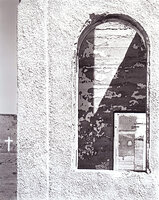
Abandoned Church

A
Abandoned Church

  • 4
  • 1
  • 60

Forum statistics

Threads
203,124
Messages
2,850,168
Members
101,687
Latest member
komsinica
Recent bookmarks
0
Umm - I don't see how that would work. If there's a pinhole ( or more commonly dust on the neg when shooting ), then a black spot is created on the print. From what I understand, the only way to fix a black spot on the print is to use a knife to scratch off the silver and then spot the resulting whit spot.

Yup. Pigment on the neg, filling in pinhole/dust mark > white spot on print > retouched. Re-reading my post I can see how I was unclear: I'd already said we use dyes, not pigments, on prints, so of course, I knew what I meant. Sorry.
 
thanks everyone.

peter. are the spot tone dyes little bottles with a dropper like cap? i have seen them but did not know if i could get them to work. see you on the 15th.

i should just be more careful with my soft negs!

eddie

i

eddie,

SPOTONE, manufactured by RETOUCH METHODS CO., INC., Chatham, New Jersey 07928, USA makes (or did make) color negative dyes called COLOR NEG. They were designed for retouching EKTACOLOR and KODACOLOR negatives and would probably work for other emulsions - "little bottles w/dropper like caps".

They also made similar color print retouching dyes called COLORPRINT (set of 14 bottles, with color descriptions such as: basic (flesh, blue, brown, green,gray, violet); pure (orange, violet); primary (red, blue, yellow); bright (red); leaf (green); sky (blue). These were somewhat reversible after being applied by using ammonia to reduce (bleach).

My experience with these materials showed me that it is difficult to learn without many hours of practice. They were strange to work with at first until I realized that the same rules of color balancing (add and subtract CYM) with color printing filters in the darkroom, also apply when using the dyes.

For spotting I used a #0000 sable brush.

Regards,
Paul

PS: I hand color my prints now with photo oils - antique photo restoration (more archival).

 
Last edited by a moderator:
Photrio.com contains affiliate links to products. We may receive a commission for purchases made through these links.
To read our full affiliate disclosure statement please click Here.

PHOTRIO PARTNERS EQUALLY FUNDING OUR COMMUNITY:


Ilford ADOX Freestyle Photographic Stearman Press Weldon Color Lab Blue Moon Camera & Machine
Top Bottom