• Welcome to Photrio!
    Registration is fast and free. Join today to unlock search, see fewer ads, and access all forum features.
    Click here to sign up

Samples of Black and White Reversal processing (Scala)

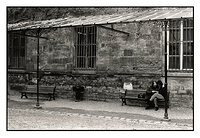
The Chicken

A
The Chicken

  • 3
  • 4
  • 64
Amour - Paris

A
Amour - Paris

  • 1
  • 0
  • 73

Recent Classifieds

Forum statistics

Threads
203,241
Messages
2,851,911
Members
101,743
Latest member
Pablino
Recent bookmarks
0

Stephen Frizza

Member
Allowing Ads
Joined
Mar 2, 2007
Messages
1,464
Format
Medium Format
Hi Guys

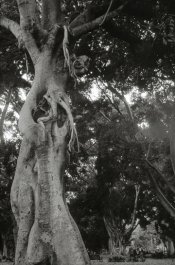
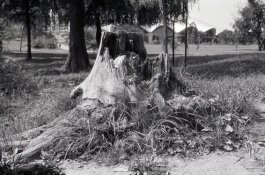
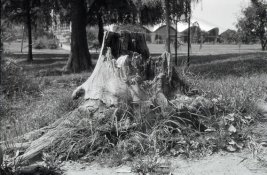
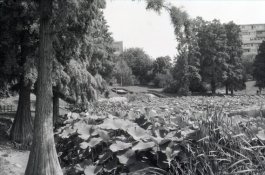
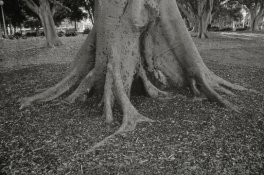
A few people on here asked me to post samples of some images I had processed by black and white reversal (Scala Process). I have been processing a lot of Scala and Tmax 100 this week and so I went to the local park and shot a roll of some trees late afternoon. Here are 3 slides I have made using Tmax 100. I have found that with my methods Tmax 100 yields a slightly extended tonal range compared to the Scala film. I have scanned these to match as closely as i could to the film.

~Stephen Frizza
The Lighthouse Lab
 

Attachments
  • scala1.jpg
    scala1.jpg
    152.8 KB · Views: 308
  • scala2.jpg
    scala2.jpg
    156.6 KB · Views: 311
  • scala3.jpg
    scala3.jpg
    146.9 KB · Views: 275
Last edited by a moderator:
Agfa Scala Film Samples

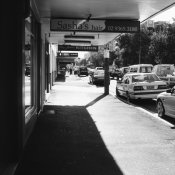
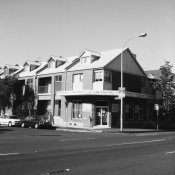
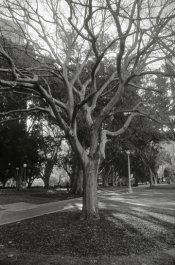
Here are 3 samples of Agfa Scala film rated at 200 i shot on 6x6 outside my lab. One observation I have made when looking at the film upon the light box is that
the slide appears slightly more neutral than the Tmax 100.
~Steve Frizza
The Lighthouse Lab
 

Attachments
  • scala3.jpg
    scala3.jpg
    179.3 KB · Views: 207
  • Untitled-3.jpg
    Untitled-3.jpg
    166.1 KB · Views: 213
  • Untitled-2.jpg
    Untitled-2.jpg
    186.7 KB · Views: 248
Last edited by a moderator:
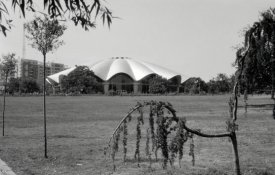
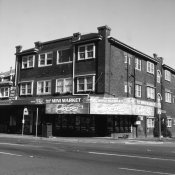
I make same tests with Azopan 100 ISO (film produce in Romania) and Dup Positive in B&W reversal processing. The films have matched those 10 years out data. The pictures attached here with Azopan and Dup Positive. In the test I work with a single developer for two phases for developer. I have other test with Neopan 400 like negative and reversal B&W http://membres.lycos.fr/georgegrosu/12 reversibil an.htm.
Sorry, for language.
George
 

Attachments

  • Azopan 50 ISO redus.jpg
    Azopan 50 ISO redus.jpg
    107.7 KB · Views: 175
  • Dup Positive 12 ISO.jpg
    Dup Positive 12 ISO.jpg
    102.2 KB · Views: 150
  • Dup Positive a 12 ISO.jpg
    Dup Positive a 12 ISO.jpg
    94.4 KB · Views: 158
  • Azopan 100 ISO redus.jpg
    Azopan 100 ISO redus.jpg
    68.2 KB · Views: 165
Ian, you are right. Azomures factory is closed in 2002 (2003???), but after 1998 she life with medical products and the stocks. Azomures make in first place chemical fertilizer.
George
 
George, so you made the tests back then with fresh film before the factory closed or did you made the tests today using old film eventually frozen... I think this is relevant for the results.
toate cele bune
 
Mihai, I made the tests attached here last week. You can see more in my site. I think we have the meme language. It is easy for you. The B&W tests I commencer in April 2008.
George
 
The main problem George is what you posted here is your experiments with films that are no longer available & out of date, and not remotely related to anything currently available. So no data or results can be particularly relevant, but I'd guess they helped you experiment with reversal processing.

However you have used & posted images etc from modern Fuji film on your website. This is the information thats important, how was it processed.

Ian
 
  • Deleted member 2924
  • Deleted
Ian, in my country a b&w film more 8 $ (Kodak or Ilford). Sow, I want to take advantage with the films that I can find more acceptable.
Neopan 400 out data march 2009 I processed with two developers.
First developer has silver halide solvent (Na2S2O3).
For my, is much easy processed the olds b&w reversal films.
I not use kit chemical.
George
 
  • Deleted member 2924
  • Deleted
Just out of curiosity, I am wondering what peoples' reasons are for processing b/w as transparencies nowadays. You certainly don't need to deliver b/w transparencies to a client in a rush any more. For projection? ULF for backlit display? Because you want to see the pix, but don't want to proof or print them? If not, then why?

I have done it before using the Ilford process for a backlit display using sheet film (FP4), and in medium format for a zoetrope (Pan F). I would consider doing it for b/w slideshow as well. Otherwise, I am not sure what the reason would be.
 
Last edited by a moderator:
More recently I've shot B&W slides for a presentation slide show. But my main use has been for my for Portfolio. There are still Galleries etc who prefer to see slides, and as all my non commercial work is now B&W I prefer B&W slides. Generally I'm making 6x7 or 6x9 slide to be viewed on a light box.

Ian
 
Alessandro, I use classical bleach with dichromate.
2F/2F, we are different people and we live different, we thing different. In my country you can not process b/w transparencies. I tray a test without big spend. I thing is nothing bad. In my country no labs work b/w transparencies. In the past, I thing television have a lab for b/w transparencies. I know, I tray to discover same thing who is discover.
For me, with b/w as transparencies I have many details in low and highs densities. The films are with low contrast and after scanning I can grow the highs densities (auto color correction in Adobe Photoshop) and the images are well. I love very much the images with Azopan (finish).
George
 
Seems like there's a problem with burned hightlights.
I get this problem when I put too much silver halide solvent in the first developer, thus making it speed-enhancing.

Imho you can uprate the film a little bit or put less silver halide solvent.

Otherwise you pretty much nailed it.

Would you share with us your processing?
It would be interesting to know...

the highlights in the transparency hold detail sorry if this isnt viewable in the scan.
 
  • Deleted member 2924
  • Deleted
looks like you've got a niche down-under! Looks like we'll see less film from that country....
A consistent reversal line is hard to keep and allot of work to boot, I know this from experience. Your scala looks fine BTW. Processing other films in the same chemistry can be a challenge however. Your TMAX scans look a little muddied to me especially in the middle tones. TMAX100 has a natural compressed contrast as a positive. Also, Normal iso should also be the factory speed.

(there was a url link here which no longer exists)

I would experiment with a film like TRiX 1st them let the other films fall into place. If you have set processing for the scala film alone you wont have consistency with the other films. Id suggest looking into the 2nd development stage for this problem.

regards
dw


Hi Guys

A few people on here asked me to post samples of some images I had processed by black and white reversal (Scala Process). I have been processing a lot of Scala and Tmax 100 this week and so I went to the local park and shot a roll of some trees late afternoon. Here are 3 slides I have made using Tmax 100. I have found that with my methods Tmax 100 yields a slightly extended tonal range compared to the Scala film. I have scanned these to match as closely as i could to the film.

~Stephen Frizza
The Lighthouse Lab
 
Just out of curiosity, I am wondering what peoples' reasons are for processing b/w as transparencies nowadays. You certainly don't need to deliver b/w transparencies to a client in a rush any more. For projection? ULF for backlit display? Because you want to see the pix, but don't want to proof or print them? If not, then why?

I have done it before using the Ilford process for a backlit display using sheet film (FP4), and in medium format for a zoetrope (Pan F). I would consider doing it for b/w slideshow as well. Otherwise, I am not sure what the reason would be.

Stephen just pointed me to this thread after asking a question in chat. I can tell you for me the idea I had was to take 4x5 negatives, enlarge them to 11x14 and use them as contact negatives for alt techniques such as oil printing and gum bichromate and cyanotype, not for slide shows. :D
 
Just out of curiosity, I am wondering what peoples' reasons are for processing b/w as transparencies nowadays.
<snip>
Otherwise, I am not sure what the reason would be.
I just like transparencies. Plus I can make Polaroid Transfers and ambrotypes too from them.

Regards, Art.
 
Just out of curiosity, I am wondering what peoples' reasons are for processing b/w as transparencies nowadays.

Saves a lot of work if you want to make an enlarged negative for contact printing. I have found that I can make very nice ortho film or paper negs of virtually any size from b&w slides.
 
Photrio.com contains affiliate links to products. We may receive a commission for purchases made through these links.
To read our full affiliate disclosure statement please click Here.

PHOTRIO PARTNERS EQUALLY FUNDING OUR COMMUNITY:


Ilford ADOX Freestyle Photographic Stearman Press Weldon Color Lab Blue Moon Camera & Machine
Top Bottom