• Welcome to Photrio!
    Registration is fast and free. Join today to unlock search, see fewer ads, and access all forum features.
    Click here to sign up

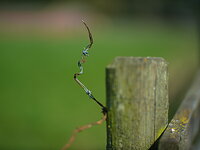
Rollei 35 tessar 40 mm f3.5

IMG_1285.jpeg

D
IMG_1285.jpeg

  • 0
  • 0
  • 16
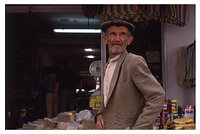
Man in market place

A
Man in market place

  • 0
  • 0
  • 41

Forum statistics

Threads
203,124
Messages
2,850,148
Members
101,684
Latest member
Deepfins
Recent bookmarks
0
Helen is right. According to the manual this lens takes a 24mm filter.

Hans
 
24mm is correct, B+W make quite a few.

I picked a new red 24mm filter up from Ffordes for £5 earlier in the year. It vignettes a little, but is otherwise really nice.

Some sellers try and cash in on the size's rarity. You may need to shop around to get a realistic price.
 
filter

24mm is correct, B+W make quite a few.

I picked a new red 24mm filter up from Ffordes for £5 earlier in the year. It vignettes a little, but is otherwise really nice.

Some sellers try and cash in on the size's rarity. You may need to shop around to get a realistic price.

I have to choice between different color conversion filter Hoya 80 A,B,C and 82A. Which one to choose from ? Or does it depend on Kelvin of lighting ?
 
I have to choice between different color conversion filter Hoya 80 A,B,C and 82A. Which one to choose from ? Or does it depend on Kelvin of lighting ?

What do you want to use it for? What sort of film are you using in what sort of lighting?

Best,
Helen
PS There's no need to capitalise 'kelvin'.
 
filter

What do you want to use it for? What sort of film are you using in what sort of lighting?

Best,
Helen
PS There's no need to capitalise 'kelvin'.

Thanks all. Very interesting article. I use mainly Fuji Superia but I read the 4the layer is compensating artificial lighting as bulbs.. I want to use the filter for indoor photography without having to use a tungsteen color film.
 
You have a range of choices if you are using colour negative film. They include, but are not restricted to, the following methods.

1) You can get nearly full correction with an 80A (assuming that you are shooting in household tungsten lighting) and lose two stops or maybe a little more.

2) You can do partial correction with an 80C (for example) and lose one stop. As an option you can overexpose up to a further stop or more.

3) You can do no correction and just overexpose up to, or a little over, two stops.

Method 1: A blue conversion filter just reduces the intensity of the red end of the spectrum down to the level of the blue end (put rather simplistically) so you need to increase the overall exposure to compensate.

Method 3: With no corrective filter, you just increase the exposure so that the blue-sensitive layer gets correct exposure (the same as method 1) and the red-sensitive layer gets overexposed (unlike method 1). Colour negative film can usually cope with that amount of overexposure, but the results will probably not be as good as method 1.

Method 2 lies between 1 and 3. In general the more exposure you give, the better the shadow detail will look. Underexposure of colour neg film leads to graininess, and the blue-sensitive layer is likely to be the least well exposed. It is usually the grainiest of the three layers even when exposed in light of the correct colour temperature.

Best,
Helen
 
filter

Thanks,Hellen. I bought a Hoya 80A and cope with losing 2 stops.
 
Photrio.com contains affiliate links to products. We may receive a commission for purchases made through these links.
To read our full affiliate disclosure statement please click Here.

PHOTRIO PARTNERS EQUALLY FUNDING OUR COMMUNITY:



Ilford ADOX Freestyle Photographic Stearman Press Weldon Color Lab Blue Moon Camera & Machine
Top Bottom