
-
Welcome to Photrio!Registration is fast and free. Join today to unlock search, see fewer ads, and access all forum features.Click here to sign up
You are using an out of date browser. It may not display this or other websites correctly.
You should upgrade or use an alternative browser.
You should upgrade or use an alternative browser.
Rollei 135mm 400[asa] infrared
-
A
- Thread starter joho
- Start date

Recent Classifieds
-
Want to Buy LVT printer/developer machine in EU, Durst rhino or similar.
- Started by ScandiPhoto
-
For Sale Ilford hp5 7x17 plus contact printing frame
- Started by Ales'
-
Free Cinestill TCS-1000 for UK only (maybe Ireland?)
- Started by Alex Varas
-
For Sale FS: Vintage leather ever-ready case for Nikon Rangefinder camera.
- Started by AnselMortensen
-
For Sale FS: Stereo Realist Leather Ever-Ready Case
- Started by AnselMortensen
Forum statistics

Sirius Glass
Subscriber
For years I have used this 35mm film and the 120 film and developed in XTOL and replenished XTOL. I shoot it at ISO 400, use a red filter [R23, R25, R27, R29 and 720 filters each with its own version of the infrared exposure] and adjust the exposure for the filter being used.
I've found that 5 minutes in Ilfotec HC 1+31 or Bellini Euro HC same dilution give acceptable results. I expect that HC-110 would do the same.
It's "Rollei", by the way - not "Rollie".
It's "Rollei", by the way - not "Rollie".
- Joined
- May 13, 2011
- Messages
- 235
- Format
- Large Format
Any way the film was fogged??? in the camera for three years -
the unexposed sprocket part of the film complete black !!! the past 10 photos hazy &&& fogged?????
Q: do we load in total darkness the 135mm like KODAK ??? Rollei Loaded in the shade ??? [120RF no problem]
the unexposed sprocket part of the film complete black !!! the past 10 photos hazy &&& fogged?????
Q: do we load in total darkness the 135mm like KODAK ??? Rollei Loaded in the shade ??? [120RF no problem]
Last edited:
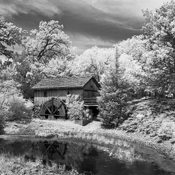
This was on Rollei Infrared, but 120 format in a Bronica S2. I just developed it in old fashioned D-76.
I don't remember the developing time, but I used the time indicated on the film box. The image itself was hand metered using an ASA of 6 with a generic 720nm filter.
I don't remember the developing time, but I used the time indicated on the film box. The image itself was hand metered using an ASA of 6 with a generic 720nm filter.
Attachments
- Joined
- May 13, 2011
- Messages
- 235
- Format
- Large Format
KevinW ,
thanks for your reply. I will keep in mind for the 120-RF---
the problem is 135mm -- with then kodak IR-135Mmm the camera was loaded in a darkbag,
I think I loaded the film in day light AND got the whole roll fogged BUT I do not remember how the film was put in the camera.
So should Rollei 135mm infrared be handled in total darkness ?????????????????????
the film was over developed - an other story....
thanks for your reply. I will keep in mind for the 120-RF---
the problem is 135mm -- with then kodak IR-135Mmm the camera was loaded in a darkbag,
I think I loaded the film in day light AND got the whole roll fogged BUT I do not remember how the film was put in the camera.
So should Rollei 135mm infrared be handled in total darkness ?????????????????????
the film was over developed - an other story....
Your camera's not equipped to read DX codes, is it?
- Joined
- May 13, 2011
- Messages
- 235
- Format
- Large Format
The camera is a Ciii 1935-Leica --- the problem is that the all the roll was fogged and as if exposed to light - so part could be over-developing but the sprocket area is exposed to light [Q:how & why]
the last 8 frames have been under exposed BUT but the sprocket area is exposed to light [Q:how & why]
there is no problem with the camera ....So the film pipped the light ?????
the last 8 frames have been under exposed BUT but the sprocket area is exposed to light [Q:how & why]
there is no problem with the camera ....So the film pipped the light ?????
Sirius Glass
Subscriber
Sirius Glass--For years I have used this 35mm film and the 120 film and developed in XTOL...
At what duration with XTOL && dilution ???
I use the stock XTOL solution and follow the replenish XTOL instructions. Using XTOL alone, counting the number of uses and adjusting the development time works well but that that is a more costly method.
Also, if you want to reply to a member use the @ sign before the names, as in @joho.
- Joined
- May 13, 2011
- Messages
- 235
- Format
- Large Format
@Sirius Glass
like this ????
like this ????

@Sirius Glass
like this ????
@joho ,
Yes.
And if they have the appropriate Alert function turned on, they will receive an Alert that someone is trying to attract their attention.
- Joined
- May 13, 2011
- Messages
- 235
- Format
- Large Format
So now my basic question for this thread do we have to load and unload Rollei 135mm infrared and be handled in total darkness????
it is not stated any where AND not on the info sheets for Rollei 135mm infrared be handled in total darkness.....
it is not stated any where AND not on the info sheets for Rollei 135mm infrared be handled in total darkness.....

Yes. It's a panchromatic film. It's sensitive to all light, and also a little to IR. You treat it like any other panchromatic film - handle in darkness.do we have to load and unload Rollei 135mm infrared and be handled in total darkness????
Note that there are some cameras (from the 1990s) that use IR for film transport; these may fog the film even if you handle it correctly otherwise.
Here's the spectral sensitivity of this film as included in the datasheet:
You can see it's sensitive to all visible light and also to UV. Visible light starts at around 400nm and extends to around 700nm.
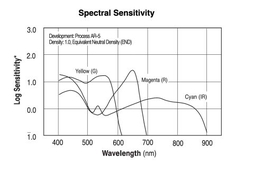
Uh....yeah. that's not really a meaningful comparison. The spectrum you posted is for Kodak EIR - Ektachrome Infrared, a no longer manufactured color slide film with extended IR sensitivity and false color rendition. The closest equivalent for this rollei B&W product would probably be Kodak HIE (also no longer made). As you can see, this also has a very different profile from the Rollei product. These are just all different products.spectrum of KODAK -infrared // there is a deference

For those who are interested: It's also possible do put the Rollei Infrared into a reversal process. I use to use a 720 nm filter.

Krickenbeck lakes between Germany and Netherlands: Zeiss Planar T* 85 mm f/1.4, Yashica FR I

Grain silo somewhere in deep France: Zeiss Distagon T* 25 mm f/2.8, Contax RTS II (I wonder why I messed up to hold the camera horizontally )
)
Of course, it's always a pleasure with fresh chlorophyll in the sunshine - but this is the way the film looks like if you do not handle it with care during the reversal process:
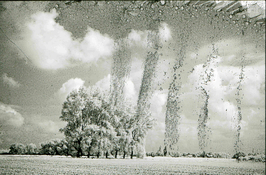
Canon nFD 35-105 mm / f/3.5-4.5, Canon New F-1.
- I use a rotating Jobo 1510 tank with about 220 ml of fluid
- Dokumol 1+7 with a bit of potassium iodide and potassium thiocyanate
- about 12 minutes first development at 20° C
- Handle with care!
 During and after the process the emulsion is extremely touch-sensitive, until it's dry.
 - It's a nice experience to watch these slides in the projector.
Krickenbeck lakes between Germany and Netherlands: Zeiss Planar T* 85 mm f/1.4, Yashica FR I
Grain silo somewhere in deep France: Zeiss Distagon T* 25 mm f/2.8, Contax RTS II (I wonder why I messed up to hold the camera horizontally
)Of course, it's always a pleasure with fresh chlorophyll in the sunshine - but this is the way the film looks like if you do not handle it with care during the reversal process:
Canon nFD 35-105 mm / f/3.5-4.5, Canon New F-1.
@joho, hopefully I can help you out a little bit. if I am understanding you correctly, you are assuming that this film is only sensitive to infra-red, or IR, light? Can you describe your process of loading and unloading the camera, and loading into the development tank? Did you have any lights on when loading into the development tank?
This film is a regular black and white film that sees all light. There are some films that do not see red, and that you can use red light with, but this is not that, it is the opposite, very sensitive to red.
Here is the sensitivity of the film, you can see the film is sensitive to all colors including IR:
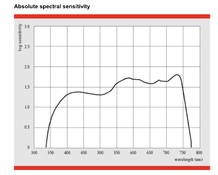
The film should be loaded into and out of the camera in dim light, because sometimes light can go into the film cassette through the very clear base this film has. That is called light piping, and although it can cause some pictures at the very beginning of the roll to have light leaks, it sounds like your issue is different.
Just like any other regular film, this film should be loaded into the development tank in complete darkness. Any light will ruin the film.
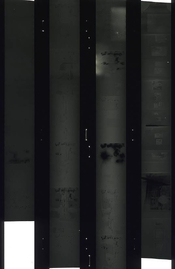
Do you have a picture of the roll of film you had trouble with.
This film is a regular black and white film that sees all light. There are some films that do not see red, and that you can use red light with, but this is not that, it is the opposite, very sensitive to red.
Here is the sensitivity of the film, you can see the film is sensitive to all colors including IR:
The film should be loaded into and out of the camera in dim light, because sometimes light can go into the film cassette through the very clear base this film has. That is called light piping, and although it can cause some pictures at the very beginning of the roll to have light leaks, it sounds like your issue is different.
Just like any other regular film, this film should be loaded into the development tank in complete darkness. Any light will ruin the film.
Do you have a picture of the roll of film you had trouble with.
- Joined
- May 13, 2011
- Messages
- 235
- Format
- Large Format
The film was almost 8 years in the camera, so, it is out-dated -- it was most likely over developed and double exposed !!
Attachments


| Photrio.com contains affiliate links to products. We may receive a commission for purchases made through these links. To read our full affiliate disclosure statement please click Here. |
PHOTRIO PARTNERS EQUALLY FUNDING OUR COMMUNITY:  |