

• Welcome to Photrio!
    Registration is fast and free. Join today to unlock search, see fewer ads, and access all forum features.
    Click here to sign up

Rodinal: dilution, agitation, minimum stock, time and contrast?

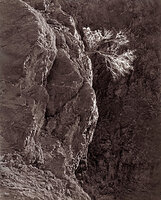
Bush on Canyon Wall

A
Bush on Canyon Wall

  • 0
  • 0
  • 0
double portrait

A
double portrait

  • 1
  • 0
  • 20

Recent Classifieds

Forum statistics

Threads
203,249
Messages
2,851,985
Members
101,747
Latest member
Tallphotographer
Recent bookmarks
0

hacked - sepiareverb

Member
Allowing Ads
Joined
Feb 17, 2007
Messages
1,103
Location
St J Vermont
Format
Multi Format
So I've read a bunch of the threads I found (granted I suck at searching), and as I'm dialing in ISO/development with the Adox and Rollei Pan and Ortho 25 films I'm running into higher contrast negatives than I want. My question is this: Is there a clear means of lowering contrast with Rodinal without losing shadow detail?

Example: I have excellent shadow detail on Adox Pan 25, but my negatives are printing at grade 0.5. Grade 2 is more normal for most of my negatives (HP5, PanF) Reducing time loses me shadow detail- as does reducing stock. I agitate 15 sec initial then 1 inversion per minute- so agitation is pretty minimal.

Thoughts?
 
I can't help with regular dilutions but have you tried stand developing for 1hr at 1:100 with one inversion at 30mins? Seems to work like magic for any and every film.
 
I have found in my somewhat limited (about 6 months) experiments using dilute Rodinal with infrequent agitation techniques, that a notable deal of "speed" goes down the toilet if you go over 1:100. If you are doing this, I'd overexpose as least one stop, and maybe more like one and a half or two would be better. I have been doing T-Max 100 with 1:100 semi-stand (5 minute intervals until a certain total agitation time has been reached), overexposing two stops (rating at 25 as a cheater way to apply across-the-board EC to the whole roll). Results have been very unique. Going to 1:200 didn't seem to do anything except kill even more low-toned detail and make the grain too coarse for what I wanted. I hear from Ian Grant here on A.P.U.G. that T-Max, if measured by Ilford's method, would end up being a 50 speed film, so if this is true, I am only overexposing one stop.

P.S. If you want to pull a good deal (more than three grades), but still want to maintain local contrast in shaded/dark/overcast areas, it is the best way out there, IMHO. Just be sure to use a very fine-grained film if you are not a fan of grain, because it really does jack up the grain a lot IME. I most often use this technique in: 1. night photography with lights (Neopan 100 Acros or T-Max 100), 2. landscape photography in which a large and detailed part of the shot is in shade, but "shafts" of sunny 16 light are also shining through illuminating certain parts of the scene (Pan F, T-Max 100, Efke 25, Rollei 25, Efke IR 820C, Rollei IR), 3. severely backlit shots in which I want detail in the foreground without the blocked up hightones "bleeding" into it, e.g. a sunset or an otherwise super-bright sky shot through a tree.
 
Last edited by a moderator:
You don't have to rate it at 12. Just rate at 25 and overexpose by a stop. :D
 
You don't mention a time used, but IIRC, the basic rule for semi stand is about 50% longer than agitation every minute, all else being the same.
I use Delta 400 with Rodinal 1:100, 75F, agitate a full minute to start, then 10 - 15 seconds every 4 minutes for a total of 19 - 24 minutes depending on subject contrast. Very nice and printable negs. The extended total time helps bring up the shadows, with the long agitation intervals holding back highlights (the principle of semi-stand)
It's probably worth trying something like this, add 50% to your existing time, keep temperature the same. You'll probably get something as usable as what you are getting now.
Oh, yeah, I rate the Delta 400 at 250.
 
Agitation is directly linked to contrast, especially so with Rodinal.
If you are shooting 120, and using steel reels, you might be able to agitate every 5th minute instead of every minute.
Some folks can get away with it, some can't. Don't know why.

If 35mm, you can agitate every 5th minute. Shoot at box speed, give limited agitation, and when your midtones are right, that's what you've got.

RODINAL is a powerful developer, which is why it can be diluted. The amount of dilution has little to nothing to do (directly) to the contrast.

RODINAL is also noted for strong highlights. Given typical agitation (10 seconds per minute) you will get brisk highlights in normal light, and scenes with light sources or bright highlights, they will be very bright indeed.

Photographers have been doing this for a hundred years, but misconceptions about what Rodinal really is have been part and parcel of Post Internet Photography.

Consider the most effective way to print negatives with high density highlights: use a low contrast paper developer and use fiber paper.

Selectol Soft / Ansco 120 is the basic soft developer. Ethol LPD is not a soft developer, but works extremely well with long range negatives, much better than Dektol.

Practise your searching skills: volumes have been posted here over the years.

Good Luck
 
Photrio.com contains affiliate links to products. We may receive a commission for purchases made through these links.
To read our full affiliate disclosure statement please click Here.

PHOTRIO PARTNERS EQUALLY FUNDING OUR COMMUNITY:


Ilford ADOX Freestyle Photographic Stearman Press Weldon Color Lab Blue Moon Camera & Machine
Top Bottom
