
• Welcome to Photrio!
    Registration is fast and free. Join today to unlock search, see fewer ads, and access all forum features.
    Click here to sign up

Ripples in EFKE R50 Emulsion

Recent Classifieds

Forum statistics

Threads
201,767
Messages
2,829,835
Members
100,936
Latest member
rdbirt
Recent bookmarks
0

nireaha

Member
Allowing Ads
Joined
Oct 10, 2006
Messages
3
Location
Sweden
Format
Medium Format
My first post on this forum so the formatting might be a bit odd.

I've not really looking for answers in this case; this is information I look for myself when I want to test a new film so I figured it might as well be stored here as anywhere else.

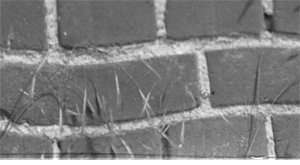
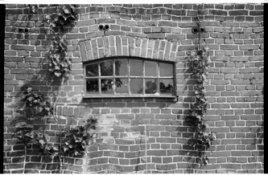
I developed my first two rolls of EFKE R50 a couple of evenings back and found that the emulsion had moved on the frames in the center of both rolls, leading to ripples in the images. Not quite what I had in mind. The frames at the ends of the rolls were OK though.

Developed in Rodinal 1:100 for 18 minutes at 21 degrees C with minimal agitation, then my regular stop-fix-wash cycle of around 25 minutes. The local supplier here in Sweden gave me the rather unhelpful answer that I should use another dilution of Rodinal to get a dev time of 8-10 minutes when I checked with them. I will try Rodinal 1:50 and probably test using a hardener, but I am not going to risk any important photos with EFKE until I've sorted the issue out. I've used Ilford films for several years with similar times in dilute XTOL without any such issues.

A lot of people seem to be using EFKE without any hassles so I might just have been unlucky, but two rolls of the two tested makes me a little wary.

I've uploaded a couple of images; one is of the entire frame and the other is a crop from the lower edge of the frame. It's one of my standard test images and the ripples show up well. Taken using my Kodak Medalist, modified to use regular 120 rolls on the supply side.

John
 

Attachments

  • all.jpg
    all.jpg
    63.6 KB · Views: 168
  • crop.jpg
    crop.jpg
    31.8 KB · Views: 161
  • Deleted member 2924
  • Deleted

Jerevan

Member
Allowing Ads
Joined
Nov 19, 2004
Messages
2,258
Location
Germany/Sweden
Format
Large Format
The Efke films, from my own experience, needs a bit of care. The emulsion is softer than other films, and you need to be gentle when the emulsion is still wet. I've gotten good results from the ISO 100 with Rodinal. If I remember correctly, I used times around 12-13 minutes with 1:50 dilution. As you are using Efke 50, you may need to back down on my development times to keep the contrast in check. You'll have to experiment a bit.
 

railwayman3

Member
Allowing Ads
Joined
Apr 5, 2008
Messages
2,816
Format
35mm
I, too, find that Efke films need more care when wet than more modern and hardened emulsions.

I believe that your problem has occured during processing...the image cast on the film by the lens must have been undistorted at that point, and I can't see that the emulsion surface would have been in any way "fluid" until it was wet.

(I had a similar thing happen when processing my first films as a young schoolboy many years ago.....I didn't realise the importance of things like temperature! :sad: )

But, given that your chemicals and time/temperature are not unusual, it could be that was some sort of one-off fault or "weakness" in the emulsion in the one area.
 

JPD

Member
Joined
Mar 24, 2007
Messages
2,170
Location
Sweden
Format
Medium Format
You didn't touch the emulsion when wet? Maybe a stupid question, but we have to rule that out.

The local supplier here in Sweden gave me the rather unhelpful answer that I should use another dilution of Rodinal to get a dev time of 8-10 minutes when I checked with them.
:rolleyes:
 

Alex Bishop-Thorpe

Advertiser
Allowing Ads
Joined
Jul 6, 2006
Messages
1,451
Location
Adelaide, South Australia
Format
Multi Format
Obviously a coating defect.
You should return all rolls of the same batch for a refund since it's highly probable that also those rolls will be affected.
Then I'd stop buying efke.

While Efke does have a history of coating defects, I don't think this is necessarily one of them. If there was a ripple when it was coated, then the image itself wouldn't have been contorted like that. To bend a brick wall, it's been affected at a point after exposure.
 
OP
OP

nireaha

Member
Allowing Ads
Joined
Oct 10, 2006
Messages
3
Location
Sweden
Format
Medium Format
The edges of the affected frames followed the ripples, even flowing over the edge of the film base at a couple of points. Given that the frames in the middle of the roll were most affected and that the ripples are vertical, my guess is that the emulsion expanded and made room for itself by squeezing together in the middle.

If I'd used stand development I might have expected something like this, but my times are only slightly longer than 'normal' times.

Interesting exercise at least. I won't be buying any more EFKE, but the rolls I have left will come in useful for testing cameras I've renovated ( I bought mail order so the postage cost makes returning them uneconomic ).

Thanks for your suggestions!

Cheers, John.
 

P C Headland

Subscriber
Joined
Mar 24, 2005
Messages
842
Location
New Zealand
Format
Multi Format
Even when I've stand developed Efke, I've not had any problems like this! My usual time / dev is 17 & 19 minutes with Rodinal 1+100 for Efke 25 & 100 respectively.

I can't imagine this being a coating defect - if it were, I'd expect the bricks to still be straight. I'd say the emulsion has shifted after the shot. How is the tension on the film (I'm asking seeing that you're using 120 in a 620 camera). Did you have any problems loading or unloading the reels during development.

I'd shoot another roll from the batch in another (120) camera. If that too has faults, then return the film for a refund.

The only problems I've had with Efke have been of my own making.
 

fschifano

Member
Allowing Ads
Joined
May 12, 2003
Messages
3,196
Location
Valley Strea
Format
Multi Format
This could still be a coating defect. How can you call it otherwise if the emulsion sloughs off the support when subjected to normal processing techniques? That's not supposed to happen. If it does, then something went wrong during manufacture.
 

Ian Grant

Subscriber
Allowing Ads
Joined
Aug 2, 2004
Messages
23,409
Location
West Midland
Format
Multi Format
I had this happen back in the 70's whe I first started using Adox films. The problem is EFKE films are not hardened like other manufacturers films and although there's a degree of hardening used now you can still get problems.

See Mirko's post in the Sponsors section. I'd add that it's essential to make sure ALL your processing steps including washing are carried out at the same temperature, preferably 20°C and kept within +/- 1° of this. Also air dry natually, don't heat dry

In the past (70's/80's) I used to add 2 or 3 drops of Formaldehyde solution to my developer just prior to processing, this hardened the emulsion, but in recent years the manufacturers improved the emulsion making this unnecessary. A Chrome alum hardening stop bath can be a useful precaution, particularly as most people don't use hardening fixers thse days.

With careful processing you shouldn't have any problems with the EFKE films, and in this case it's far more likely to be a temperature related processing problem than a coating/film fault.

Ian
 
Joined
Jan 21, 2003
Messages
15,715
Location
Switzerland
Format
Multi Format
I think Ian's advice is good, but Frank's suggestion is interesting too.
The second option would be to use a pyro developer, which somewhat hardens the emulsion during processing. If I was to use Efke films I would keep the wet time as short as possible. If the emulsion was hanging off the film base, then it could be either processing, or a coating defect, or a combination of both. I actually think that using a less dilute Rodinal, as advised by the Swedish dealer, was a good one.
The main question is - why are you switching from Ilford? Price? Here in the US it's a wash as far as price goes, and I'd much rather trust the quality of Ilford films than Efke. As gorgeous as the Efke film can be, getting consistently great results is worth the extra cash.

Just my 32cents.
 
OP
OP

nireaha

Member
Allowing Ads
Joined
Oct 10, 2006
Messages
3
Location
Sweden
Format
Medium Format
P C : I converted my Medalist to use 120 rolls on the supply side only and I've not had any tension issues with other films I've put through it. The first and last frames on the films are OK, the rippling increases toward the center then fades again.

Ian : Temperature was 21 degrees at all steps ( I am a little obsessive ) and films were air dried. I noted that the emulsion was rippled when I removed it from the tanks.

Thomas : I'd read all the warnings about high contrast so I figured I'd start with Rodinal at 1:100. Why I tried EFKE? Why not - after using Ilford D100, FP4+ and HP5+ in dilute XTOL for a few years I figured it'd be interesting to try something new.
 

Jerevan

Member
Allowing Ads
Joined
Nov 19, 2004
Messages
2,258
Location
Germany/Sweden
Format
Large Format
As an aside, the swedish prices for Ilford film is really high, while the Efke is at a midlevel price-point, whille Foma and Kentmere are comparatively cheap. Kodak prices are high also, but seems to be rather competitive and a good bit lower when you buy say 10 rolls, compared to Ilford. The prices from the swedish general agent for Ilford are hilarious and the margins on film sales at the dealers end is probably miniscule, which leaves little room for discounts to customers who buys a bigger lot of film.
 

Photo Engineer

Subscriber
Allowing Ads
Joined
Apr 19, 2005
Messages
29,018
Location
Rochester, NY
Format
Multi Format
While all of the above is true, what we see may also be a defect in the subbing which may have been applied by the manufacturer of the film support itself. So, don't be too quick to jump on the film manufacturer as the problem just might be outside of his control. And, if their test procedures are within their limits for agitation and temperature, the film would have appeared within specs to them.

PE
 

Ian Grant

Subscriber
Allowing Ads
Joined
Aug 2, 2004
Messages
23,409
Location
West Midland
Format
Multi Format
Have to admit all my Adox 25 now gets processed in Pyrocat HD now, as Thomas says it's a tanning developer so tends to harden the emulsion.

In the UK Silverprint sells Ilford films at a very good discount price for 10 rolls or more, this makes it cheaper than Adox for 120, and only a few pence a roll more than Fomapan.

Ian
 
Joined
Jan 21, 2003
Messages
15,715
Location
Switzerland
Format
Multi Format
Fair enough. Sometimes it's nice to shake it up a little.
With that said, I'm a firm believer in using one emulsion (maybe two) for consistency and to truly master film processing to suit your paper(s) of choice. So I try to challenge people's decision to change film choice when I can, because I like them to think about what they gained by switching.
But sometimes I go over-board, because I am all about vision and 'seeing' photography, and keeping it simple helps my efforts to be able to predict my results, while others thrive on using different films / processes / chemistry, and I sometimes forget to be empathetic toward that.

I hope everything turns out well for you.

Thomas : I'd read all the warnings about high contrast so I figured I'd start with Rodinal at 1:100. Why I tried EFKE? Why not - after using Ilford D100, FP4+ and HP5+ in dilute XTOL for a few years I figured it'd be interesting to try something new.
 

Chazzy

Member
Allowing Ads
Joined
Jan 17, 2004
Messages
2,942
Location
South Bend,
Format
Multi Format
If Efke films need a hardener, wouldn't it make sense to add the hardener to the pre-soak instead of waiting until the end of the process and using a hardening fixer?
 

Ian Grant

Subscriber
Allowing Ads
Joined
Aug 2, 2004
Messages
23,409
Location
West Midland
Format
Multi Format
You could use a pre-hardener as was used many years ago with some colour processes, but they were usually Formaldehyde based but if it's a one shot developer you can just add it to the developer.

Ian
 
Last edited by a moderator:

Chazzy

Member
Allowing Ads
Joined
Jan 17, 2004
Messages
2,942
Location
South Bend,
Format
Multi Format
You could use a pre-hardener as was used many years ago with some colour processes, but they were usually Formaldehyde based and if it's a one shot developer you can just add it to the developer.

Ian

Is there a commercial product available for this purpose, or would I have to brew up something myself?
 

Photo Engineer

Subscriber
Allowing Ads
Joined
Apr 19, 2005
Messages
29,018
Location
Rochester, NY
Format
Multi Format
Prehardener:

Sodium Sulfate 50 - 100 g/l
Sodium Carbonate 25 - 50 g/l
Formalin 30% 10 ml/l

pH to 10.1 with either 28% Acetic Acid or Sodium Hydroxide solution.

Use for 1 - 2 minutes at 68 F and then wash for 5 minutes before development.

I have been told that Glutaraldehyde or Succinaldehyde may be substituted but I have not tried that. They were both used in color processes at one time, but you had to use a neutralizer bath after the hardener.

Alternate (and less effective) prehardener;

Chrome Alum 10% in water

Use for 5 minutes at 68 F
Wash for 5 - 10 minutes at 68 F.

PE
 

Ian Grant

Subscriber
Allowing Ads
Joined
Aug 2, 2004
Messages
23,409
Location
West Midland
Format
Multi Format
I always used Formaldehyde, I bought a bottle of Formalin solution in the 70's and it's lasted a very long time, as you use 2 or 3 drops :D I did use it for emulsion manufacture & coating too.

Now it's reconded to be carcinogenic but back when I was a biologist (early 70's) we were exposed to rats & dogfish preserved in it and the smell was nauseous, the very small amount needed for photographic purposes pales heavily into insignificance.

Ian
 

PHOTOTONE

Member
Allowing Ads
Joined
Oct 30, 2006
Messages
2,412
Location
Van Buren, A
Format
Large Format
I don't understand what the stigma is about using a hardening fixer. I have used Kodak Rapid-Fixer w/Hardener for decades and my negatives of all types in all sizes are just fine. The only time I don't use a hardening fixer with film is if I am developing with a Pyro-type developer, and then I just use Rapid-Fix without the hardener. My first negatives from the early 1960's are just as fixed and unfaded as they were when I developed them.
 

Photo Engineer

Subscriber
Allowing Ads
Joined
Apr 19, 2005
Messages
29,018
Location
Rochester, NY
Format
Multi Format
Chrome alum isn't usually recommended as a pre-hardener athough it was once used in emulsions.

Ian

Chrome alum was used as a hardener in the following sequence in E1, E2 and E3.

First Developer
Rinse
Chrome Alum hardener
Rinse / re-expose
Color Develop
etc.......

Now, this is not a pre-hardener in the classic sense, but is pre-color development. :D I have used it as a pre hardener though in B&W processing. I have not evaluated its effects on image quality though, but it worked for me.

As for hardening fixes, that use Alum, I can say this:

1. You use it often after the damage has been done!
2. It can be reversed.
3. It is rather weak.

Another pre-hardener you can use contains Zircotan, but it is not very common.

PE
 

RobertV

Member
Allowing Ads
Joined
Mar 8, 2009
Messages
897
Location
the Netherla
Format
Multi Format
Is there a commercial product available for this purpose

RBM (Rollei Black Magic) Additiv dev. hardener. It's in a 250ml bottle which you can use for self made emulsions and for developing films on higher (tropical) temperatures.
 
Photrio.com contains affiliate links to products. We may receive a commission for purchases made through these links.
To read our full affiliate disclosure statement please click Here.

PHOTRIO PARTNERS EQUALLY FUNDING OUR COMMUNITY:


Ilford ADOX Freestyle Photographic Stearman Press Weldon Color Lab Blue Moon Camera & Machine
Top Bottom