
• Welcome to Photrio!
    Registration is fast and free. Join today to unlock search, see fewer ads, and access all forum features.
    Click here to sign up

Reversal Processing

Recent Classifieds

Forum statistics

Threads
202,080
Messages
2,834,749
Members
101,101
Latest member
howlingsun
Recent bookmarks
0

Joe O'Brien

Member
Allowing Ads
Joined
Apr 18, 2010
Messages
170
Format
Multi Format
I had a chemistry major walk into the darkroom today and ask me if I could help him get a black and white transparency from some fp4+ for a project he's doing with a physicist and a biologist. I told him I had an idea but I'd never done it before and I wanted to run it by some people, so, here I am. My plan was this:

Develop (regular time)
Rinse
Bleach (Potassium Ferricyanide 10g/100ml)
Rinse
Re-Expose
Develop (regular time)
"Stop" (we do a rinse cycle for this in the darkroom where I work)
Fix
Rinse
Hypo-clear
Wash
Photo-Flo

Does anyone know if this would be a viable technique? If it is, how long would I bleach for? And, would opening the developing tank for a minute or so under full room lighting be sufficient "Re-exposure"? I'm not looking to buy any other chemicals because as far as I know there is no money or other compensation coming to the darkroom budget from either of the scientists, or this student.
 

wildbill

Member
Allowing Ads
Joined
Nov 28, 2004
Messages
2,828
Location
Grand Rapids
Format
Multi Format
(there was a url link here which no longer exists)

there are a few articles on this if you search the box on your left.

ilford also has info on their site, at least they use to.
 

Photo Engineer

Subscriber
Allowing Ads
Joined
Apr 19, 2005
Messages
29,018
Location
Rochester, NY
Format
Multi Format
NEVER use a Ferricyanide bleach when intending to get a reversal image from a B&W film. You lose the image. You must use Dichromate or Permanganate! Also you must use clearing baths in the reversal process.

Good luck.

PE
 
OP
OP

Joe O'Brien

Member
Allowing Ads
Joined
Apr 18, 2010
Messages
170
Format
Multi Format
Thanks for the speedy responses guys,

@PE: What is a clearing bath?
 

Photo Engineer

Subscriber
Allowing Ads
Joined
Apr 19, 2005
Messages
29,018
Location
Rochester, NY
Format
Multi Format
A stop bath with sulfite present and intended to "clear" the film of any excess developer or bleach. See elsewhere on APUG or in Kodak instructions on this.

PE
 

holmburgers

Member
Allowing Ads
Joined
Aug 13, 2009
Messages
4,439
Location
Vienna, Austria
Format
Multi Format
Here is the procedure I have used (once), but it came out very well.

1. Dektol 2:1 + 5grams HYPO/L - 12 minutes, typical to high agitation.

2. Ilford Wash Sequence (5 changes w/ agitation, or thereabouts)

3. 2-part A/B bleach mixed right before use*, 1:1 - 5 minutes, high agitation
a) 1.4% Potassium Dichromate (0.7% in final solution)
b) 4% solution of 48% Sulfuric Acid (for a total of 1% concentrated sulfuric acid in final solution)

4. Ilford Wash Sequence

5. 10% Sodium Sulfite - about 4 minutes

6. Ilford Wash Sequence

7. Light exposure - unscientific, just inspected it under a 40 watt tungsten bulb and tried to shine as much light on it as I could for maybe 3 minutes or so.

8. HC-110 dil. B - 7 minutes

9. Ilford Wash Sequence

10. Kodak Fixer - about 4 minutes (shorter than average)

11. Final Wash, 15 minutes running water

*mixing before use, A/B style, isn't actually necessary with dichromate bleach. I borrowed this from a permanganate bleach formula before actually understanding it. Though mixing in this way might be safer.


I did a couple films: Delta 100 came out well @ EI 64, and TXP320 @ EI 160. Good luck!

Also, there's a thread called "reversal processing controls" or something like that, and I outlined a lot of points made by Haist in his book, and Wall & Jordan in theirs.

Your 1st dev should be "to completion", and in a fairly high contrast developer (print developers generally). Using the normal stated developing time for negatives will probably not result in pleasing positives. I recommend a dichromate bleach, which by all accounts is less trouble than permanganate. Also, a potassium dichromate bleach will last indefinitely, not true with permanganate. Use sodium sulfite to clear a dichromate stain, metabisulfite for permanganate (or so I've determined by trudging through many different formulas, and from insights from others)

I'm definitely not an expert on the topic, but hopefully that's helpful.
 
Last edited by a moderator:

Chris Douglas

Member
Allowing Ads
Joined
Apr 25, 2010
Messages
87
Format
35mm
Better go with the pros

I have had good results with plus x pan, using the formulas from Anchell's books. However, I had to under expose buy two stops the get best results. I shot the plus x at asa 500 and got good density in the transparancy.

If the film has been exposed at normal speed, maybe the pro labs know how to get good results. Good luck.

Best regards,
Chris
 

johnielvis

Member
Allowing Ads
Joined
May 21, 2010
Messages
966
Format
Medium Format
I do this almost exclusively--you need the dichromate or permanganate bleach

you don't need hypo clear---but do fix for normal time just to be safe---use stop bath BEFORE the fix step....do 2nd deveopment (I reuse the first developer since I don't put hypo in it--use very stron developer--d-19)...so you do 1st development...rinse rinse rinse rinse.....bleach....reexpose...clear (sulfite solution)...redevelop...rinse..STOP...fix (normal time for fixer)...wash...photoflo and hang it.
 
OP
OP

Joe O'Brien

Member
Allowing Ads
Joined
Apr 18, 2010
Messages
170
Format
Multi Format
Thanks everyone, I was really hoping to try this! Unfortunately when the chemistry guy found out that he'd need to put up more than $5 to get the chemicals he decided he would try and do it some other way. I can't say I was sad to see the back of someone with that attitude though. :sad:

I'm saving this thread though, when I get some time I'd love to try it this out!

@dr5, I told him about you guys and how you do amazing work, but when he found out that people don't just give away their services for free he decided to try something different.
 

John Austin

Member
Allowing Ads
Joined
Oct 2, 2010
Messages
519
Location
Southern For
Format
Large Format
I use the Ilford process with some modification for the Quinninup Kids Club LimoKino project using Ultrafine 100 bulk rolls

I follow the first development but replace the Pot Permanganate bleach with the Kodak Pot Bichromate bleach and I use a 1% sol'n of Sodium Sulphide re-development

The reasons for the changes are that I had the emulsion wash off the base on one test roll with the permanganate bleach and the second developer toning bath is quicker and the kids love the colour, which is sepia

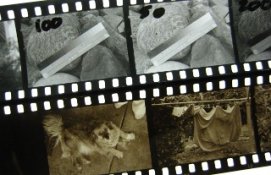
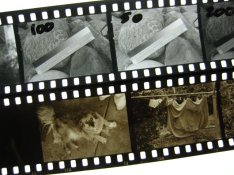
jbaphoto120206d1386.JPG

This pic is of early Nikon shot test rolls

For full info please PM me
 

Attachments

  • IMG_1386.JPG
    IMG_1386.JPG
    204.4 KB · Views: 195
Last edited by a moderator:

michaelbsc

Member
Allowing Ads
Joined
Dec 18, 2007
Messages
2,103
Location
South Caroli
Format
Multi Format
If it is an experiment, then go for it. If it is a *WAY IMPORTANT PROJECT* and you don't get a second chance, send it to Dr. 5.
 

BobD

Member
Allowing Ads
Joined
Dec 22, 2006
Messages
1,113
Location
California,
Format
Analog
Thanks everyone, I was really hoping to try this! Unfortunately when the chemistry guy found out that he'd need to put up more than $5 to get the chemicals he decided he would try and do it some other way. I can't say I was sad to see the back of someone with that attitude though. :sad:

I'm saving this thread though, when I get some time I'd love to try it this out!

@dr5, I told him about you guys and how you do amazing work, but when he found out that people don't just give away their services for free he decided to try something different.

At least he didn't ask you to shoot his wedding. :laugh:
 

John Austin

Member
Allowing Ads
Joined
Oct 2, 2010
Messages
519
Location
Southern For
Format
Large Format
Here is my current way to reverse ultrafine X100

REVERSAL PROCESSING OF BLACK AND WHITE FILM

John Austin
Quinninup, Western Australia 6258
Dead Link Removed

Reversal processing of Ultrafine X 100 in a mix of Ilford Applicaton Sheet Reversal Processing Sept' 2003* and Kodak Professional Data Book J-1 p80 with the addition of ID36 developer from the Ilford Manual of Photography 1971 and reference to British Journal of Photography Almanac 1954

Ultrafine X 100 bulk roll film is used because it is the cheapest film I can find

Cookery Book

ID36
Metol 3g
Sodium sulphite anhd 50g
Hydroquinnone 12g
Sodium carbonate anhd 60g
Pot bromide 4g
Water to 1000ml

For use the developer is diluted and Hypo, Sodium thiosulphite added. This developer is retained for the second development

Kodak Bleach R-9
Water to 1000ml
Potassium dichromate 9.5g
Conc' Sulphuric acid 12ml - Observe precautions

I use this Kodak bath as the Ilford permanganate bath sometimes softens the emulsion to the point where it washes off the backing

Kodak Clearing Bath CB-1
Sodium sulphite 90g
Water to 1000ml

Alternative sepia toner fogging and redevelopment bath
Sodium sulphide 50g
Water to
1000ml

Exposure
By some odd quirk I found the best ASA setting to be the 100asa marked on the Ultrafine film box, but note that exposure is critical as there is no option for correction with printing paper grades or exposure

First development
Like exposure, development time and hypo addition will have to be fine tuned after your first test roll
First development for my darkroom is 12 mins 20°C in ID36 1+3 water plus 6g/Ltr of Hypo, Sodium thiosulphite
Retain the first developer bath for the second development

Stop – wash
Ilford recommend a 2 minute wash in running water at 20°C

Bleach
Use Bleaching bath for 6 minutes at 20°C. Use continuous gentle agitation. After about 30 seconds the lid of the tank may be removed and the rest of the process continued in normal room light. During this process all of the reduced silver should be dissolved out of the emulsion

Second wash
Second wash as first wash but continue until almost all of the orange colour has been removed

Clearing bath

2 minutes with gentle agitation, the emulsion at this stage is very vulnerable to surface damage

Third wash
Two minutes gentle but thorough washing
Fogging exposure for ID36 development
Expose the film for at least 1 minute about 1 meter away from a 60w tungsten lamp. An alternative is to use transparent reels and expose the film under water in the dev' tank, but give a bit longer in this case

Second development
2 minutes in the saved ID36 plus Hypo

Fixing and hardening
Ilford recommend fixing the film, but I do not see the point in this unless a hardening fixer is used. I use a Ilford Hypam Hardener at normal strength, but without the fixer

Alternative second development using Sodium sulphide
Re-develop in Sodium sulphide sepia toner bath for 2 minutes. I have read that Kodak odourless sepia toner will work, but for me it did not. The bottle of sepia toner used was purchased fresh in 1981. When using sepia toner second development the fogging exposure in not necessary

Wash and dry
Wash with a gentle flow of water for 20 minutes. Remove film from reel with great care and hang to dry without wiping or using a squeege, if necessary use a wetting agent

Notes,
1. This is the process I have found works well with the Ultrafine film, however, tests will have to be done and if your images float into the the final wash water start all over again, like me
2. Sodium sulphite is used as the clearing bath with Pot dichromate, for Pot permanganate bleach use the original Ilford Sodium metabisulphte bath
3. The sepia toner redevelopment is an alternative to the original Ilford redevelopment process and obviates the need for a fogging exposure, I offer this as an easier alternative. The disadvantage of this process is that as it lacks the hypo added to the ID36 developer which helps to keep the highlight clear, so sepia toned slides are slightly veiled
4. Kodak also offer an alternative to re-exposing the film, but this uses chemicals I have never seen or ever read about before so is probably not in your normal photo-chemical suppliers catalogue

© John Austin, 2012
 

mrred

Member
Allowing Ads
Joined
Mar 8, 2009
Messages
1,251
Location
Montreal, Ca
Format
Multi Format
John, I'm not sure why the copyright is there as your formulas are clearly (and stated) from other sources....

Your second developer should not contain hypo. It is developing what needs to become high density and the hypo is stripping that away. Any other developer will do, given enough strength and time. I use Dektol 1:4.

I found that reducing the concentration of the bleach and clearing avoided the gel from floating off the film. I would try half strength and down from there.

It is great to see you with results. Did you know you can use the same process to print?
 

John Austin

Member
Allowing Ads
Joined
Oct 2, 2010
Messages
519
Location
Southern For
Format
Large Format
Thanks Mrred,

The copyright thingie is from the pdf version for Quinninup Kids Club, it refers to the whole document, of which the reversal bit is at the end

The original Ilford document, Ilford TI206 3/86 (which I first used in the 1972 version) stated using the first dev' for second dev use ". . .the hypo in this developer helping to give clear highlights." - Now I read the downloaded new version it says to use a freshly mixed dev' solution - I will try this tomorrow unless it is too hot again - I get into too much trouble if all the gin & tonic ice has been used in the darkroom in hot weather, when my priorities are called into question

I will see what happens
 
Last edited by a moderator:

A_Caver

Member
Allowing Ads
Joined
Jan 13, 2011
Messages
20
Format
Multi Format
Alternative to light for re-exposure

For the reversal, try the following bath of 2 minutes instead of light:
Water 1L
HCl 37% Solution 1ml
SnCl2 1g
It is important to make the solution acidic prior to adding the SnCl2, otherwise you will get Sn(OH)2 which is not water soluble.

I have used this in some reversal processing I am working on. I think Acetic Acid can also be substituted, but I have not worked out the amount for this.
 

mrred

Member
Allowing Ads
Joined
Mar 8, 2009
Messages
1,251
Location
Montreal, Ca
Format
Multi Format
For the reversal, try the following bath of 2 minutes instead of light:
Water 1L
HCl 37% Solution 1ml
SnCl2 1g
It is important to make the solution acidic prior to adding the SnCl2, otherwise you will get Sn(OH)2 which is not water soluble.

I have used this in some reversal processing I am working on. I think Acetic Acid can also be substituted, but I have not worked out the amount for this.

The articles I read was to make the SnCL2 part of the second developer. Check this thread out. (there was a url link here which no longer exists)

Having a seperate solution to do that could be handy. How many uses could it get?
 

mrred

Member
Allowing Ads
Joined
Mar 8, 2009
Messages
1,251
Location
Montreal, Ca
Format
Multi Format
Thanks Mrred,

I get into too much trouble if all the gin & tonic ice has been used in the darkroom in hot weather, when my priorities are called into question

It makes an interesting chemistry class!


On the note of the strength of your bleach.... You only need it string enough to clear the developed silver. I use 6g / liter of Dichromate. It has reduced the amount of image floating down the drain.

I also use a reduced clearing bath. I use 30g/ liter of sodium metabisulfite. The indicatorcator is black spots in the highlights. This is actually chrome deposits from the bleach. First fix would to ensure thorough wash before the flash is done and if still a problem, increase time in the clear.

If the clear has any more than a slight change of colour, you need more washing on the bleach stage - there is too much bleach carried over.
 

Photo Engineer

Subscriber
Allowing Ads
Joined
Apr 19, 2005
Messages
29,018
Location
Rochester, NY
Format
Multi Format
Stannous Chloride reversal baths go bad rather quickly and therefore if mixed with developer would reduce the lifetime of the developer. If you have softness issues, it is fair to add a Chrome Alum or Aldehyde hardening bath before the bleach and if you do, surround it with good washes.

PE
 

johnielvis

Member
Allowing Ads
Joined
May 21, 2010
Messages
966
Format
Medium Format
I've been using longer bleach times and more dilute bleach these days---no more than 2g/litre of dichromate and like 3' bleach times.... any less than 2g/l and you start to get chemical exhaustion problems--it still works, but the times go WAY up...3' is about my limit of bleach times.

anyways--never had an emulsion peel off with that brew yet.
 
Photrio.com contains affiliate links to products. We may receive a commission for purchases made through these links.
To read our full affiliate disclosure statement please click Here.

PHOTRIO PARTNERS EQUALLY FUNDING OUR COMMUNITY:


Ilford ADOX Freestyle Photographic Stearman Press Weldon Color Lab Blue Moon Camera & Machine
Top Bottom