
• Welcome to Photrio!
    Registration is fast and free. Join today to unlock search, see fewer ads, and access all forum features.
    Click here to sign up

Results with high contrast film rotary processed in dilute Rodinal

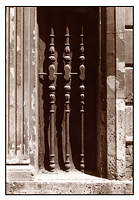
sentinels of the door

A
sentinels of the door

  • 3
  • 0
  • 30
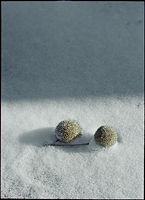
Sycamore Fruits

H
Sycamore Fruits

  • 0
  • 0
  • 21

Forum statistics

Threads
201,696
Messages
2,828,696
Members
100,894
Latest member
picpete
Recent bookmarks
1

ic-racer

Member
Joined
Feb 25, 2007
Messages
16,719
Location
USA
Format
Multi Format
A while back I put together a method to use 100:1 Rodinal with a Jobo rotary processor. http://www.largeformatphotography.info/forum/showthread.php?t=23322

I have done about 75 rolls of film with that method and have obtained consistent results. I'm still fine tuning a coefficient to help predict development times as the number of rolls increase (if you haven't read the above link, the technique involves 7 or 8 changes of the dilute developer during the course of development).

I recently applied this technique to some high contrast, fine grain film and have been getting pretty evenness of development. Just for kicks I did rotary process a roll in some technidol as a comparison. As expected the edges were denser than the center of the film and the negatives were essentially unprintable.

I thought I'd share some of my experiences getting this film to behave. Obviously there are a number of ways to do things, but I wanted a process that let me 1) Rotary process and 2) use chemicals already available in my darkroom. So these resullts are pretty specific to my own way of doing things.
 
OP
OP
ic-racer

ic-racer

Member
Joined
Feb 25, 2007
Messages
16,719
Location
USA
Format
Multi Format
First I tried t-max developer and at a nominal time of around 5 minutes at 24 degrees, the negatives were way too contrasty. The 'gold standard' is how the negatives print. I also check contrast with a step wedge exposure. (gamma around 1.0)

I got to 3 minutes and it was still too contrasty.(gamma around 0.8)

Next I tried hypothermia and I cooled the Jobo to 20 degrees with tap water. Negative contrast was pretty good but time was still pretty short at 3 minutes.

Then I tried cooling way down to 16 degrees. This, by the way required all the ice in my refrigerator icemaker (placed and re-placed in the 6 jobo bottles). Ice was needed as my tapwater is only 20 degrees or so.

The 16 degree process gave good negatives. Nice even development, reasonable speed (ei 12 - 25) and a reasonable time of 4 minutes. Cooling way down to 16 degrees was extremely cumbersome. I have about 400 feet of this film to shoot and process and dealing with the ice was a pain.

Then I tried to 'dilute Rodinal' method that I had previously worked out. It involves 7 or 8 changes of dilute developer during the 'development' cycle. For example 1 roll of film will be processed in 1 liter of developer which has 10cc of Rodinal added. The tank holds 140cc, so multiple exchanges are used to pass all the developer across the film (a spread sheet calculates all the dilutions and change times for me).
 
OP
OP
ic-racer

ic-racer

Member
Joined
Feb 25, 2007
Messages
16,719
Location
USA
Format
Multi Format
Here are some curves showing my initial testes (higher gamma curve) and the results of about 4.5 minutes at 24 degrees (lower curve). This worked out very well and the negatives are pretty nice.

I was a little concerned about that hump in the curve, but it got less pronounced at the lower gamma.

FilmCurvewithHump.jpg
 
OP
OP
ic-racer

ic-racer

Member
Joined
Feb 25, 2007
Messages
16,719
Location
USA
Format
Multi Format
Here is a scan of a print from one of the negatives. This image did required dogging and burning, but it did not seem any worse than a continuous tone film.

IMG.jpg
 
OP
OP
ic-racer

ic-racer

Member
Joined
Feb 25, 2007
Messages
16,719
Location
USA
Format
Multi Format
Fine tuning. These two pictures gave me an idea. The negatives both were processed to the same gamma. The first one was a single roll, 140 cc, at 4.5 minutes. The second one was from 4 rolls together (470cc) for about 7 minutes. The additional time to exchange 470cc of developer 8 times accounted for the need to increase the overall time.

The sprocket hole marks are less pronounced on the roll that was processed with 3 others.

One theory is that the time the film sits without contact with developer is longer with the 4 rolls (additional filling/emptying time) and this somehow evens out the development process. I don't know but I want to try the single roll (140cc) at 7 minutes with a 25 or so second 'pause' in between developer exchanges.

Of course these sprocket holes marks can have a random nature to their appearance and may have nothing to do with what I just mentioned above. Therefore I may have little or no control over their presence :smile:.

IMG_0002-1.jpg

IMG_0001.jpg
 
Photrio.com contains affiliate links to products. We may receive a commission for purchases made through these links.
To read our full affiliate disclosure statement please click Here.

PHOTRIO PARTNERS EQUALLY FUNDING OUR COMMUNITY:


Ilford ADOX Freestyle Photographic Stearman Press Weldon Color Lab Blue Moon Camera & Machine
Top Bottom
