
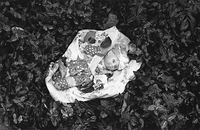
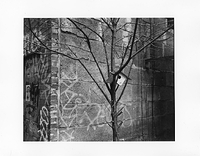

I was reading through an old photography manual issued by the US Air Corps / War Department in July 1941, and came across the section about reticulation:
Can anyone clarify for me what this does (how it works), particularly the part involving fire?

Is there some characteristic about the fire that this process needs? For what it is worth, this book seems to assume the availability of at least modest darkroom equipment, so I would think that more conventional drying methods would be available. In other words, this isn't a "developing film in your helmet while being shelled in the trenches" book.
(3) Remedy. - Keep all solutions cool and at uniform temperatures. Under tropical conditions, use a concentrated developer and short development. The reticulation effect may sometimes be removed by placing the negative in a 10 percent solution of formaldehyde for a few minutes and drying in front of a fire. Use ample ventilation in drying negatives.
Can anyone clarify for me what this does (how it works), particularly the part involving fire?
Is there some characteristic about the fire that this process needs? For what it is worth, this book seems to assume the availability of at least modest darkroom equipment, so I would think that more conventional drying methods would be available. In other words, this isn't a "developing film in your helmet while being shelled in the trenches" book.


