
• Welcome to Photrio!
    Registration is fast and free. Join today to unlock search, see fewer ads, and access all forum features.
    Click here to sign up

Recommendation needed: B&W developer for low speed film

Recent Classifieds

Forum statistics

Threads
203,202
Messages
2,851,257
Members
101,720
Latest member
LeahPFL
Recent bookmarks
0

jzhu

Member
Allowing Ads
Joined
Mar 5, 2009
Messages
18
Location
Ottawa, Cana
Format
Medium Format
I am plan to try some slow speed B&W films.
I have the following list:
1. Ilford Pan F 50
2. EFKE 25
3. Rollei Pan 25

However, I am not sure what developer should I use for these films. I am also not sure about the development time for these film, cause there are so many versions online. I am looking for some recommendation for B&W developers and developing time for these film.
By searching the Internet, Diafine looks like the easiest way to develop these films. Only need 3 mins in two develop bath. Anyone have good results using Diafine? Any other Suggestions? What about stop bath and fixer?
Hope someone can give me some hints, and helps on this.

Many Thanks in advanced.
 
For 1. search for PanF and Rodinal. There aren't many combos here on APUG that most agree on but Pan F and Rodinal seems to be one of them.

pentaxuser
 
Aculux works really nicely with Pan-F. I haven't tried it with the other two films. I use the Paterson times, more or less. I think the Paterson time with Aculux-3 is 5min 30. I've used 6 minutes before which has been fine, too.
 
Xtol or D-76/ID-11 will do a great job with any of the above.

Start with the manufacturers' recommended development times in these developers, and adjust as needed--which is the same advice always given whenever someone asks about development times here.
 
I highly recommend Rodinal diluted 1:50 for these slow films. The tonality Rodinal offers in unmatched from other developers. If not Rodinal then definitely as Mike suggests, Xtol or D-76/ID-11 diluted 1:1. As far as development times, I'd find times on http://www.digitaltruth.com/devchart.php. Then subtract 10% from their recommended time as a starting point.

BTW.. if you do go with Rodinal, be careful not to agitate too much. I'd recommend agitating for the first minute then one or two gentle inversions every minute.
 
Thanks guys, I will keep your comments in mind. Since the solution available in local store is very limited. I guess I will start with Xtol or D-76/ID-11 diluted 1:1. Also, I may order Rodinal from US later. I guess I will figure out the time once I get hands on it.
 
For these films, any b/w developer will work. But due to their high contrast, I would suggest a somewhat "standard" or "mild" or "old-school" developer at first. T-Max and X-Tol will be great for the shadows, but may push your high tones a bit far if you don't dial everything in. These developers are "improvements" over the older stuff in a technical sense, but as such, can be more technically demanding and harder to work with in my experience. Not that I don't like them, but I would start with D-76 or D-23 and see if you like the films at all. Afterward, maybe experiment with other developers. Rodinal, especially if highly diluted, must make these films look INSANE! Even highly diluted HC-110 makes them look rather NUTS!, and it has a healthy amount of silver solvent, while Rodinal has none, to my knowledge.

IMO, the best general answer to any "which developer for this new film" question would be, "Whatever developer you are most familiar with, and preferably already have on hand." That will let you better compare the differences between the new films you are trying and the ones you have already tried using that developer.
 
Last edited by a moderator:
Xtol or D-76/ID-11 will do a great job with any of the above.

Start with the manufacturers' recommended development times in these developers, and adjust as needed--which is the same advice always given whenever someone asks about development times here.

I'd suggest D76 / ID11 as a one size fits all, solid all rounder that is a known quantity, unless you are looking for a more specific look such as that given by products such as Rodinal
 
Just for my own interests, and when using these films, why would one want to use a solvent developer instead of a non-solvent one? What is the tonal range when using something such as D76, being that it's more or less considered a standard by which to judge films.
 
If there specific reason to reduced the development time by 10%?

I find, and I think most will agree that development times posted on the internet and especially by manufacturers seem to be a bit too much. Better to underdevelop than overdevelop. Some will disagree. But for your first time developing I recommend reducing development time 10% then go from there, especially with Rodinal, which runs hot anyway.
 
Just for my own interests, and when using these films, why would one want to use a solvent developer instead of a non-solvent one? What is the tonal range when using something such as D76, being that it's more or less considered a standard by which to judge films.

Wayne, I would recommend non-solvent developers for slow, fine grain film. Using a solvent developer makes slow films look mushy. Obviously everyone has their own opinion. Even though D-76/ID-11 and Xtol are solvent developers once diluted to 1:1 and especially at 1:3 they act more like non-solvent developers. This would be a good starting point.
 
Thanks guys for all the suggestions. It will take me a while to understand your discussion.

Accidentally, I found Rodinal in a local store, so I guess I will try rodinal 1:50 first. The question for now is: How many Rodinal is needed for one roll of 120 film?
 
>How many Rodinal is needed for one roll of 120 film?

Enough to cover the film in the developing tank. Typically 500 ml. That means 10ml Rodinal and 490 ml of water. Or 10 + 500, to give 510 ml total. It won't make any functional difference which ratio you use.

As mentioned above, keep the amount of agitation down, or the contrast will be strong, with little of the silvery mid-tones that most people find appealing. I agitate three times in the first minute, then once each three minutes.

See http://www.digitaltruth.com/devchart.php for developing times, and realize that some experimentation is almost always necessary to zero on the development results that you like.

Keep a notebook. And good luck. [Larry in Kingston, Ont.]
 
Thanks larry. However, my developing tank only holds around 500ml liquid. So with 510ml total solution, I won't have much space left in the tank. Is that ok? or can I get away with 9+450?
 
Wayne, I would recommend non-solvent developers for slow, fine grain film. Using a solvent developer makes slow films look mushy. Obviously everyone has their own opinion. Even though D-76/ID-11 and Xtol are solvent developers once diluted to 1:1 and especially at 1:3 they act more like non-solvent developers. This would be a good starting point.

Newbie question. What is the difference between a 'solvent' and 'non-solvent' developer? Why are there two kinds and how does each act on the emulsion?
 
Newbie question. What is the difference between a 'solvent' and 'non-solvent' developer? Why are there two kinds and how does each act on the emulsion?


Short answer:

A solvent developer contains one or more chemicals that dissolve the edges of the silver grains, giving the appearance of less grain. A non-solvent developer does not contain these chemicals, so grain is more apparent.

Long answer, I will leave up to the chemical engineers.
 
  • Deleted member 2924
  • Deleted
... can I get away with 9+450?

You can get away with 4.5 + 445.5. I don't use Rodinal but the
many posts I've read indicate about a 3ml bottom limit.

If I were using D-76/ID-11 I'd likely go 1:7. I use a reduced
sulfite D-23 at that dilution and like the results. Lots of
compensation and the film's full speed. Dan
 
For Rollei Pan 25, Pan F+ and Efke 25 you can use each High Definition and high acutance developer.

Some good examples:
Rodinal 1+50 (or even higher in dilution)
Beutler developer (Tetenal Neofin Blau), Metol based
AM50 (Amaloco) high definition pyrocatechine, non staining

I just was finding out a replacement for AM50 due to the fact this Amaloco developer is discontinued and Neofin Blau/Blue is rather expensive.

So I tried the Beutler original fomulae after some specific recommendation and information from Tom A. (from the RF Forum) who has a lot of Beutler experience.
It's a very easy to make yourself developer which is for me a perfect replacement of the AM50.

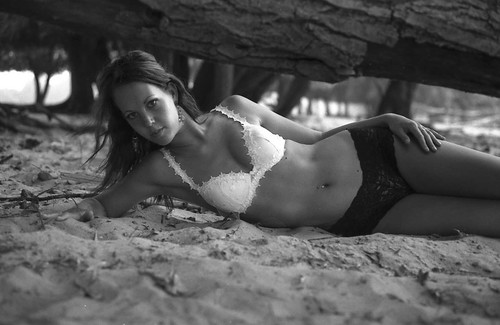
Here an example of Rollei Pan 25 in AM50 1+29:

205627285_d513bda112.jpg


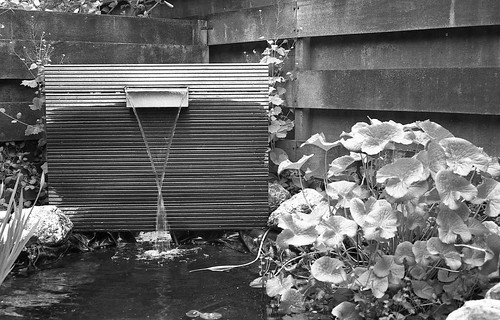
and here an example of Rollei Super Pan 200 in Beutler 1+1+10:

3515286382_2993101e4c.jpg


Both images shot with the M7+Summicron 2,0/50mm

The Fomulae:
Solution A:
1g Metol
5g Sodiumsulfite
fill up till 100ml (water).
Solution B:
5g Soda (Sodiumcarbonate)
fill up till 100ml (water)

Beutler produces a raisor sharp image with acceptable grain. In the 50's the Beutler formulae was very often used on the Dr. Schleussner/Adox films, with are the actual Efke 25-50-100 single layer films from now.

Some pricing (in the Netherlands):
Tetenal Neofin Blau/Blue 5 small bottles / 5-10 films: Eur. 11,50
Amaloco AM50 60ml (for 3-4 films): Eur. 2,70
Rodinal 500ml (for at least 50 films): Eur. 12,00
Beutler see above receipt : Eur. 0,05 / film
 
Last edited by a moderator:
nothing else to suggest.

D23

regards
dw


I am plan to try some slow speed B&W films.
I have the following list:
1. Ilford Pan F 50
2. EFKE 25
3. Rollei Pan 25

However, I am not sure what developer should I use for these films. I am also not sure about the development time for these film, cause there are so many versions online. I am looking for some recommendation for B&W developers and developing time for these film.
By searching the Internet, Diafine looks like the easiest way to develop these films. Only need 3 mins in two develop bath. Anyone have good results using Diafine? Any other Suggestions? What about stop bath and fixer?
Hope someone can give me some hints, and helps on this.

Many Thanks in advanced.
 
The Fomulae:
Solution A:
1g Metol
5g Sodiumsulfite
fill up till 100ml (water).
Solution B:
5g Soda (Sodiumcarbonate)
fill up till 100ml (water)

Beutler produces a raisor sharp image
with acceptable grain.

I've used a 1-3-3 formula with film. That's an Ansco 120
print developer formula ratio minus the 120's bromide.
I break all formulas into ratios. FX-1, 1-10-6.
Beutler, 1-5-5. Dan
 
Very good Dan, never thought of it that way. Makes sense and allows quick mental comparisons of Beutler type devs.
I always lump them together but that way seems more informative as to the probable outcome.
Thanks.
Murray

I've used a 1-3-3 formula with film. That's an Ansco 120
print developer formula ratio minus the 120's bromide.
I break all formulas into ratios. FX-1, 1-10-6.
Beutler, 1-5-5. Dan
 
I've used a 1-3-3 formula with film. That's an Ansco 120
print developer formula ratio minus the 120's bromide.
I break all formulas into ratios. FX-1, 1-10-6.
Beutler, 1-5-5. Dan

Dan,

Does 1-3-3 mean 1 Solution A, 3 Solution B, and 3 water?
 
Diafine will probably work fine. I've seen some excellent Pan-F work developed in Diafine. But to get to know the film, I would recommend using one of the developers the manufacturer recommends for the film, particularly if you already have experience with it. D-76/ID-11 (usually 1+1) is frequently one of the recommended developers. Once you know how the film works with the standard developer, you can experiment with others and have some basis for comparison.
 
Photrio.com contains affiliate links to products. We may receive a commission for purchases made through these links.
To read our full affiliate disclosure statement please click Here.

PHOTRIO PARTNERS EQUALLY FUNDING OUR COMMUNITY:


Ilford ADOX Freestyle Photographic Stearman Press Weldon Color Lab Blue Moon Camera & Machine
Top Bottom