
• Welcome to Photrio!
    Registration is fast and free. Join today to unlock search, see fewer ads, and access all forum features.
    Click here to sign up

rate of printing

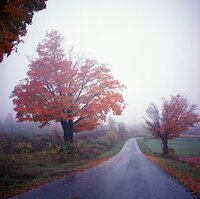
Rainy Day Trees

A
Rainy Day Trees

  • 5
  • 1
  • 72
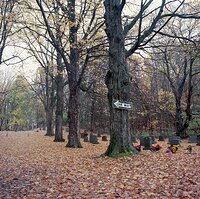
One Way

A
One Way

  • 3
  • 1
  • 68

Forum statistics

Threads
203,153
Messages
2,850,658
Members
101,702
Latest member
Guido Bee
Recent bookmarks
0

Neil Grant

Member
Allowing Ads
Joined
Jan 30, 2007
Messages
563
Location
area 76
Format
Multi Format
I have just got my wet darkroom 'up and running' for printing. It's quite cold and I've decided to work with the current room temp (about 60F), rather than try to warm up the processing chemicals.
As of necessity, my processing times are longer than I'd use for a temperature of 70F, and no doubt this is contributing to a fairly miserable printing rate of about 2 negs per hour. I'm lucky to have a
small Durst roller dryer for resin coated papers, so I'm not surrounded by acres of wet paper. Just wondered what rate everyone else was achieving?
 
I'm impressed, I only get most of one print in one session. Some times it takes two or more sessions to get an acceptable print, and another to tone.
 
I use RC paper and the temperature of my temporary darkroom is about 22 C (70 F approximately). When I know my negatives are good (meaning not too dense, nor too thin) I can manage 3 or 4 prints per hour. But that is ideal situation, many times is less than that. Printing 2 negatives per hour (properly) sounds very good to me.
 
I solved the temperature issue by purchasing a small space heater with an actual temperature readout. It's small, but I turn it on when I come home from work and the room (and more importantly, the chemicals and countertop the trays sit on) are at 68 and stable when I'm ready to work in the darkroom later that evening.
 
Yes, I agree if printing something special on FB, and toning, not much more than 2 prints hour, but if I am printing off straight prints which don't need setting up/burning in etc, I can get up to 6/hour. With RC, I quite often have a neg printing in the enlarger, when the one before is in the fix. When using FB I can only dry 2 9x12 or 4 8x10 max anyway because I tape down to glass. I use a RHD Analyser Pro and 90% of the time with properly exposed negatives the analyser gives me a decent exposure/contrast straight off and the first print is good. Sometimes, of course I see the first print and have to tweak settings to improve it. I never make test strips. I probably burn 10%-20% of paper to waste in total. The rest makes keepable prints (although not all are that good photographically, of course! :laugh:).

Don't know about others but I find my darkroom sessions vary; sometimes I just want to churn out some prints from a particular film onto RC, other times I take ages fiddling to get the best image I can. Also, sometimes everything drops in to place like clockwork, sometimes everything is cack-handed. I think the slowness of printing is part of the long-term attraction. I usually print a handful from each film, but the un-printed are a huge resource to go back to in the future, and discover something for the first time.
 
I hardly ever manage to print more than two prints in one session.
 
If you are spending more than 5 minutes in the developer, consider using a tray heater.
 
One 8x10 fibre a weekend typical neg ie not straight.
And a box in recycle bin
 
The idea is to create a great print and enjoy what you are doing. That is, unless you are doing commercial work. Time doesn't matter - in fact, as I understand it, time in the darkroom doesn't count against your life's allotment.
 
sometimes it takes me an hour a print, sometimes less,
it depends on the print ... and the way you want to interpret the negative.
i have a few prints that took me days to print ... and others that i just machined out.

if your tray of developer is cold, get a bigger tray and fillet with warm water and make a water jacket.
do the same thing to your fixer and stop bath. i have a water-wash tray that i drilled holes into so when i use
it as a water jacket, it doesn't raise my chemical trays ..

good luck !
 
If you are spending more than 5 minutes in the developer, consider using a tray heater.

I've standardised on 3min at 60F to ensure completion. In the Summer, when the darkroom gets warmer I'll try to get closer to 2 min. Just a quick note on rates: when our in-house photography studio
was film-and-print orientated the print darkroom had 4 enlargers and an Ilfospeed 2240 roller transport - which did dry-to-dry in 70 secs. On a good day we could hope to do 10 negs per hour, per enlarger
- though it was really only possible to keep two 'going' at once. Of course, things have all gone digital these days. Home printing seems very slow by comparison but it's great to get away from the medeiocre scan and inkjet way of doing things.
 
Get a tray warmer print developers don't work well at low temperatures. Also prints shouldn't be developed to completion.

I normally print about 4 different exhibition prints an hour, when I did D& P work I'd hand print a 6x6 120 film in under half an hour - you learn how to judge exposure and filtration without test strips quite quickly.

Ian
 
While I can make two good prints an hour, I am now reluctant to do so. I find that if I focus on a single negative when I go into the darkroom, my output is much higher quality.

It takes me 30 to 90 minutes to get everything the way I want it. Then there is toning and archival washing ahead. Most of my prints are toned in two toners, thiourea and selenium, and with wash in between total production time for one single print is about 3 hours. But usually I will save prints and then tone many at once, which cuts back a lot on water consumption, and it also helps with consistency in toning.
 
deadline

I once worked for a wire photo service who had the motto "a deadline every minute." This meant that somewhere in the world some publication had a deadline we would miss if we didn't get a photo printed and onto the network in a hurry. And this was before the Internet. So I am quite used to doing "quick and dirty" printing -- to get an acceptable print out in a rush. However, you are not under those time constraints. I think you are doing just fine. Taking your time to do it right by your own set of rules is one of the blessings of film. The use of a space heater is a thought, though. You can probably find a small one for ten bucks.
 
I can support the difference in RC throughput when using an Ilfospeed machine. Excellent bits of gear and you just need a water-supply and a drain.

That room temperature is really low and it would be quite surprising if you don't see a difference in your prints when the weather warms up - you might feel that you have to go back and reprint a load . . . Photographic tray-warmers seem to be rare these days, but there are electrically-heated rubber-mats used for animal husbandry (eg. baby piglets) that can do a good job for black-and-white temperatures.
 
I have just got my wet darkroom 'up and running' for printing. It's quite cold and I've decided to work with the current room temp (about 60F), rather than try to warm up the processing chemicals.
As of necessity, my processing times are longer than I'd use for a temperature of 70F, and no doubt this is contributing to a fairly miserable printing rate of about 2 negs per hour. I'm lucky to have a
small Durst roller dryer for resin coated papers, so I'm not surrounded by acres of wet paper. Just wondered what rate everyone else was achieving?

one good print per evening if I'm working on anever printed negative:sad:
 
I can support the difference in RC throughput when using an Ilfospeed machine. Excellent bits of gear and you just need a water-supply and a drain.

That room temperature is really low and it would be quite surprising if you don't see a difference in your prints when the weather warms up - you might feel that you have to go back and reprint a load . . . Photographic tray-warmers seem to be rare these days, but there are electrically-heated rubber-mats used for animal husbandry (eg. baby piglets) that can do a good job for black-and-white temperatures.

My darkroom is about 50 degrees F / 10 degrees C in the winter, and I use an electric heater that is the kind they use in the restaurant industry to keep food warm. They are adjustable, and can be had in very large sizes to support more than one tray. It's easy for me to dial in 70 degrees F of the developer by simply adjusting the heat output. They work really well.

The piglet warmers you speak of are great for small adjustments, but if it's really cold they are not effective.
 
I can make as many as 30 work prints in a couple of hours, my negatives are pretty much scaled to my paper, Forma 200 and Forma RC or FB grade 3 or VC, I don't need to make a test print for every negative from the same roll. On the other hand a final print, if there is such a thing as a final print, at times I can only print one to two prints in a session. FB takes longer due to extended wash and toning time.

By the way, my work prints are straight prints, no burning or dodging.
 
Nice to know that prints will even develop properly in 3 mins at 60F. I had always thought that at that temperature the chemical might not function as it should no matter how long it was in the tray.

On the matter of printing rate it would seem that saving a minute or even two minutes in developer would not per se increase the throughput rate much over say an hour or so. Printing rates depend on other more time-consuming activities I would have thought

pentaxuser
 
I never thought about speed.

If I'm printing RC and don't care about making it perfect AND no dodging and burning, I can probably do 2 per hour.
Typically, it takes me a whole session to make ONE of something I'm happy with, which is usually 3 to 6 hours.

If this is Fiber, it will take multiple days to make one that I'm happy with. I only work on one at a time.

I'm really not concerned about productivity.
 
Nice to know that prints will even develop properly in 3 mins at 60F. I had always thought that at that temperature the chemical might not function as it should no matter how long it was in the tray.

On the matter of printing rate it would seem that saving a minute or even two minutes in developer would not per se increase the throughput rate much over say an hour or so. Printing rates depend on other more time-consuming activities I would have thought

pentaxuser
The paper (Ilford MG I've glossy) develops normally - and the contrast is as I'd expect. The image starts to appear after 25 secs or so and then develops more slowly. After a minute or so little change in print density or contrast occurs - hence my description of developing to completion. I think development temperatures need to exceed 55F for normal behaviour - less than this superaddivity breaks down. My darkroom sessions yield prints of excellent quality - no less than the '2240' days - just a lot slower. Not sure if Ilford still make a roller transport processor - they were excellent and reliable - but you needed to use it a fair amount to turn the chems over sufficiently quickly,
and connection to mains water and a 3-phase supply. As other posters have noted, dish warmers are quite expensive. The idea of a mains powered device sitting in a sink of water is not particularly appealing.
 
Photrio.com contains affiliate links to products. We may receive a commission for purchases made through these links.
To read our full affiliate disclosure statement please click Here.

PHOTRIO PARTNERS EQUALLY FUNDING OUR COMMUNITY:


Ilford ADOX Freestyle Photographic Stearman Press Weldon Color Lab Blue Moon Camera & Machine
Top Bottom
