
• Welcome to Photrio!
    Registration is fast and free. Join today to unlock search, see fewer ads, and access all forum features.
    Click here to sign up

Random horizontal scratches/lines on negative

Sentry

A
Sentry

  • sly
  • Dec 16, 2025
  • 1
  • 0
  • 0

Forum statistics

Threads
201,221
Messages
2,820,702
Members
100,596
Latest member
bosak
Recent bookmarks
0

ziyanglai

OK. I've had this issue for about a month now and it's driving me nuts. I thought I could solve the problem myself, but turns out I couldn't...:sad:

So... Approximately 3 months ago, I started developing my own Ilford FP4 125 (new film) using an OPEN tank at a local high school, they have some pretty nice equipment there and I knew the instructor. I developed using D-76 1+0 and 1+1 with Kodak NON-hardening fixer(fixed for 4-7 minutes). The negatives were fantastic. There were no problems at all.

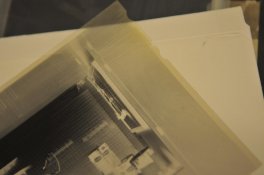
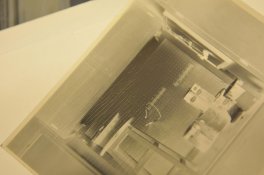
Well, about 1 month ago, they started summer break, so I couldn't go in there anymore, so I started developing at home using a CLOSE tank (Yankee Agitank). I also ran out of film, so I bought another new box of Ilford FP4 125. At first, I used HC-110 Dil. B with Kodak HARDENING fixer(fixed for 7-8 minutes). And the first 2 sheets came out with these random horizontal scratches/lines that I couldn't describe. (See photo below).

At first I thought it might be the Yankee close tank. So I actually wasted another 2 sheets of film, and developed with the same chemicals and dilutions using the OPEN tank with the lights on, just to see what is going on. So I poured in HC-110, and then the fixer, and same thing, the negatives came out with those scratches/lines. (I should also note that I was stupid and didn't check whether the scratches/lines were there after the developer, before the fix. BTW, the film looks fine out of the box before developing.)

So I thought it may be the problem with the fixer, since Ilford recommends using a non-hardening because their film is already "pre-hardened". OK, so I disposed the hardening fixer and bought Photographers Formulary TF-4 (fixed for 4-6 minutes)but still kept HC-110 Dil. B. Using close tank, same problem. Scratches/lines still on the negative.

OK. So now I'm getting really annoyed. Now I switched to Ilford Perceptol 1+3 with TF-4. Using close tank, same problem.

So can anyone suggest what I do now or what the problem might be? I've wasted almost $50-75 buying all the necessary equipment/chemicals. If no one can come up with a definite answer. I think I'll just let my lab handle it and pay them 2 bucks for each sheet.

It should also be noted that I also developed using the 3 methods mentioned above with 120 rollfilm (Ilford FP4 125 as well). Same thing, still scratches, but less visible.

So is this a chemical issue? Bad film?

I would really like to go back to using D76 and kodak non hardening fixer, but considering the costs I've spent so far and D-76 is not really economical since the tanks take up about 1/2 gallon every time, I would really like to stick with what I have right now with little change as possible.

Also, I can assure you that this is not a procedural issue. I have developed hundreds of rolls of 35mm and 120 film and about 30 sheets of 4x5 without any issues. The problem came when I started doing this at home.

Thanks everyone.
ziyangphoto.com

2 photos attached.
 

Attachments

  • DSC_8767.jpg
    DSC_8767.jpg
    302.6 KB · Views: 301
  • DSC_8768.jpg
    DSC_8768.jpg
    320.3 KB · Views: 289

JackRosa

Member
Allowing Ads
Joined
Nov 23, 2004
Messages
447
Location
Oklahoma, US
Format
Multi Format
1 sheet vs. 2

How about you develop only one (1) sheet just to make sure the horizontal lines have nothing to do with sheets scratching each other?
:confused:
 
OP
OP

ziyanglai

How about you develop only one (1) sheet just to make sure the horizontal lines have nothing to do with sheets scratching each other?
:confused:

When I developed the 2 test sheets with the lights on, I put the 2 sheets on opposite sides as far as possible without them touching each other or touching the side of the tank, and I watch the whole process and they did not touch anything at all. And this wouldn't so anything at all.. I used to develop 6 sheets at a time with D76 and kodak non hardening fixer in an open tank without any problems..
 

JackRosa

Member
Allowing Ads
Joined
Nov 23, 2004
Messages
447
Location
Oklahoma, US
Format
Multi Format
If the tank uses 1/2 gallon of developer and you wish to save $$, use the developer highly diluted and increase temperate and/or development time. You will not care whether the sheets are properly develop, you are looking for scratches/no scratches.
 

JackRosa

Member
Allowing Ads
Joined
Nov 23, 2004
Messages
447
Location
Oklahoma, US
Format
Multi Format
OK, that shuts down the theory of scratching ....

No idea what it could be. Are you washing the film between development and fixing?
 

JackRosa

Member
Allowing Ads
Joined
Nov 23, 2004
Messages
447
Location
Oklahoma, US
Format
Multi Format
I have used FP4 with HC-110 and Rodinal and TF-4 and TF-5 and never a problem. I know Ilford TF-4 is goos stuff, as it TF-4 and TF-5.

Hard water? Water contaminants? try distilled water ??
 
OP
OP

ziyanglai

OK, that shuts down the theory of scratching ....

No idea what it could be. Are you washing the film between development and fixing?

Yes, I use water as stop bath. 1 minute with agitation on first 15 seconds.
 

Nikanon

Member
Allowing Ads
Joined
Jul 11, 2009
Messages
433
Location
Chugwater, Wyoming
Format
35mm RF
Those aren't scratches, they are CRACKS in the emulsion that occur due to rapid changes in temperature of solutions. Say if the film goes from 70F water to 64F developer, that is enough to cause the cracking. It usually happens when the wash is much warmer than the developer, or the other chemicals are at very different temperatures. This basically only happens with sheet films, roll films have a greater tolerance for temperature changes.
 
OP
OP

ziyanglai

I have used FP4 with HC-110 and Rodinal and TF-4 and TF-5 and never a problem. I know Ilford TF-4 is goos stuff, as it TF-4 and TF-5.

Hard water? Water contaminants? try distilled water ??

Well, where I used to developed film and where I live is only 1.5 miles apart. The water is pretty hard here in AZ, but I do have a softener at home.. But that IS a possibility! Never thought about that!
 
  • ziyanglai
  • Deleted
OP
OP

ziyanglai

Those aren't scratches, they are CRACKS in the emulsion that occur due to rapid changes in temperature of solutions. Say if the film goes from 70F water to 64F developer, that is enough to cause the cracking. It usually happens when the wash is much warmer than the developer, or the other chemicals are at very different temperatures. This basically only happens with sheet films, roll films have a greater tolerance for temperature changes.

Interesting.. This might be it! Anyone else here experienced this before?! I'll try to keep the temperature as stable as possible when I try it again tonight! On the other note, TF4 smells like crap! I can smell it 3 rooms away...
 

Nikanon

Member
Allowing Ads
Joined
Jul 11, 2009
Messages
433
Location
Chugwater, Wyoming
Format
35mm RF
Well, where I used to developed film and where I live is only 1.5 miles apart. The water is pretty hard here in AZ, but I do have a softener at home.. But that IS a possibility! Never thought about that!

Ziyanglai, this is Reticulation, I guarantee, see my explanation above.
 

Nikanon

Member
Allowing Ads
Joined
Jul 11, 2009
Messages
433
Location
Chugwater, Wyoming
Format
35mm RF
This is something I am familiar with not only because of studying, but I have seen it myself in my own negatives. Temperature consistency will solve the issue. Sheet films can be very fussy about these things.
 
OP
OP

ziyanglai

OK. Well, (there was a url link here which no longer exists) is right! they do have a cooling system at the local high school and I do not keep an eye on my temperature when doing home development. So I guess I'm done with home development. I'll give away these chemicals for free. Here's what I have

About 1/4 gallon HC-110 stock solution (mixed 2 weeks ago)
Perceptol 1 liter (mixed 3 hours ago)
TF-4 fixer stock solution(mixed 3 hours ago)
Kodak photo flo about 1/2 gallon (don't remember how I mixed there)

I will give these away for free, you pay shipping. I don't know how economical it will be for you, but you do the math yourself. I will probably ship it with USPS large flat rate box, so it'll probably be around $25-35. PM me if you're interested. This will go on the free stuff thread if no one claims it in the next 2 hours.
 

sly

Subscriber
Allowing Ads
Joined
Nov 12, 2006
Messages
1,675
Location
Nanaimo
Format
Multi Format
Evening out the temp of your chemicals is not that hard! Get a tub or bucket that your bottles or beakers of chems can fit in. Fill about halfway with water at an appropriate temp, and stand bottles in it. Check and adjust until they are all 20C. If you have both hot and cold running water, adjust temp of rinse water. I only have cold running water, and darkroom is in outbuilding - can be quite cold in the winter. I warm my chems in a bucket and I rinse in cold running water - well below 20C. I've developed hundreds of sheets and rolls of film in the 10 years I've been working in this darkroom, and have had no reticulation. Includes HP5+, FP4+, SFX, Delta 100, 400, 3200, Rollei R3 and probably more. A variety of chemicals - depending on what I found on sale, or was curious to try.

You're in Arizona, so ice cubes might be needed if heat is the problem.
 
Last edited by a moderator:

Bill Burk

Subscriber
Allowing Ads
Joined
Feb 9, 2010
Messages
9,455
Format
4x5 Format
Wow, Chandler, of course, reticulation is possible there.

I'll be passing through this summer on our road trip if you still have trouble I'll stop by but I think you've got it.

I live near the coast so I NEVER have had reticulation! Even though I have read about it - it remains a mystery to me. I have even failed when I tried.

Good thing Nikanon has seen it.
 

jp498

Member
Allowing Ads
Joined
Oct 5, 2009
Messages
1,525
Location
Owls Head ME
Format
Multi Format
Wouldn't reticulation be on the emulsion side? The 2nd photo shows this to be opposite the emulsion side, which would be plain plastic right?
 
OP
OP

ziyanglai

Wow, Chandler, of course, reticulation is possible there.

I'll be passing through this summer on our road trip if you still have trouble I'll stop by but I think you've got it.

I live near the coast so I NEVER have had reticulation! Even though I have read about it - it remains a mystery to me. I have even failed when I tried.

Good thing Nikanon has seen it.

I actually didn't know about reticulation.. I didn't think it was possible as my temperature varies ~5-10F. I didn't know this small temperature change can cause that much problem! Anyway, let me know when you're in town!
 
OP
OP

ziyanglai

Wouldn't reticulation be on the emulsion side? The 2nd photo shows this to be opposite the emulsion side, which would be plain plastic right?

Hmm.. That is a good question.. All the cracks on my negatives are on the shiny side.
 
OP
OP

ziyanglai

When I google "film reticulation", most of the sites, images only mention increased grain size for special effect, a few mention crinkled/crack surface. Any idea why most of them don't mention this?
 

jimjm

Subscriber
Allowing Ads
Joined
May 2, 2007
Messages
1,239
Location
San Diego CA
Format
Multi Format
My guess is reticulation as well. The pattern shown looks more like some kind of cracking of the film/emulsion versus any type of scratching. If your margin of temp difference is between 5-10 F, that's WAY too much. I never let my chemical / water temps vary more than 2 to 3 degrees (if at all). I've never had this happen, but I would not be surprised if the emulsion and film base could expand/contract at different rates, if you go from fixer at 68 degrees to a first rinse at 75.
 

MattKing

Moderator
Moderator
Joined
Apr 24, 2005
Messages
54,718
Location
Delta, BC Canada
Format
Medium Format
You don't need temperature control equipment. You just need the patience to let all your chemicals and your wash water come to room temperature and then work at that temperature.

You will have to adjust your developing time to take into account your room temperature, but that is easy.
 

Xmas

Member
Allowing Ads
Joined
Sep 4, 2006
Messages
6,398
Location
UK
Format
35mm RF
There may be a back coating that can crack but you need to find a microscope or good loope and look at the problem. You should be able to see if it is a gouge or crack.

I normally hold any temperature change to less than one degree C

But it won't be the choice of chemicals unless you have not diluted the stop... or similar.

A back coat might be easy to damage when wet.

You need to inspect the 120 as well.
 
Joined
Sep 10, 2002
Messages
3,651
Location
Eugene, Oregon
Format
4x5 Format
You don't need temperature control equipment. You just need the patience to let all your chemicals and your wash water come to room temperature and then work at that temperature.

You will have to adjust your developing time to take into account your room temperature, but that is easy.

Exactly!

Then you just use the developing time for the temperature you have. There are charts available for temperature compensation.

If this is reticulation or some other kind of cracking caused by sudden temperature differences, then keeping the temperature more constant will solve the problem. The only thing that you need to be careful of is to not process at too high a temperature. Up to about 80°F/27°C is fine.

Here's a link to a chart http://www.ilfordphoto.com/Webfiles/2006210208211880.pdf

When I lived in So. Central Texas, the cold tap water was 78°F or more. I just used that as a processing temp. If your room temperature is a lot different than that, then just start with all solutions at the same temp and let them all drift together. No problem as long as you are consistent.

Best,

Doremus
 

Neal

Subscriber
Allowing Ads
Joined
Dec 3, 2004
Messages
2,026
Location
Chicago, West Suburbs
Format
Multi Format
Dear ziyanglai,

I think you might be scratching them when you load or unload your film holder.

Good luck,

Neal Wydra
 
Photrio.com contains affiliate links to products. We may receive a commission for purchases made through these links.
To read our full affiliate disclosure statement please click Here.

PHOTRIO PARTNERS EQUALLY FUNDING OUR COMMUNITY:


Ilford ADOX Freestyle Photographic Stearman Press Weldon Color Lab Blue Moon Camera & Machine
Top Bottom