

• Welcome to Photrio!
    Registration is fast and free. Join today to unlock search, see fewer ads, and access all forum features.
    Click here to sign up

Ragged Branches on Emulsion-side

Recent Classifieds

Forum statistics

Threads
202,825
Messages
2,846,000
Members
101,546
Latest member
roglem
Recent bookmarks
1

giglaeoplexis

Member
Allowing Ads
Joined
Mar 26, 2019
Messages
20
Location
California
Format
35mm
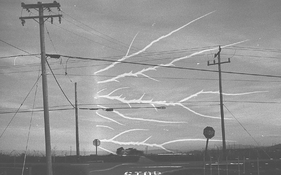
I'm having difficulty figuring out what's going on here. I've searched the internet for similar issues but have come up empty. On only a few frames, on one reel of two developed simultaneously, I get these ragged, light gray branches. These are on the emulsion side of the negative.

All negatives with these "branches" are AristaEDU400 135-36, developed in Pyrocat-HD 1:1:100/Fixer 24. I've tried developing both at 70F and 80F with the same results. I thought the issue might be related to more consistent developing temperatures and tried a test roll at 80F. This roll showed no signs of the "branches".

This is the first time I've ever seen anything like this. When I began developing my own film in the 90s, I processed a few hundred rolls with D-76 at various dilutions and never came across this.

Any ideas would be greatly appreciated.
 

Attachments

  • 2023-04-21-AristaEDU400-027.jpg
    2023-04-21-AristaEDU400-027.jpg
    386.9 KB · Views: 121
Static discharge? It looks both like it has to be and that it can't possibly be.

(edit) Looking at some samples online - static discharge seems to be what it is.
 
Static discharge? It looks both like it has to be and that it can't possibly be.

It looks like lightning.... but it's only on a few frames and not the entire roll. I have no way of knowing which roll was on top, but the single roll I developed was in the bottom reel.
 
It looks like lightning.... but it's only on a few frames and not the entire roll. I have no way of knowing which roll was on top, but the single roll I developed was in the bottom reel.

The static happens when advancing the film, I think - if the conditions are correct. If you look at how the bolts all line up along one start point, which would roughly coincide with where the film was touching the film underneath in the supply spool (while the previous frame was shot) - the sparks shoot off as you advance the film. It's not that common.
 
The static happens when advancing the film, I think - if the conditions are correct. If you look at how the bolts all line up along one start point, which would roughly coincide with where the film was touching the film underneath in the supply spool (while the previous frame was shot) - the sparks shoot off as you advance the film. It's not that common.

I've shot color in the same camera and have never had branches on the film. Is it possible the combination of film, developer, and/or fixer would result in something like this?
 
I've shot color in the same camera and have never had branches on the film. Is it possible the combination of film, developer, and/or fixer would result in something like this?

No. Humidity when shooting the film is probably a factor.
 
No. Humidity when shooting the film is probably a factor.

I think technically speaking only cine film has an antistatic layer (remjet; also serves other purposes).

Very neat (if unintended) demonstration of the effect though! It goes nicely with the power lines, too.
😂🤣😂🤣 YEAH! It's very neat. But I need to find a solution! I have an idea it might be the film, though..... The emulsion of this AristaEDU is pretty thin. It's worth it to try a few rolls of HP5+ and my old standby, TRI-X. Dang it all to heck!
 
I have an idea it might be the film, though..... The emulsion of this AristaEDU is pretty thin. It's worth it to try a few rolls of HP5+ and my old standby, TRI-X. Dang it all to heck!

It is likely that it has more to do with the nature of the film substrate than the emulsion.
What camera were you using, and was there a motor winder involved?
 
That's most certainly static discharge.

Cold, dry days exacerbate this, but it's pretty amazing you were able to get a discharge almost all the way across the web of the film! That's unusual!

Typically, we will see this on 35mm motion picture printers that run at around 100 feet per minute with a relative humidity of less than 20%.
 
That's most certainly static discharge.

Cold, dry days exacerbate this, but it's pretty amazing you were able to get a discharge almost all the way across the web of the film! That's unusual!

Typically, we will see this on 35mm motion picture printers that run at around 100 feet per minute with a relative humidity of less than 20%.

I'm up in Arcata, CA, about an hour south of the Oregon Border. That image was taken a couple miles from the coast.
 
Could be a confectioning defect from the factory.
 
I shot a couple rolls of XP2 and 1 roll of Kentmere 400 on my Mamiya Press Super 23 and had zero issues. The Kentmere 400 was processed in Pyrocat-HD at some random temperature. Tough to maintain a consistent temperature with just tap water. In the olden times, 30 years ago, when I'd develop using D-76 I'd use straight tap water and get the temperature close. The next step, I think, would be to try a different film, something more-pro.
 
Static discharge. I like the effect, so I introduced in a couple of films with piezo lighter igniter.

Advance/load film slower to avoid this.
 
Photrio.com contains affiliate links to products. We may receive a commission for purchases made through these links.
To read our full affiliate disclosure statement please click Here.

PHOTRIO PARTNERS EQUALLY FUNDING OUR COMMUNITY:


Ilford ADOX Freestyle Photographic Stearman Press Weldon Color Lab Blue Moon Camera & Machine
Top Bottom
