

• Welcome to Photrio!
    Registration is fast and free. Join today to unlock search, see fewer ads, and access all forum features.
    Click here to sign up

Questions about Diafine...

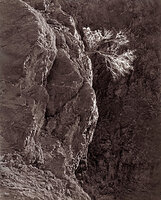
Bush on Canyon Wall

A
Bush on Canyon Wall

  • 0
  • 0
  • 0
double portrait

A
double portrait

  • 1
  • 0
  • 20

Forum statistics

Threads
203,257
Messages
2,852,002
Members
101,747
Latest member
Tallphotographer
Recent bookmarks
0

tonyjuliano

Member
Allowing Ads
Joined
Apr 19, 2010
Messages
65
Location
Glenside, Pe
Format
35mm RF
A friend of mine insists that this developer enables you to change the ISO setting on your camera, in mid roll, and achieve perfect development, throughout the entire roll.

I'm a little skeptical, as I think it only allows the concurrent development of different rolls (exposed at different ISO's) in the same batch...

I shoot mostly TMAX and Delta Pro, and have been using TMAX and Rodinal developers in my Jobo, with great results. It would be almost "revolutionary" to me to be able to adjust ISO, up or down, on the same roll.

What is your opinion?
 
Well, Diafine can have pretty extreme compensating effects, which might allow you to get away with changing EI in mid-roll (up to a point). This is another way of saying "compensating developers can help cover for exposure errors"---after all, the difference between "exposure error" and "change of EI" consists entirely of whether you did it on purpose, and the chemistry can't tell one from the other!

-NT
 
Couldn't have said it better. There is a somewhat popular myth going around that Diafine is a magic bullet developer and it simply isn't so. The developer works really well, but really good results are obtained only when used within the confines of a very limited set of circumstances. Because it is an extremely compensating developer, scenes with a very high dynamic range are rendered easier to print. Highlights are well controlled and shadow densities get a definite boost. However the middle can look a little flat, so be prepared for that. There are only a couple of films that I've used with this developer and found that it made for some really nice negatives. First is Tri-X. Diafine and Tri-X is an almost magic combination. You can rate the Tri-X anywhere from EI 1000 to 1600 (1000 for contrasty light, 1600 for more even lighting) and get a negative that is really easy to print. Another is FP4+ rated at 250. Good for a 1 stop speed boost, but otherwise not terribly useful.
 
Last edited by a moderator:
Another nice application for the compensating properties of Diafine is IR film. I develop Efke IR 820c mostly in Diafine; it keeps the Wood effect under a bit of control, producing images that tend to be deemed "weird and interesting" rather than "completely surreal".

HP5+ at 800 is another interesting one. It's a fairly low-contrast film natively, and Diafine seems to boost the toe (==more detail in the shadows) while making the shoulder just go on and on forever (==lower contrast in highlights, but with a lot of room before truly blowing out). It's a nice combination for street shooting at night, where the shadow detail is crucial but you don't want the streetlights to cause blowout.

I don't know if quantitative data exist to confirm this impression, by the way. There are some interesting curves for different films in Diafine at Dead Link Removed (Vorsicht: site is in German, but Anglophones can still read the graphs and the film names), but I haven't found anything for HP5+ in a rigorous two or three minutes of googling.

-NT
 
no -- Diafine can be used as an everyday developer. I don't change the speed rating for any film and regularly use Fuji Acros and Fuji Neopan at their rated speeds. I have used a dozen films in Diafine from 25 to 3200 ISO, and find that the simplicity of use far outweighs any other issues and would place Diafine developed negatives up against any other developer and dare you to tell me which is which.
 
Nathan,

Don't know about the IR film, as I'm not a big fan of IR photography. But you're right about HP5+ at 800. I'd forgotten about that one, and it is a nice combination. I've done more than a few batches of HP5+ in 4x5 shot in a Crown Graphic with a big Metz 45 potato masher flash. Of course the photographs have that old fashioned newspaper quality to them, but the highlights are particularly well controlled, and the shadows not so deep that you can't wring something from them.
 
So, if you can develop a roll of the same film shot at ISO 400, along with a roll shot at 800, how would that be any different from having 400 and 800 on the same roll? Seems the same the me.
 
I think the two bath developer Diafine is best for 1600 with Tri-X and other films with a similar film speed adjustment. Another developer by the same company is Acufine, which can be adjusted for results with Tri-X from 800/1000 to 3200 but with the same ISO for the roll. Both Diafine and Acufine are reusable and have replenishment chemistry available. I'm using D76 now, but have used both on and off for years.
 
So, if you can develop a roll of the same film shot at ISO 400, along with a roll shot at 800, how would that be any different from having 400 and 800 on the same roll? Seems the same the me.

It's not, but let's take a closer look. Since you've mentioned exposure indices of 400 and 800, we can use HP5+ as an example. Frames exposed at 400 and 800 will both develop, but the frames exposed at 400 will be very dense and will have a flatter contrast curve. There is a possibility that the highlights will be too dense to print easily and will require a lot of burning in to extract any detail onto a print. Not a good situation. At EI 800, things are much better. True, you won't have the shadow detail that would be there at EI 400, but this isn't as much of a problem as you might think. Only the very deepest shadows will be blank, and these areas are likely not to be of great importance to the whole of the composition.

The whole point is that Diafine is really good if you need a speed boost and you need to compress the dynamic range of a scene. It is a specialized tool, one that is very good at doing what it does. Otherwise, you'll get much better results with a more conventional developer.
 
So, if you can develop a roll of the same film shot at ISO 400, along with a roll shot at 800, how would that be any different from having 400 and 800 on the same roll? Seems the same the me.

I was actually referring to processing rolls rated at different speeds simultaneously.
 
Yup, there's one processing time in Diafine. 3+3. You can do 5+5 if it makes you feel better, but it doesn't really do anything different. Different films, the same films at the same ISOs, the same films at different ISOs on different rolls or on the same rolls. It's all the same. That's not to say that you'll like the way Tri-X looks at 200 in Diafine, or at 1600 in Diafine. But it's the same processing.

If I were you, take a roll and shoot it in a couple different lighting situations, rating it from 400-1600 for each scene. Pick which one you like the most and make a note for the 'proper' exposure in each kind of lighting - flat, contrast, normal.
 
I was actually referring to processing rolls rated at different speeds simultaneously.

Because Diafine is a two bath developer, there is nothing you can do to influence the results through development controls. Temperature and time don't matter much, if at all. Every film gets exactly the same treatment, so mixing different films in a single tank is no problem. Soup any film for three to four minutes in bath A and an additional 3 to 4 minutes in bath B at any temperature between 70 to 80 deg. F and you get what you get. Your only way to control the density and contrast of the negative is through exposure controls.
 
To understand how the same development can "work" for different EIs on a single roll (or multiple rolls at different EIs developed together), it helps to think really hard about the characteristic curve. From a really principled perspective, there's no such thing as EI, or "correct" exposure, or any of that stuff; a particular combination of film, developer, and development regime is JUST a function for converting the amount of exposure to the density of the negative. The characteristic curve shows you that function.

Now, suppose you shoot the exact same image twice, but with two stops more exposure the second time---at "EI 400" and "EI 1600", if you like. Two stops more exposure means that the entire exposure---all the inputs to the function---will be shifted two stops to the right along the curve. If you have a highly compensating developer, like Diafine, and the scene doesn't contain a very large dynamic range, it might still be in the roughly-linear portion of the curve; maybe at 400 it covers from Zone II to Zone IX, and at 1600 that range will be from Zone IV to Zone XI---which would probably blow the highlights in a "normal" developer, but here it might just get you up into the shoulder of the curve. Both negatives are probably perfectly printable, it's just that the densities are consistently higher in the second one.

Whether both negatives are "correct" is largely down to taste, but they could easily both be "workable".

-NT
 
Last edited by a moderator:
What are the benefits of Emofin Philippe, tu peux expliciter STP?
 
With Emofin, temperature and time do have influence on the results, which is not the case with Diafine.

From what I'm being told, time and temperature do not matter with Diafine either.
 
This thread was a good read. Thanks to those who provided their street smarts on this developer. I was considering taking Freestyle up on their marketing and buy some but now after reading about the flat mid tones and "you get what you get" .. it just seems to be rather Ford Model A to me (you can have any color you want, so long as it's black). I think I'll stick with the whole premise I've been operating on and getting much better at over time, and that is mastery of the skill of picking the right exposure time under every light. It's hard work, sure, but hard work that brings about superb results. No offense to Acufine, but I think I'll pass on the Diafine.

However, I still think I would greatly benefit from stand development Rodinal 1:50 or 1:100 with pinhole negs from Delta 100 and TMax 100 and Adox CHS Art 100 and PanF+ films.
 
Before you completely dismiss Diafine out of hand, just consider this. There is nothing that can beat the Tri-X / Diafine combination when the film is exposed at EI 1250 - 1600. Yes, it's a little flat for a pushed processed film, but that's good. Shadow detail is enhanced, the mid-range goes on forever, and the highlights are well controlled. If you need the speed, it's a very hard combination to beat. It is not a general purpose tool. It is a specialized tool that works very well when used for it's intended purpose.
 
If you need the speed, it's a very hard combination to beat.

Perhaps further explanation of me passing on Diafine is necessary. The focus of my work has been predominated by pinhole. At first thought, the casual observer might think that I should seek for faster film. But actually quite the contrary. I'm looking to shoot the slower films, and for several reasons actually. I do a lot of water subjects as well as capturing motion in general. And sometimes five or ten seconds is not enough to flatten breakers out and make like glass. Those are the days I wish PanF+ was available in 4x5 format because the reciprocity is very high and the speed is low, so it takes forever to make a good pinhole exposure. Also, I have found that it is true that the longer the exposure with pinhole, the better quality of the overall tone edge to edge and the least amount of vignetting. Fast exposure times makes a lot of vignetting and probably calls for compensatory techniques such as stand development (is how I work this out in my head, but I have proof of this too in my prints!).
 
Because Diafine is a two bath developer, there is nothing you can do to influence the results through development controls. Temperature and time don't matter much, if at all. Every film gets exactly the same treatment, so mixing different films in a single tank is no problem. Soup any film for three to four minutes in bath A and an additional 3 to 4 minutes in bath B at any temperature between 70 to 80 deg. F and you get what you get. Your only way to control the density and contrast of the negative is through exposure controls.

What I keep wondering is if development could be controlled by varying the concentration of solution A. It seems to me that a more concentrated version of solution A would lead to greater development and a less concentrated version of solution A would lead to lesser development.

As I understand it Diafine works as follows. Solution A loads the film with developer. When exposed to solution B development begins and continues until the developer is depleted, either because the developer becomes exhausted or the developer diffuses out of the film and into the solution where it is effectively lost by dilution. If this is true then it would seem to me that a more concentrated version of solution A would load a greater amount of developer into the film, and this would lead to a greater degree of development before the developer is depleted.

Does this make sense to anyone?
 
Photrio.com contains affiliate links to products. We may receive a commission for purchases made through these links.
To read our full affiliate disclosure statement please click Here.

PHOTRIO PARTNERS EQUALLY FUNDING OUR COMMUNITY:


Ilford ADOX Freestyle Photographic Stearman Press Weldon Color Lab Blue Moon Camera & Machine
Top Bottom
