• Welcome to Photrio!
    Registration is fast and free. Join today to unlock search, see fewer ads, and access all forum features.
    Click here to sign up

Pushing tri-x 2 stops, some advice

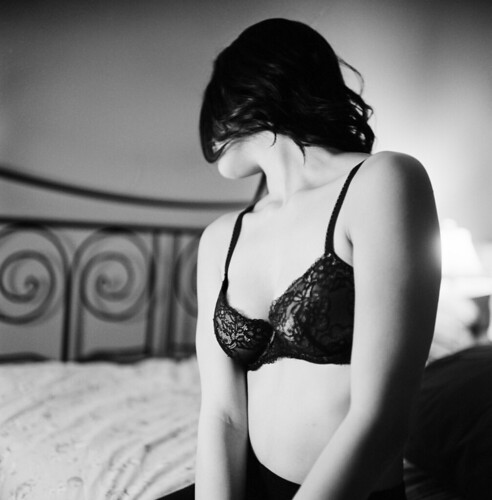
Lowlight freestyle

A
Lowlight freestyle

  • 1
  • 1
  • 62
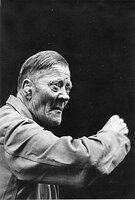
man arguing 1972

A
man arguing 1972

  • 7
  • 4
  • 123

Recent Classifieds

Forum statistics

Threads
203,027
Messages
2,848,786
Members
101,605
Latest member
Bburall33
Recent bookmarks
0

msbarnes

Member
Allowing Ads
Joined
Jul 23, 2011
Messages
384
Format
Multi Format
OK so I did low-light shooting indoors and I pushe tri-x in 120 2 stops (ISO 400 to ISO 1600). The lighting was flat so blowing highlights in't an issue and since this is 120 film, grain is less of an issuel.

I usually just use d76. I've used Rodinal in the past, but I think D76 gives me more speed (which is probably consistent with most people's observations). I've used xtol in the past (but not for pushing) and didn't like the grain, but this was for 35mm film so that experience is less relevant. So I'm thinking of batching up some xtol, microphen, or just sticking with d76. Any thoughts and opinions on the differences in speed, grain, and tonality? I fear that diafine, which I believe gives 1250 or so speed is going to be too flat.
 
I remember back in the 70's using Acu-1. It really was some good stuff.
 
Was shooting 120 trix just last weekend, all shots taken indoors. Devd in xtol 1:1 for 14 minutes. Got nice negs with plenty of shadow detail, grain was very aceptable

sent from tapatalk
 
I use tri-x 1600 iso in rodinal 1+100 stand ... here a sample in 35mm :

400tx print on mcc 110 in moersch eco 4812 , flat light

S145.jpg
 
what are the advantages for stand development? It is one of those techniques that I've never quite understood. I figured that it is better for high contrast situations like bands/concerts/etc.

I may see how this thread evolves and test a few rolls playing with 2-3 different techniques.
 
anyone play around with different techniques? like stand vs normal agitation, developments, and etc.?
 
I use stand/semi-stand development because I can do other things while it develops, I like the workflow.

I use Rodinal 1+125 for 1.5 hrs to do a two-stop push. After the first hour I swirl it real gently for fifteen seconds.

I haven't done any real testing with it myself, my technique comes from here.
 
I use stand/semi-stand development because I can do other things while it develops, I like the workflow.

I use Rodinal 1+125 for 1.5 hrs to do a two-stop push. After the first hour I swirl it real gently for fifteen seconds.

I haven't done any real testing with it myself, my technique comes from here.

You push Tri-X to 1600 and develop for only 1.5 hours?


I arrived at 2:45 after starting at 2:15 and finding that to be not enough development.

Wondering what other variables are different. I'm developing at 20 degrees C ... using tap water. 1: 100 ratio.

Also, results I've seen from Diafine with Tri-X at 1600 are outstanding. Great shadow detail.
 
I've used Tri-X at 1600 with Xtol 1:2 and 1:3. I think the 1:3 time was with normal agitation (swirl or inverse) for something like 20-25 minutes, but I don't have my notes handy. The result was quite good, but pushing it to 3200 resulted in the shadows dropping off like a rock (toe values like Peg-Leg Pete). I have not tried it with Diafine. (yet)
 
You push Tri-X to 1600 and develop for only 1.5 hours?


I arrived at 2:45 after starting at 2:15 and finding that to be not enough development.

Wondering what other variables are different. I'm developing at 20 degrees C ... using tap water. 1: 100 ratio.

Also, results I've seen from Diafine with Tri-X at 1600 are outstanding. Great shadow detail.


You've already done more testing than I have, so there's that. I've gotten good results following the methods in the link I included though. He does 2 hrs for a 4 stop push. I guesstimated 1.5 for 1600 and got good results. One variable I see is that he recommends gently swirling the developer every 1/2 hour for fifteen seconds.
 
Ahhh ... I don't do nothin! Just mix, pour and let it sit! Sans semi, so to speak.

But! ... sometimes I do a little less or a little more depending on the light, etcetera.

All of that said, I'm not convinced i've reached the perfect recipe just yet ... it's just been working well enough that I don't have to work too hard in the darkroom to get good prints.

But an hour difference for the same rating makes me wonder what I might be doing wrong —or could be doing better —and in less time!

One thing is: I do not soak the film before developing, which is what that recipe you linked, called for.

This is just more evidence of the fact that stand development is something that has to be honed by each individual to his/her taste and preference. All of this is just a starting point.
 
Ahhh ... I don't do nothin! Just mix, pour and let it sit! Sans semi, so to speak.

But! ... sometimes I do a little less or a little more depending on the light, etcetera.

All of that said, I'm not convinced i've reached the perfect recipe just yet ... it's just been working well enough that I don't have to work too hard in the darkroom to get good prints.

But an hour difference for the same rating makes me wonder what I might be doing wrong —or could be doing better —and in less time!

One thing is: I do not soak the film before developing, which is what that recipe you linked, called for.

This is just more evidence of the fact that stand development is something that has to be honed by each individual to his/her taste and preference. All of this is just a starting point.

That makes sense - the part about each for themselves. The wide variety of times I see for stand development I start to wonder what really is going on inside that developing tank.
 
Tri-X is a film well suited to pushing, and EI-1600 is very feasible.

Despite how great stand is, I never saw Rodinal as well-suited to pushing. A developer will make all the difference in success or not in pushing -- Microphen is a good choice for pushing but I've had great luck and results with DD-X...also well made for pushing.

Good luck!
 
That makes sense - the part about each for themselves. The wide variety of times I see for stand development I start to wonder what really is going on inside that developing tank.

Not done any myself but from what I understand is the developer pretty much exhausts after a certain point so an additional hour might not yeald you much.
 
@ Roger agree that works.

HC-110 and Diafine were my go-to developers at the time..

--this stand development. Why isn't "bromide burn/streaking" an issue?
I used to have bromide burn issues with 4x5 when I didn't agitate enough.

I always found a nice long rest- 2 minutes in water after dumping the developer rather than a stop softened the contrast.
I know some here have said baloney to it... in the end it doesn't hurt. My pushed tri-x was admired by several back in the newsroom days.
 

Untitled by Michael_Sergio_Barnes, on Flickr

I went with Xtol 1+3, as per advice from someone at my photography store but I do not think that some of the other combinations that you guys use is necessarily less suitable. They print pretty well too (this is a scan but prints look no worse IMO).

Thanks!
 
Last edited by a moderator:
Beautiful print with lots of detail! Very nice.
 
I _love_ Tri-X @ 1000, developed in Acufine, stock dilution. I prefer it to Microphen but honestly I can't quite put my finger on it. Stuff lasts forever and you can replenish it.I have developed Tri-X @ 1600 in Acufine, the results were acceptable. Even pretty decent.
 
Photrio.com contains affiliate links to products. We may receive a commission for purchases made through these links.
To read our full affiliate disclosure statement please click Here.

PHOTRIO PARTNERS EQUALLY FUNDING OUR COMMUNITY:


Ilford ADOX Freestyle Photographic Stearman Press Weldon Color Lab Blue Moon Camera & Machine
Top Bottom