• Welcome to Photrio!
    Registration is fast and free. Join today to unlock search, see fewer ads, and access all forum features.
    Click here to sign up

Problems With My First Roll of Fuji 400 Neopan

Recent Classifieds

Forum statistics

Threads
201,943
Messages
2,832,459
Members
101,027
Latest member
yukinosita_yuk
Recent bookmarks
0

gone

Member
Allowing Ads
Joined
Jun 14, 2009
Messages
5,504
Location
gone
Format
Medium Format
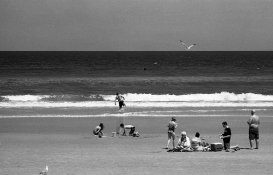
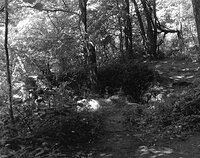
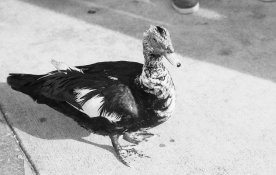
I just finished my first roll of Neopan 400 and have some odd, inconsistent frames on the roll. The first shot here is very contrasty, and a lot of the middle tones seem to be blown out (it wasn't THAT much of a sunny day). Many of the other frames look OK, others look like the goose here. For comparison, the second shot is from a roll I shot today with the same camera in this same developer, but I used Tri-X, a film I am very familiar with. Does the Neopan just have trouble handling certain sorts of lighting? Or is my developing protocol wrong?

Here's how I developed it. My usual mix is TD-16, but since they sent me twice what I ordered I decided to half the 2 packages of powered chemical and mix up one half of the stock solution. Yes, I am aware that you aren't supposed to do this, but the roll of Tri-X that I developed in it today turned out just like it was supposed to, so I must have got the amounts right. However, I did develop the Neopan just 3 hours after mixing up the fresh batch. That's something I would never do w/ D76. as I always wait 24 hours to use it, but the folks at Photographers' Formulary assured me that I wouldn't have to do that w/ the TD-16. Now I wonder about that. The Tri-X was developed after the developer had sat for 24 hours after mixing.

I used the same developing protocol w/ the Neopan as w/ the Tri-X. Both films were metered for ISO 250, a yellow filter was used (the camera's meter always takes care of the filter factor quite well), and I developed them for 8 1/2 minutes at 68 degrees in the full strength stock solution. I've developed dozens of rolls of Tri-X like this, and w/ that film I get great negs. I fill the tank w/ the developer, initially give it 30 seconds of inversions, then 2 inversions every 30 seconds, and none the last minute. Stop bath is 10 seconds of inversions, 30 seconds of sitting. Kodak Rapid fixer is 30 seconds of inversions, 2 inversions every 30 seconds, and it gets 5-6 minutes in that.

The Tri-X looks fine, but the Neopan has inconsistencies. Any ideas? I'm thinking that the developer was still too active right after mixing it, but I don't know if I developed, or shot, the Neopan right either. Sorta confused as to why some of the Neopan looks fine and some doesn't. It sure is a lot sharper and finer grained than the Tri-X!
small nf14.jpg


small nr11.jpg
 
Last edited by a moderator:

fretlessdavis

Member
Allowing Ads
Joined
Dec 28, 2013
Messages
312
Location
Southern AZ
Format
Medium Format
D-76 is more active right after mixing. I made the mistake of mixing up some D-76 and immediately putting the bottle in an ice bath to cool it down to working temperture, and I had a couple rolls that were overdeveloped that night. I don' know for sure, but when I mix it and put it in my 65 degree darkroom, by the time it naturally cools all the way down from 125-130, it's probably been long enough, and I haven't seen any issues doing it that way.

Are you exposing the film at 250, or are you just metering at 250 to compensate for the filter? If you're setting the meter at 250 with the yellow filter on the front, too, you're probably overexposing a bit more than you should.

I've pushed my last few of rolls of Neopan 400, but if it's anything like the Acros I've shot the last couple weeks in terms of exposure, it's quite sensitive to overexposure.
 

appletree

Member
Allowing Ads
Joined
May 14, 2013
Messages
52
Location
Cypress, Tex
Format
Multi Format
Ha my post still shows up, sort of, after deleting it. Getting used to this forum still.

I asked a question about mixing Tri-X and using the same day, while apologizing for not being much assistance and slightly derailing the thread. Then I searched a bit better and found some threads discussing it. Sorry for the confusion/messiness in here.

Best of luck in figuring this out!

Edit: Thanks fretlessdavis for the response. Sorry for the confusion, I quickly found some answers/discussions so tried deleting my post so I didn't mess up this thread. Interesting about the D76. The more you know!
 
OP
OP

gone

Member
Allowing Ads
Joined
Jun 14, 2009
Messages
5,504
Location
gone
Format
Medium Format
I think one variable can be eliminated, as I developed the Tri-X in the same batch of TD-16 developer today and it came out perfect. So I must have divided the two packets up correctly.

I probably got the idea to develop the Neopan like Tri-X from the internet, where I get all my ideas these days, and maybe that one's questionable. It may have come from flickr. In fact, I seem to remember that the Neopan calls for a different agitation scheme. I'd better look it up....on the internet.

The TD-16 times are longer than for D76 with the Tri-X because, I think, TD-16 is similar to D76H? With Tri-X, it comes out under developed if I use the D76 times. I'm thinking that the Neopan may be overdeveloped myself.

I set my ISO on this particular camera (Nikon N8008s) for 250, then the camera's AE brings it down another stop or so for the yellow filter. I had to shoot a few test rolls w/ this camera to get the filter factors figured in correctly, but that was months ago, and I've gotten consistent results ever since I did that. This camera's meter has some issues when I change from a red filter to a yellow filter w/ the metering, so doing the tests enabled me to find out the optimal place to set the ISO for each filter.

Looks like I need to do some research on the proper agitation scheme and/or developing times w/ Neopan developed in D76, and extrapolate from that on my next test roll. Thanks everyone.
 
Last edited by a moderator:

Christiaan Phleger

Member
Allowing Ads
Joined
Feb 22, 2006
Messages
1,219
Location
Hawaii
Format
35mm RF
Neopan is not Tri-x but I think you've seen this now. In my vast experience with Neopan it requires an initial agitation of at least 45 seconds and in some cases a full minute depending on the developer. Initial agitation of 30 sec has lead to processing inconsistencies as you've described. Coming from Tri-x it seems way more than what you think but it only helps neopan.
 
OP
OP

gone

Member
Allowing Ads
Joined
Jun 14, 2009
Messages
5,504
Location
gone
Format
Medium Format
Whoa, I did everything wrong. I finally looked at Fuji's developing guidelines (duh), and while I developed it for around 9 minutes in the D76 full strength, they call for 6 1/2 minutes. I gave the tank 2 inversions every 30 seconds, they call for 2 every minute. So, I totally overcooked this roll. I'd read a lot on the internet that said to initially just develop this like you would Tri-X. I don't think so! Of course, I'm using TD-16, not D76, but I'll just add an extra minute and err on the under development side and go from there.

Note to self....always follow the manufacturers' developing regime when using a new film, and whenever I attempt something new w/ a developer, like splitting this one for the first time, use a film that I know inside and out to ck the results. The next test roll is ready to be developed and I'm sure it will be fine now.
 
Last edited by a moderator:

GarageBoy

Member
Allowing Ads
Joined
Nov 5, 2012
Messages
994
Format
35mm
Why were you shooting at EI250? Because of your own testing or did you just arbitrarily chose EI250?
 

Christiaan Phleger

Member
Allowing Ads
Joined
Feb 22, 2006
Messages
1,219
Location
Hawaii
Format
35mm RF
Take My Advice! I haver personally processed Many Hundreds of feet of Neopan for my wedding biz thru the 90's and 2000's and I can assure you *from practical knowledge* extend the first agitation to at least 45 sec constant random agitation no matter what the developer!!!! You can temper the sense that you're over agitating by rolling off the remainder of the agitation. Neopan is VERY responsive, and my own technique with Rodinal is for the remaining agitation to be almost a gentle swirl. You either take my hard earned knowledge and use it or ignore it. Guess which one is ignor-ant.
four-silver-atoms.com
 
OP
OP

gone

Member
Allowing Ads
Joined
Jun 14, 2009
Messages
5,504
Location
gone
Format
Medium Format
Well, my experience w/ initial agitation schemes is not yours RidingWaves. I always agitate for 30 seconds initially w/ Tri-X in D76, TD-16, Rodinal, and Acufine and it comes just like I want. I only see one ignorant person on this thread at this point. I was simply looking for help on a problem. Get it? And aloha to you too, bra. Jeez. You need to learn some manners, boy.

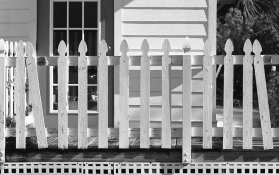
For this second roll of Neopan film I used a Canon T90 with a FD 135 2.5 lens. Metering was set to 200 ISO, and the camera's TTL meter made the adjustment for my yellow filter. Pics were taken at high noon in Florida sun. I followed Fuji's recommendation of 1 minute of constant initial agitation, then 2 inversions every minute, and went with TD-16 full strength once more, this time for only 7 1/2 minutes at 68 degrees (Fuji calls for 6 1/2 minutes with D76). It came out great. Holy moly, this is a sharp, tight grained film! Not something I would use a Leica lens with to take a portrait in bright light for sure. I could learn to really like this (except that it's discontinued, of course). The across-the-board tones are not quite what I get w/ Tri-X, but I've been working w/ that film for years and this is just my second roll of Neopan. But still, I like what I see. I'm happy. Did I mention that this film is sharp? I can get similar sharpness w/ Tri-X in Acufine, but the Fuji in TD-16 has better tones. I can only imagine how sharp this film would be in Acufine.

Despite what they said at Photographers' Formulary, I think one of the reasons my first roll was over cooked was because I used that TD-16 right after I mixed it up. From now on it sets over night, just in case. Can't hurt.


small ct4.jpg


small ct6.jpg


small ct7.jpg
 
Last edited by a moderator:

Christiaan Phleger

Member
Allowing Ads
Joined
Feb 22, 2006
Messages
1,219
Location
Hawaii
Format
35mm RF
Ok, first, to quote Zoolander, "I'm not your Bra, Brah". Lighten up! And calling out someone on manners while calling them Boy is quite rude...
If you insist on repeating mistakes then by all means go ahead! No doubt you'll learn from your mistakes (and judging by the mistakes you've admitted to so far there's a Probably a few more you've made that you don't even know about).
I offered *specific* help of this film (uneven development) from hard earned practical use *of this specific film*, and you didn't even acknowledge my post, so my quote of being *ignorant* still rings true. Its only your 2nd roll of this film and you admit that "works fine" when you use your techniques with Tri-X, but THIS ISN'T TRI-X. See my original post. Making small errors in processing and asking for help is part of learning the craft of traditional photography. Ignoring useful practical advice and information while making the same mistakes is ignorant. Insulting an experienced professional who is trying to help is rude. As well, don't use Aloha if you don't know the meaning of it, and clearly you don't.
 
Photrio.com contains affiliate links to products. We may receive a commission for purchases made through these links.
To read our full affiliate disclosure statement please click Here.

PHOTRIO PARTNERS EQUALLY FUNDING OUR COMMUNITY:


Ilford ADOX Freestyle Photographic Stearman Press Weldon Color Lab Blue Moon Camera & Machine
Top Bottom