
• Welcome to Photrio!
    Registration is fast and free. Join today to unlock search, see fewer ads, and access all forum features.
    Click here to sign up

Presentation of Liquid Emulsion on timber

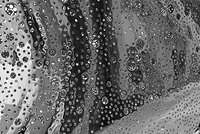
Wheels within Wheels

D
Wheels within Wheels

  • 1
  • 0
  • 0
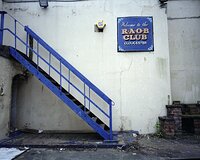
R-A-O-B Club

A
R-A-O-B Club

  • 0
  • 0
  • 8

Recent Classifieds

Forum statistics

Threads
203,220
Messages
2,851,640
Members
101,730
Latest member
joswr1ght
Recent bookmarks
0

thefizz

Member
Allowing Ads
Joined
Dec 8, 2004
Messages
2,354
Location
Ireland
Format
Medium Format
I have been trying out liquid emulsion on flat panels of timber and wish to display one at home.

My question is this: Should I frame the panel with or without glass?

Obviously glass would protect the surface to some degree but for this type of print I thought it would be more suitable not to cover it.

Any thoughts?

Peter
 
thefizz said:
I have been trying out liquid emulsion on flat panels of timber and wish to display one at home.

My question is this: Should I frame the panel with or without glass?

Obviously glass would protect the surface to some degree but for this type of print I thought it would be more suitable not to cover it.

Any thoughts?

Peter

I think glass would detract from the look. However it might be best to try to protect the image somehow. have you given any thought to coating the wood with something like polyurethane?

Pete
 
PeterDendrinos said:
I think glass would detract from the look. However it might be best to try to protect the image somehow. have you given any thought to coating the wood with something like polyurethane?

Pete

Thanks Pete, I agree that the glass will detract from the image so I will check out your polyurethane idea. Have you used it? If so, any advise on how to apply it etc.?

Peter
 
I have been using liquid emulsions for about a year (to do imitation tintypes) and I would be very reluctant to cover the emulsion with anything.

The only coating I have seen that's crystal clear is a nitrocelulose laquer but I am not sure how it would effect the emulsion.

I would be inclined to cover the image with non-glare glass raised very slightly on spacers so that it doesn't contact the emulsion.

JMHO
 
My experience with wood and silver-gelatin process is that, unless you use well aged wood or wood that is well sealed with inert coating, the image will be degraded in a matter of few years. Besides the presentation matter, I would strongly recommend you to use polysulfide toner and/or Ag Guard, if you want the image to last longer without turning bad.

I often present my prints in a shallow shadow box, and I like the way it looks. I also get many comments in galleries about the framing alone.

thefizz said:
I have been trying out liquid emulsion on flat panels of timber and wish to display one at home.

My question is this: Should I frame the panel with or without glass?

Obviously glass would protect the surface to some degree but for this type of print I thought it would be more suitable not to cover it.

Any thoughts?

Peter
 
Thank you Calamity Jane & Ryuji for your help.

It is much appreciated.

Peter
 
Good point about reaction from the wood. I don't think a sealant necessarily guarantees protection. This is not considered sufficient barrier for archival purposes with other artwork...it's a matter of degrees of obsession, but a 4-ply matboard is the recommended barrier. I believe some conservators even recommend a horizontal separation of 4 inches. Now this may be for framing a historical document in a national museum, for which no degradation is tolerable.

This is a different scenario, but a thin sealant (chemical layer) with another chemical layer (emulsion) directly in contact with it, and unpredictable behavior over time such as outgassing that may be 'dormant' stored in dark, but activated by sunlight...

If people do this and get satisfactory longevity, great. Just tell me to "be quiet".

My thoughts on a 'top coat' in lieu of glass would be (assuming compatibility with the emulsion and that such an item exists), perhaps a satin finish water-based urethane coating. The water-based urethanes I'm told do you have any color and do not yellow, while the solvent-based ones are already or become yellow.

Murray
 
I have read that Griffin Varnish is suitable for subbing the timber and also for sealing the finished work as it does not turn yellow like other varnishes/lacquers.

Apparently it is used for sealing paintings. Has anyone used this product?

Peter
 
Photrio.com contains affiliate links to products. We may receive a commission for purchases made through these links.
To read our full affiliate disclosure statement please click Here.

PHOTRIO PARTNERS EQUALLY FUNDING OUR COMMUNITY:


Ilford ADOX Freestyle Photographic Stearman Press Weldon Color Lab Blue Moon Camera & Machine
Top Bottom
