• Welcome to Photrio!
    Registration is fast and free. Join today to unlock search, see fewer ads, and access all forum features.
    Click here to sign up

pre flashing paper

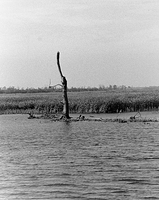
Horicon Marsh-5

A
Horicon Marsh-5

  • 1
  • 0
  • 48
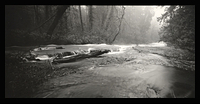
Millstone, High Water

A
Millstone, High Water

  • sly
  • Dec 17, 2025
  • 7
  • 5
  • 115

Recent Classifieds

Forum statistics

Threads
201,246
Messages
2,821,180
Members
100,617
Latest member
blackspirit
Recent bookmarks
1

salan

Member
Allowing Ads
Joined
Jul 13, 2004
Messages
89
Location
Cheshire Eng
Format
Multi Format
All,
I have heard this mentioned, but have never done it. Could someone enlighten me please and give me some 'starters' as to what light and how much?
Thanks
Alan
 
Joined
Jan 21, 2003
Messages
15,715
Location
Switzerland
Format
Multi Format
Make a series of exposures with no negative, like a test strip, but maybe with 1 second bursts at a small aperture. Develop the paper and see at which exposure you start to see tone (just off paper white).
Pick the exposure time just before the one you get tone, if you need a lot of help with density in your highlights, or if you just need a little boost pick a smaller amount of time.
 
OP
OP
salan

salan

Member
Allowing Ads
Joined
Jul 13, 2004
Messages
89
Location
Cheshire Eng
Format
Multi Format
Can you explain the reasoning behind it please? as in how does it work?
Alan
 

brian steinberger

Subscriber
Allowing Ads
Joined
Jan 5, 2007
Messages
3,042
Location
Pennsylvania
Format
Med. Format RF
Alan, I leave the negative in the enlarger and put two clear plastic cups over the lens. This diffuses the light nicely. As Thomas said, find the time just before that which gives you tone. If using FB paper you will need to dry the test strip first before you make your judgement. Pre-flashing is for negatives with stubborn dense highlights or highlights which are too hard to burn in. Results with pre-flashing are normally much better than burning in however. A great example of a neg that would benefit from pre-flashing would be an well exposed interior near a window. Pre-flashing would bring detail back into the window panes, items sitting on the window sill, etc.
 
Joined
Jan 21, 2003
Messages
15,715
Location
Switzerland
Format
Multi Format
Pre-flashing eliminates the papers inertia. So any light to hit the paper after pre-flashing will produce a tone.

And inertia can be described as a 'threshold' of sorts. Light can strike the paper surface, and you develop it and there is no tone. The threshold means that a certain amount of light has to strike the paper surface before the paper develops a tone in the developer. That's inertia; like pushing a square box forward on a surface - if you apply a little bit of force it may not move, but if you apply more force it will.

Edit: Michael is correct. I was typing along... :smile:
 

removed account4

Subscriber
Allowing Ads
Joined
Jun 21, 2003
Messages
29,832
Format
Hybrid
Can you explain the reasoning behind it please? as in how does it work?
Alan

hi alan

preflahing photo paper fogs the paper a little bit
so bright white " hot spots " are not so hot.
it tames contrast too, if you like to make paper negatives.

have fun !
 

Bob Carnie

Subscriber
Allowing Ads
Joined
Apr 18, 2004
Messages
7,735
Location
toronto
Format
Med. Format RF
I only use paper flashing,, hot developer application as a last resort and would not consider it part of a normal workflow.. I use these techniques 1 in 50 prints..
just my 2cents.
 

MartinP

Member
Allowing Ads
Joined
Jun 23, 2007
Messages
1,569
Location
Netherlands
Format
Medium Format
To help identify what is paper-base and what is a tone, cover a long edge of the test-strip with the arm of the easel - it will give a direct comparison for each stage of the strip.

On multi-contrast paper, it is also possible to flash with grade-00 or grade-5, instead of white light. That can make a handy difference, as (for example) over-exposed clouds may be relatively low contrast within themselves.

Like everyone else has mentioned, this 'adds' the ineffective exposure which would otherwise be at the bottom left of the log-exposure/density curve, running pretty much along the x-axis. And no, it isn't an everyday technique unless you have very unusual negatives. EDIT: It could become more standard for you if you shoot contrasty scenes on Ilford Direct Positive paper though.
 

Mike Wilde

Member
Allowing Ads
Joined
Aug 10, 2006
Messages
2,903
Location
Misissauaga
Format
Multi Format
To add a more classical term than intertia, we are really talking about getting the exposure with the pre flash to push the paper response up off of the toe of it's response curve, in a classic illimination H- to Log D density plot.
 

DREW WILEY

Member
Allowing Ads
Joined
Jul 14, 2011
Messages
14,785
Format
8x10 Format
It's a pretty arcane trick in this era of high-quality VC papers, but I guess everyone tries it at least
once.
 

removed account4

Subscriber
Allowing Ads
Joined
Jun 21, 2003
Messages
29,832
Format
Hybrid
replacing developered paper that has been rinsed and squeegeed under the enlarger
and aligned with the negative in the easel and burning in that way can also do the trick.
it takes more effort than flashing and doesn't smell as good as warm developer ..
but t works
 

Bob Carnie

Subscriber
Allowing Ads
Joined
Apr 18, 2004
Messages
7,735
Location
toronto
Format
Med. Format RF
How do you do the localized flashing?? or better yet how do you find your position to flash small areas??
I wouldn't necessarily call it arcane if it is localized flashing. It can be useful for bringing in lightbulbs and that sort in addition to careful burning, without getting into masking etc. But I would agree in many cases it is no longer as necessary as you can accomplish virtually the same thing with low contrast burning. And I'd always prefer a localized application than doing something to the entire sheet if possible.
 

nworth

Member
Allowing Ads
Joined
Aug 27, 2005
Messages
2,228
Location
Los Alamos,
Format
Multi Format
Preflashing is a rather specialized contrast reduction technique. Anchell gives a good discussion of it and several useful variations in "The Variable Contrast Printing Manual," and Rudman gives a detailed explanation in "The Photographer's Master Printing Course." It generally comes into play when the shadows are OK but the highlights are too dense to print properly. Contrast reduction is more pronounced in the highlights, noticeable in the midtones, and almost non-existant in the shadows when the technique is applied correctly. This comes about from the additive nature of the non-focused flashing exposure and the image exposure. You have to experiment to find the right level of flash. The idea is pretty well explained above, and generally the point just before the exposure causes any increased density is the right point, but it can vary depending on your aims. Often preflashing is combined with an increase in the contrast grade to get a balanced picture.
 

doughowk

Member
Allowing Ads
Joined
Feb 11, 2003
Messages
1,809
Location
Kalamazoo, MI
Format
Large Format
Pre-flashing works with any exposure-sensitive material including film. For film one is concerned with shadow information, whereas with paper its highlight area information.
For film I use a white-balance filter (as described in Lambrecht's "Way Beyond Monochrome")
For fiber-based enlarging paper I use a flasher by RHDesign. It easily installs on the enlarger lensboard.
For silver chloride contact paper I use Besseler Audible timers that give control to 1/10 second. I pre-flash the paper prior to placing in contact printing frame.
 

Bob Carnie

Subscriber
Allowing Ads
Joined
Apr 18, 2004
Messages
7,735
Location
toronto
Format
Med. Format RF
Very Cool
I have contrast masked negatives and positives
but this is a brilliant way of doing this.
Overall flashing is done many ways, but Micheal I can see clearly how you do it and is something I never figured out how to do.

Old dogs do learn new Tricks

thanks
Bob

There are several ways depending on what is required. Of course there is negative masking, but there are a few other more simple techniques I sometimes use (both require a second light source/enlarger and easel - I bought a small used Durst for $10 for this purpose so I can use filters etc):

1. With the flashing easel set to the same size as the print, you can tape down little markers, pointers etc so you know where to position the burning cards/holes etc during the flash exposure.

2. Make an actual scrap print, cut out the areas to be flashed, and place the print on or above the paper during the flash exposure (essentially paper plane masking). Note it is best to use RC paper for this since in addition to it being obviously easier to work with and faster to process/wash/dry, it has to be dimensionally stable paper so that "registration" at the paper plane works properly.

3. Combine (1) and (2), burning/dodging during the flash exposure with a print that has cutouts etc.

Diffusing paper can be used with any of these techniques to feather edges etc.

I originally learnt about localized flashing from John Sexton's masterful use of it in many of the powerplant, Hoover Dam and space shuttle prints in his "Places of Power" series. These prints remain my reference point for how to manage extreme contrast situations without destroying local contrast.
 

Monophoto

Member
Allowing Ads
Joined
Aug 27, 2004
Messages
1,689
Location
Saratoga Spr
Format
Multi Format
The basic principle behind flashing is to add a small amount of exposure to the print. Small increments affect highlights more than shadows, so that small increment tends to reduce contrast. Its a very effective way to add just a hint of detail in highlights that would otherwise be blown out. I tend to use post-flashing rather than pre-flashing simply because for me its part of the process of creating the print.

The textbooks tell you to either remove the negative from the carrier, and then give a short burst of light using the enlarger, or else use a secondary light source. There are some textbooks that talk about using a small flashlight that is masked with a bit of neutral density filter (which could be nothing more than a bit of exposed and processed film leader) that you can use to flash specific highlight areas. I've tried that - it does work, but it's tricky to get the right amount of contrast reduction and avoid creating an obvious abnormal shadow.

The approach that I finally settled on and that works for me is to have a sheet of matte mylar drafting film (it's been around for a while!) mounted in a cardboard frame. The sheet of mylar is fairly large compared with the negatives that I normally print - about 8x10". If I conclude from an initial test print that the highlights need to be brought down a bit, I make a second print with all of the burning and dodging that I want to do. But before removing the paper from the easel, I hold the mylar sheet under the lens and make a final flashing exposure that is typically 5-20% of the base exposure. The mylar absorbs some of the light, hence the duration of the flash in my approach may be longer than in other methods. and the mylar also diffuses the light so that there is no image content. The main advantage of this approach is that it allows me to flash the print, but doesn't require that I tinker with the negative or enlarger settings in any way - so that it can be integrated into a printing sequence without affecting the time required to make the NEXT print.

 

Bob Carnie

Subscriber
Allowing Ads
Joined
Apr 18, 2004
Messages
7,735
Location
toronto
Format
Med. Format RF
that talk about using a small flashlight that is masked with a bit of neutral density filter (which could be nothing more than a bit of exposed and processed film leader) that you can use to flash specific highlight areas. I've tried that - it does work, but it's tricky to get the right amount of contrast reduction and avoid creating an obvious abnormal shadow.


Well I have read about this technique... I will argue that this is impossible to do... If you think about it
 

Murray Kelly

Member
Allowing Ads
Joined
Jan 31, 2007
Messages
661
Location
Brisbane, Australia
Format
Sub 35mm
My understanding of flashing for film and paper is that each crystal of silver salt needs something like 3 photons to make it developable. The shadows on a negative or the highlights on a print just don't get enough to develop. They get maybe 1 or 2 photons and won't develop. Hence the toe in a film density curve. Controlled flashing will supply the necessary photons to allow those almost exposed crystals to respond to the developer. The already sensitised crystals of the rest of the image are not affected because of the low light of the flash. The technique works well with contrasty films or scenes and to enable the paper of a print to produce highlight detail that would not be available without it.

Pat Gainer described a setup where he had a light set off to the side of the easel to supply those extra photons. He had determined the parameters by experiment.
 
Last edited by a moderator:

Bob Carnie

Subscriber
Allowing Ads
Joined
Apr 18, 2004
Messages
7,735
Location
toronto
Format
Med. Format RF
Murray is this in response to my post. I do understand the principle of flashing. If not the following is not directed at you.

I would like someone explain how to locally flash within a print... Micheal R has done so quite nicely..
I do not know how one can do so with a pinpoint flash light and any sort of filter over it.... I would be really impressed if someone could in layman terms spell out how it could be done with a mobile light source, which btw
would be an incredible method if possible.

Bob
My understanding of flashing for film and paper is that each crystal of silver salt needs something like 3 photons to make it developable. The shadows on a negative or the highlights on a print just don't get enough to develop. They get maybe 1 or 2 photons and won't develop. Hence the toe in a film density curve. Controlled flashing will supply the necessary photons to allow those almost exposed crystals to respond to the developer. The already sensitised crystals of the rest of the image are not affected because of the low light of the flash. The technique works well with contrasty films or scenes and to enable the paper of a print to produce highlight detail that would not be available without it.

Pat Gainer described a setup where he had a light set off to the side of the easel to supply those extra photons. He had determined the parameters by experiment.
 

frotog

Member
Allowing Ads
Joined
Jan 7, 2007
Messages
730
Location
third stone
Format
Large Format
Using a red filter can help with selective flashing.

Very Cool
I have contrast masked negatives and positives
but this is a brilliant way of doing this.
Overall flashing is done many ways, but Micheal I can see clearly how you do it and is something I never figured out how to do.

Old dogs do learn new Tricks

thanks
Bob
 

frotog

Member
Allowing Ads
Joined
Jan 7, 2007
Messages
730
Location
third stone
Format
Large Format
...just realized what might seem self-evident might in fact be somewhat obscure to some so I'll elaborate...
Rig a simple flashing source near the lens of the enlarger (a clamp on fixture with a 15w bulb and some 216 white diffusion works very nicely). Control the duration of the flash by connecting this fixture to a timer, preferably with a foot switch. Determine your flash time. Cover the enlarger lens with a red filter and use a burning-in card (white side towards the lens, black side down) to do your selective flash. It's a simple technique that works well when done properly.
 
Photrio.com contains affiliate links to products. We may receive a commission for purchases made through these links.
To read our full affiliate disclosure statement please click Here.

PHOTRIO PARTNERS EQUALLY FUNDING OUR COMMUNITY:


Ilford ADOX Freestyle Photographic Stearman Press Weldon Color Lab Blue Moon Camera & Machine
Top Bottom