• Welcome to Photrio!
    Registration is fast and free. Join today to unlock search, see fewer ads, and access all forum features.
    Click here to sign up

Portfolio - Print Size, Quantity, Presentation

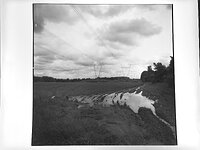
Puddle

Puddle

  • 1
  • 2
  • 37

Recent Classifieds

Forum statistics

Threads
202,716
Messages
2,844,621
Members
101,485
Latest member
minhnk1990
Recent bookmarks
2

Renato Tonelli

Subscriber
Allowing Ads
Joined
Jan 26, 2007
Messages
1,489
Location
New York,NY & Pontremoli
Format
Multi Format
How do you like to present your photos (excluding hanging them)?

What print size do you like best
How many prints in a portfolio
Do you mount them
Are they matted
Are they in a box or "book"

Mine are 8x10 for portraits and 11x14 for landscapes
They are grouped in 10-15 prints
All are mounted
I keep them in a box (the type Light Impressions sells)
 
Mine are a mix of 5x7 and 8x10 (and now some 5x12) prints, matted to 11x14, to fit in one consistent size portfolio box. My prints are the size they are because they're contact prints in platinum/palladium, and I mostly shoot with a 5x7/5x12. I've done 8x10 work, and I like the camera I have in that format, but the format itself doesn't do as much for me.

With mats and mount boards in 4ply, I can get about 15 prints in a 2" presentation box. I've got a lot more prints than that, so I now have four boxes into which I divide the portfolio, and I can edit/shuffle amongst the boxes depending on what I want to present.
 
Sounds like you have a fine system.

I'm not nearly so well presented. I simply post my stuff on the internet 'cause I'm lazy. My friends tell me it's no way to present my 8x10 work 'cause the detail is lost at 72 ppi. Perhaps when I'm 95 some art guru will declare me fit for museum displace forcing me to actually make prints again. The guru will make money off me, I'll die, and never see a penny. Ain't that how it works in art. When alive, the artist gets nothing. Grin.
 
My Portfolio's are in portfolio-cases, I guess you'd say almost book-like in plastic sleeves.

I use a thin card and window mount the images usually 2 to a page, the prints are usually under 10x8. I prefer to do it this way because its flexible and robust and can stand a lot of handling. I would normally take two of these when initially meeting galleries etc - one with the project I'm planning to exhibit with 20 or 30 prints, and a second which has sets of images from previous exhibitions etc, that helps the gallery get a better overview if they don't already know you. I also normally also take a couple of fully mounted exhibition prints.

For more important follow up meetings I take boxed finished prints usually unmounted. However in reality you need to weigh up what's best for each gallery, remembering they are looking for consistency, and a well edited, balanced and sequenced portfolio works far better than a random box of prints.

I would add that the same goes for online Portfolios, and it's interesting to see how few people here have really given thought to these issues when uploading their APUG portfolios.

Ian
 
Last edited by a moderator:
Sounds like you have a fine system.

I'm not nearly so well presented. I simply post my stuff on the internet 'cause I'm lazy.

Since Walt makes his living as a commercial photographer, I think I'll take that "lazy" part with a grain of salt. However, presenting yourself in a way that books commercial and editorial engagements is very different from the way in which you need to approach museums and galleries.

Very few photographers who want to show or be represented take this seriously enough. Museums and galleries are businesses and have little patience with a non business-like attitude. Would you go to a job interview with a two day beard and bluejeans on? Why should presenting your photos be any different?

Here are my rules. I've broken one of them (the first one) and it hurt me. I won't make that mistake again.

1) Don't show your work to anyone whom you seriously want to represent you or to show your work until you have amassed a credible body of work. That means at least 40 prints which hang together as a body of work. They must be mounted, matted and sequenced properly so as to put your absolutely best foot forward. Size of the photographs is irrelevant, but the mats should be same size, ply and material.

2) You might not want to show them all, but you should always show at least 20 in my opinion. If you show Paletti 30 prints, for example, he’ll ask to see more. If you give him 30 more he’ll look at them all. But if you only give him 15 he’ll say that there’s not enough there out of which to select a show, even if he really likes your work. Help him out here. Give him something to work with. (I’m just using him as an example because I know him so well and have watched his gallery develop. But I’m fairly certain this principle is valid with all gallery owners.)

These first two are tough ones. The tendency is to try to show before you're really ready.

3) Always call and arrange a portfolio review rather than just showing up. Be on time, be brief and to the point. Time is money.

4) Stay away from non-professional venues. Having had prints hanging in Borders’ Books, Starbucks, etc. is the kiss of death as far as most gallery owners is concerned. And if it isn’t you don’t want to show there anyway. You are known by the company you keep. Keep asking yourself constantly: “Do I want to be seen in this company?”

5) Prepare an artistic resumé and keep it up to date. No Bravo Sierra, please. If you haven’t shown, just talk about where your interest in photography started and who’s mentored you, etc.

6) Don’t insult someone with an MFA (as a lot of gallery owners have) or Ph.D. by asking them to don cotton gloves when handling your prints.

7) This is a suggestion, not a rule: Consider getting together with some of your buds and putting together a group show. Here again, it needs to hang together thematically, but it can be a great way to get started. That’s what I did with the Azo show that we mounted in Rockville and it was a huge success, especially in Louisville. We all sold prints out of it.

It came about as the result of a proposal I made to the Metropolitan Center for the Visual Arts in Rockville, MD in response to a call for proposals by the Visarts’ Gallery Director. I collected slides of prints by the photographers I wanted to include, and sent them in along with the proposed theme and they loved it! Then Paletti had it shipped out to his gallery and showed it there.

Bear in mind that I don’t care if I ever make a dime from photography. I only want to be shown. I have a day job which pays me well enough to buy the film and paper I need to make pictures. If you want to make money at it, I’d suggest the Michael Smith model, which involves building a network of collectors who regularly purchase your work for their private collections. That’s an entirely different league and probably takes decades to really implement. (And by the way, he and Paula keep hundreds of prints ready to show at all times.)

 
How long did that take to write :smile:

Good words.

But put more simply - If your works not good don't show it.

Be ruthless in your editing, one bad or out of place print can let you down.

And yes find someone else to help you, its invaluable.

The bit about an artists statement is important, but in reality it is just the tip of the iceberg.

You have to be able to contextualise your images, say why you are making them, what you are saying with the images, and how they relate to current photographic practice. You will be dealing in the main with people with post graduate degrees, so you need to be able to communicate your vision at that level.

Ian
 
great advice...

Since Walt makes his living as a commercial photographer, I think I'll take that "lazy" part with a grain of salt. However, presenting yourself in a way that books commercial and editorial engagements is very different from the way in which you need to approach museums and galleries.

Very few photographers who want to show or be represented take this seriously enough. Museums and galleries are businesses and have little patience with a non business-like attitude. Would you go to a job interview with a two day beard and bluejeans on? Why should presenting your photos be any different?

Here are my rules. I've broken one of them (the first one) and it hurt me. I won't make that mistake again.

1) Don't show your work to anyone whom you seriously want to represent you or to show your work until you have amassed a credible body of work. That means at least 40 prints which hang together as a body of work. They must be mounted, matted and sequenced properly so as to put your absolutely best foot forward. Size of the photographs is irrelevant, but the mats should be same size, ply and material.

2) You might not want to show them all, but you should always show at least 20 in my opinion. If you show Paletti 30 prints, for example, he’ll ask to see more. If you give him 30 more he’ll look at them all. But if you only give him 15 he’ll say that there’s not enough there out of which to select a show, even if he really likes your work. Help him out here. Give him something to work with. (I’m just using him as an example because I know him so well and have watched his gallery develop. But I’m fairly certain this principle is valid with all gallery owners.)

These first two are tough ones. The tendency is to try to show before you're really ready.

3) Always call and arrange a portfolio review rather than just showing up. Be on time, be brief and to the point. Time is money.

4) Stay away from non-professional venues. Having had prints hanging in Borders’ Books, Starbucks, etc. is the kiss of death as far as most gallery owners is concerned. And if it isn’t you don’t want to show there anyway. You are known by the company you keep. Keep asking yourself constantly: “Do I want to be seen in this company?”

5) Prepare an artistic resumé and keep it up to date. No Bravo Sierra, please. If you haven’t shown, just talk about where your interest in photography started and who’s mentored you, etc.

6) Don’t insult someone with an MFA (as a lot of gallery owners have) or Ph.D. by asking them to don cotton gloves when handling your prints.

7) This is a suggestion, not a rule: Consider getting together with some of your buds and putting together a group show. Here again, it needs to hang together thematically, but it can be a great way to get started. That’s what I did with the Azo show that we mounted in Rockville and it was a huge success, especially in Louisville. We all sold prints out of it.

It came about as the result of a proposal I made to the Metropolitan Center for the Visual Arts in Rockville, MD in response to a call for proposals by the Visarts’ Gallery Director. I collected slides of prints by the photographers I wanted to include, and sent them in along with the proposed theme and they loved it! Then Paletti had it shipped out to his gallery and showed it there.

Bear in mind that I don’t care if I ever make a dime from photography. I only want to be shown. I have a day job which pays me well enough to buy the film and paper I need to make pictures. If you want to make money at it, I’d suggest the Michael Smith model, which involves building a network of collectors who regularly purchase your work for their private collections. That’s an entirely different league and probably takes decades to really implement. (And by the way, he and Paula keep hundreds of prints ready to show at all times.)

my work that i have in a "portfolio box" is all printed 8x10, and 16x20 4ply windows
the whole thing was 20 ( or is it 30? ) prints in 2 clam-boxes.
a gallery that had me - in their stable - re-windowed me with 8-ply.

i also have my "commercial/editorial" book 20 11x14 images, all printed exactly
the same all presented in a leather handmade book with a post binding,
so i can change and make the pages fresh.

... and ... i also have a series of artist books - hand made japanese bound books
(made by me)
that i present to archives and libraries as "samples" .
they are anywhere from 10 to 30 images.
one is small, the images are all on 5x7 paper with a big "gutter"
(where the hinge is) the others are about 8x10 in a 11x14ish book.
i have had plans for books with 16x20/20x24 pages, but still just a plan ...

i guess i have a few portfolios, all different, but really the same.
 
Last edited by a moderator:
Photrio.com contains affiliate links to products. We may receive a commission for purchases made through these links.
To read our full affiliate disclosure statement please click Here.

PHOTRIO PARTNERS EQUALLY FUNDING OUR COMMUNITY:


Ilford ADOX Freestyle Photographic Stearman Press Weldon Color Lab Blue Moon Camera & Machine
Top Bottom
