

• Welcome to Photrio!
    Registration is fast and free. Join today to unlock search, see fewer ads, and access all forum features.
    Click here to sign up

pinhole blanks

Tractor & Tulips

A
Tractor & Tulips

  • 1
  • 1
  • 34
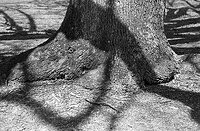
Tree with Big Shadows

Tree with Big Shadows

  • 3
  • 0
  • 82

Forum statistics

Threads
203,459
Messages
2,855,089
Members
101,853
Latest member
DJFOX
Recent bookmarks
0

Ces1um

Member
Allowing Ads
Joined
Jan 12, 2015
Messages
1,408
Location
Nova Scotia, Canada
Format
Multi Format
Does anybody have a website/link where I can purchase premade 20mm disc with a 0.2mm pinhole? I'm kind of hoping to find either a chemically etched or laser drilled pinhole that I can use with my newly 3d printed pinhole camera. I need it to fit this camera:
https://www.thingiverse.com/thing:953359

I know I can make my own but I'm hoping to get one with a higher quality pinhole.
 
I assume you should be able to cut to size a disk/sheet larger than 20mm dia.
 
Does anybody have a website/link where I can purchase premade 20mm disc with a 0.2mm pinhole? I'm kind of hoping to find either a chemically etched or laser drilled pinhole that I can use with my newly 3d printed pinhole camera. I need it to fit this camera:
https://www.thingiverse.com/thing:953359

I know I can make my own but I'm hoping to get one with a higher quality pinhole.

have you wandered to pinhole edun ?
http://www.pinholeedun.com
pinhole billy is a great guy, i bought
my pinholes from him .. he's the real-deal !
he even sells zone plates :smile:
have fun!
john
 
There is little if any improvement in pinhole image quality with purchased pinholes over pinholes many people can make with basic materials.
 
There are some people on eBay that sell 0.2mm, laser drilled pinholes.
 
There is little if any improvement in pinhole image quality with purchased pinholes over pinholes many people can make with basic materials.
That's interesting. I've read just the opposite and pinhole camera manufacturers all put either chemically etched or laser drilled pinholes in stating they're better. I personally have no idea if or why it makes a difference. I've read burs from the metal can add diffraction issues but I don't know if that really amounts to something you can physically see. Have you personally used both and found no difference by any chance? Thanks for your help. I'll likely just try and make one from a pop can then.
 
I swear that if you make them from the thinnest brass shimming material (bought mine in a train model hobby shop, sometimes can be found in arts/crafts supply stores too.) you will be greatly satisfied with the result and enjoy the challenge of making it yourself to boot.
 
I make my own using the 'dimple and sand' method. I use #400 or #600 wet-or-dry sandpaper wet and have gotten some good results. I have done them from .001" and .002" brass shim stock, and have blackened them with a chemical concoction found in model railroad hobby shops. The .002" is easier to handle, and I have had a .001" crack after a year or two, probably the combination of sanding and possibly even some corrosion from the blackening reduced the thickness too much. (It was a plate clamped between oak blocks, so perhaps seasonal expansion and contraction got to it.)

Fabricating your own requires careful craftsmanship and attention to detail to get the best results. It's obviously simpler to just buy something, but I enjoy the challenge (and I'm cheap! :whistling: )
 
That's interesting. I've read just the opposite and pinhole camera manufacturers all put either chemically etched or laser drilled pinholes in stating they're better. I personally have no idea if or why it makes a difference. I've read burs from the metal can add diffraction issues but I don't know if that really amounts to something you can physically see. Have you personally used both and found no difference by any chance? Thanks for your help. I'll likely just try and make one from a pop can then.
I have never tried commercial laser or etched pinholes. I do examine pinholes under considerable magnification, and can make them round and burr free. Lacking a powerful magnifier or microscope, one can scan the pinhole at high resolution and barely enough exposure to keep the light from blowing out the edges of the image. The magnifier has the advantage of being useable at an angle to check better for burrs. I second DWThomas' recommendation of .002" brass shim stock. .001 shim stock is rather fragile.
 
I've done both, soda-can dimple and sand, and purchased laser-drilled from ebay. I prefer the laser ones, they're easier to mount - rout a round opening halfway through the face of the camera, drill a 1/4" or so hole for the light, attach the pinhole with a dab of caulk or silicone and it can be removed if needed. My aluminum ones have relied on tape to hold them in place, though I've cut round ones that fit in things like Isolette shutters. But I'm only into super-wide pinholes for the strange perspective rendering, I really want the sharpest image possible, another vote for laser-cut.
 
Awesome! Thanks for having the patience to put that together.

There are some who argue that chemically etched holes are better than laser-cut because the etching process undercuts the resist on one side leaving a conical hole with a sharp edge. I suspect while that's probably true in an academic abstract theoretical sense, when the holes are fabricated in 1 mil stock I wouldn't expect to see much if any difference. For many purposes an edge in 1 mil stock *is* a knife edge!
 
Yes, thank you very much for that, very interesting! I've always suspected that it's not so much diffraction that sometimes causes decreased contrast, but actually reflections from the rim and inside "tunnel" of the pinhole. I have a few where it almost looks like a light leak, and the effect changed when I sanded them more.... when I "blacken" the film ( or paper, in my case :smile: ) side of the metal, I've never tried to blacken the inside edge of the pinhole itself.....
 

Thanks for doing a practical test. I usually use a lens test chart similar to the AF 1951 chart, but your choice of subject better represents what most people usually photograph. Mr. Pinhole recommends a slightly larger pinhole than I prefer, although perhaps appropriate for the wide angle cameras that are a strong point of pinhole photography. Tests suggest that deviating from the optimum pinhole diameter by 10% causes a measureable loss of sharpness.

A bulky needle holder seems impractical. A few layers of duct tape around the needle may work better.

For making very small pinholes, perhaps less than 010", I use pins rather than needles. The pin is forced slightly through the material and both pin and material are together ground down against a fairly fine whet stone. The pin is discarded after one grounding. If the pinhole is too small, a new pin is inserted into the hole and the process continued. This seems to be the easiest way to get small clean holes, although it may take quite a few attempts to get exactly the right size. Oh well, can't we always use a few extra pinholes?
 
Does anybody have a website/link where I can purchase premade 20mm disc with a 0.2mm pinhole? I'm kind of hoping to find either a chemically etched or laser drilled pinhole that I can use with my newly 3d printed pinhole camera. I need it to fit this camera:
https://www.thingiverse.com/thing:953359

I know I can make my own but I'm hoping to get one with a higher quality pinhole.

https://aupremierplan.fr/custom-cameras/laser-drilled-pinholes/
Sizes: 0.1mm , 0.15mm , 0.2mm , 0.3mm , 0.4mm , 0.5mm, and 1mm. Mounted and marked.
 
Thanks everyone- I have ordered a laser cut pinhole off of ebay. It should arrive shortly.
 
Photrio.com contains affiliate links to products. We may receive a commission for purchases made through these links.
To read our full affiliate disclosure statement please click Here.

PHOTRIO PARTNERS EQUALLY FUNDING OUR COMMUNITY:


Ilford ADOX Freestyle Photographic Stearman Press Weldon Color Lab Blue Moon Camera & Machine
Top Bottom
