• Welcome to Photrio!
    Registration is fast and free. Join today to unlock search, see fewer ads, and access all forum features.
    Click here to sign up

Photographing Old Photos

Horicon Marsh-5

A
Horicon Marsh-5

  • 0
  • 0
  • 0
Millstone, High Water

A
Millstone, High Water

  • sly
  • Dec 17, 2025
  • 4
  • 5
  • 77

Recent Classifieds

Forum statistics

Threads
201,244
Messages
2,821,111
Members
100,614
Latest member
generic
Recent bookmarks
0

awty

Subscriber
Allowing Ads
Joined
Jul 24, 2016
Messages
3,700
Location
Australia
Format
Multi Format
Hi
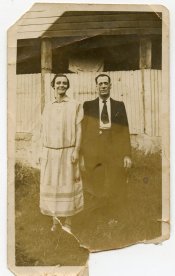
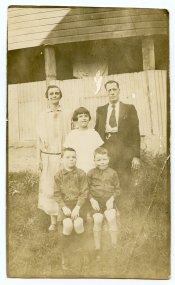
I have a few old family photos I would like to photograph then enlarge, just wondering if someone could tell what would be a good method to get detail with out reflection? Or could point me to a prior thread.
They are from the late 20's and measure 2.5"x 4.25". I have a mamiya rz67 with 180mm lens I could use, or something else.
Thanks
BTW, is there a gallery here for old photos? I have some that may be of interest and I always like really old pictures.
 

Attachments

  • Grandma and grandad bill agnes and frank fitz 1920's304.jpg
    Grandma and grandad bill agnes and frank fitz 1920's304.jpg
    214.7 KB · Views: 185
  • Grandma and grandad fitz 1920's303.jpg
    Grandma and grandad fitz 1920's303.jpg
    185.4 KB · Views: 179

chriscrawfordphoto

Subscriber
Allowing Ads
Joined
Mar 12, 2007
Messages
1,893
Location
Fort Wayne, Indiana, USA
Format
Medium Format
You'll want a macro lens. Unlike regular lenses, macros are corrected for photographing small flat objects and will give sharper results across the image area although the RX67 can focus very close with most lenses.

Unless you have a strong objection to doing any digital work, I would scan them with a flatbed scanner. It is much easier than photographing the old prints. It can be a pain to set up lighting that is both even and doesn't cause glare.
 
OP
OP
awty

awty

Subscriber
Allowing Ads
Joined
Jul 24, 2016
Messages
3,700
Location
Australia
Format
Multi Format
You'll want a macro lens. Unlike regular lenses, macros are corrected for photographing small flat objects and will give sharper results across the image area although the RX67 can focus very close with most lenses.

Unless you have a strong objection to doing any digital work, I would scan them with a flatbed scanner. It is much easier than photographing the old prints. It can be a pain to set up lighting that is both even and doesn't cause glare.
Thanks. I dont have any macro lenses in medium format, have some in 35mm, but would rather a bigger negative.
I have some non reflective glass I could use if that helps?
Yes I know I can scan and inject print, but thats not what I want to do here.
 

btaylor

Subscriber
Allowing Ads
Joined
Dec 28, 2010
Messages
2,283
Location
Los Angeles
Format
Large Format
You need polarized filters over your lights. I did something similar when copying family photos. Macro tubes to get close enough. Quite simple but effective.
 

petrk

Subscriber
Allowing Ads
Joined
Nov 30, 2017
Messages
120
Location
Prague
Format
Multi Format
To avoid reflections the lights should come directed from oposite sides of the old photographs in the angle that has to be arranged so reflections are stil there, but not visible from a viewfinder. Look at copy stands for getting an idea
 
Last edited:
OP
OP
awty

awty

Subscriber
Allowing Ads
Joined
Jul 24, 2016
Messages
3,700
Location
Australia
Format
Multi Format
+1
In any decent (not fancy) flatbed, the design makes sure the specular reflection do not reach the sensor. Much cheaper than macro lens + copy stand + polarizer(s).

Oddly enough thats the exact way they materialized in the first post, its not what Im asking.

Thanks for the copy stand and lighting idea, Ill see what I can rig up, at least I know theres a method.
 

ic-racer

Member
Joined
Feb 25, 2007
Messages
16,696
Location
USA
Format
Multi Format
The tonal range of the source prints looks to be only about 3 stops, so consider that in the equation. That is, expect to increase negative development or print on #5 paper, otherwise your new enlarged prints will be lacking contrast.
You can get good results with a non-macro lens. Don't stop down too much. With the RZ. don't go beyond f11 as resolution will start to decrease.

Artistically I treat this like any photograph of a found object, and I like to emphasize the imperfections and tears, etc in the original, and frame it to include the whole piece of paper on which the original image resides. Rather than using the technique as a 'restoration' technique.
 

removed account4

Subscriber
Allowing Ads
Joined
Jun 21, 2003
Messages
29,832
Format
Hybrid
Hi Paul
Here is what I have done its a trick that they don't want you to know about ...
Use a 35mm camera and of the Kodak Films like TMY/TMX (400/100) [ Ilford variety or other tab grain will work fine too ] 35mm because you have rectantular images. I am not sure how deep you want to get into the copy work but you can get away no copy stand and no lights; just do it outside on a overcast day or open shade. Get a cardboard or a sheet of glass and some of that tack up stuff ( rubber cement also might work ) to get the image flat and set it up on top of ( not UNDER ) the glass or cardboard. You don't really need a flat field macro or micro lens but if you have one it won't hurt. Your lenses are probably not that curved like a 19th or early 20th century portrait or landscape / uncorrected, put a telephoto lens on your camera to give yourself some distance and a good crop. Photographs are flat so it doesn't matter too much if you compress the background. Have your camera on a tripod and bracket your exposures a little bit, stop down a little bit and you should be good to go. I have photographed old family photographs as described, and never had problems. What might give you trouble is the yellowing and staining from age so you might want to look for a filter around the same color as the stains. A polarizing filter would be OK if you have glare but open shade and grey day should eliminate that if you are careful. I also have a copy stand and fanned lights at 45º and used polarized filters and have gone that route, while it works and there is nothing wrong with it, sometimes seat of the pants approach works out OK.
If it didn't work, its just IDK 10 mins and a roll of film ?
Have fun !
John
 
Photrio.com contains affiliate links to products. We may receive a commission for purchases made through these links.
To read our full affiliate disclosure statement please click Here.

PHOTRIO PARTNERS EQUALLY FUNDING OUR COMMUNITY:


Ilford ADOX Freestyle Photographic Stearman Press Weldon Color Lab Blue Moon Camera & Machine
Top Bottom