
• Welcome to Photrio!
    Registration is fast and free. Join today to unlock search, see fewer ads, and access all forum features.
    Click here to sign up

PH-meter help for Developer measurements

Sentry

A
Sentry

  • sly
  • Dec 16, 2025
  • 1
  • 0
  • 0

Forum statistics

Threads
201,221
Messages
2,820,702
Members
100,596
Latest member
bosak
Recent bookmarks
0

Serg Lavrenchuk

Member
Allowing Ads
Joined
Jun 23, 2008
Messages
105
Location
Kiev, Ukraine
Format
Multi Format
I have used for years in the lab not expensive Ezodo mp103 PH-meter for control of RA4 chemistry Developer conditions.
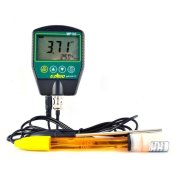
62002421_images_8879288276.jpg

And all those years measuring DEV ph was some kind of game in uncertainty. PH measurement was all the time something in 0.10-0.15 range. Not like 0.05 advertised and needed. Calibration was done every morning before measurement. As soon as you take it into the developer, you get readings that first try to raise and stabilized and then start to drop indefinitely.

After developer measurements electrode never was showing 10.01 in calibration but less. I tried to ask for advice from chemist and hint was that maybe some Surf.active substances reduce electrode activity. I also decided that that is cheap PH meter that I should not expect 0.05 from.

Recently we had to start c41 film processor in the lab and to keep chemistry good state started to monitor chemistry.
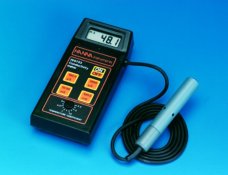
Our bad exp. with Ezodo PH meter made us buying used Hanna 991300-HI 1288 ph-cond meter.
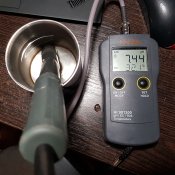
2019-03-04 18.18.15 1K .jpg

It was much easier to calibrate and for sure much better made. But measuring DEV ph again shows the same diagnose - PH is less than expected when stabilized and start to drop slowly (but not indefinite fast drop as with Ezodo and some readings could be taken as "reading"). 10.01 after that show something like 9.94 or something (depending on how alkaline was DEV measured).

EXAMPLE.

I calibrated this morning Hanna with new set of 7.01 and 10.01 calibration solutions. Rechecked several times that 10.01 always shows 10.00-10.01. Go to our 38C film processor DEV. See there stabilized readings (ph-meter stabilise on 37.6C -> I think due to a massive body of the probe) of PH = 9.94.

I know that ph of my developer is 10.03 +/- 0.05 as I know it is in good shape at the moment. So I wash probe and go to 10.01 solution. Get there Ph=9.93. So from these experiments, I could evaluate that my DEV is about 10.02.


That is a time-consuming and error-prone method. And it looks not right for me.

Could somebody advice is it always so weird with Ph-metering solutions or DEV-solutions?
Could somebody tell about how good good Ph-meter should word with a developer?
Maybe somebody could advise about exp. using Hanna Ph-meters like ours. Maybe that is used a probe that drop shadows on well-made device?
 

bernard_L

Member
Allowing Ads
Joined
Feb 17, 2008
Messages
2,113
Format
Multi Format
You know that pH for a given solution should be measured at 20°C? At different temperature, pH for same solution, i.e. - log of H+ concentration, will be different, due to shift in equilibria. And what a given apparatus reads will be again something different, not the standard 20°C pH, and not the -log[H+] at temperature "x".
 
OP
OP
Serg Lavrenchuk

Serg Lavrenchuk

Member
Allowing Ads
Joined
Jun 23, 2008
Messages
105
Location
Kiev, Ukraine
Format
Multi Format
Both devices uses ATC (automatic temperature compensation). For C41 developer I specially try to measure with machine warmed to 38C so to get the same stable T every day. Calibration solutions usually about +\- 25C while calibrating. ATC is on while calibrating.
 

Mr Bill

Member
Allowing Ads
Joined
Aug 22, 2006
Messages
1,520
Format
Multi Format
I've read enough photoprocessing solutions to help wear out a couple of research grade pH meters, long time ago. The color developers are relatively difficult to get good readings, especially if they are "seasoned" developers - from a replenished processor tank. There were specific electrodes recommended by Kodak for dealing with this, and anything else was not seen as necessarily reliable.

As bernard points out you should take the readings at the specified temperature; if you read at a different temperature the values will be different. (If you look at temperature charts for your pH 10 buffer you'll see that different calibration values are spec'd at different temps.)

Regarding the electrodes, I think you can find Kodak recs in the H24 manual for motion picture processing. In the good old days, maybe 20 years ago, you'd be using a double-junction reference electrode with a Corning "Triple-purpose pH electrode," which as I recall cost about $200 US back then. These are long discontinued; I think the current rec (see H24) is a "Ross" electrode, probably more costly.

Could somebody tell about how good good Ph-meter should word with a developer?

We felt that our color developer readings were probably reliable within about 0.02 pH units, but it's hard to be really certain of that because there is no hard reference solution that is similar to the developer. Now, to get this we used research-grade meters that would read to a 3rd decimal place - the point of that was that you could see how fast the reading was drifting so you could judge where the reading would stabilize (it would take about a minute or so with a seasoned developer). I should point out that this was with "manual" meters; the more modern ones apparently figure this out for you (I never used one of these).

Ps, I checked the H24 manual; look at module 3 - the section named ULM-191-2, "pH Measurement of Photographic Processing Solutions."

Try this link -
https://www.kodak.com/uploadedfiles...t_en_motion_support_processing_h243_h2403.pdf
 

Mr Bill

Member
Allowing Ads
Joined
Aug 22, 2006
Messages
1,520
Format
Multi Format
For C41 developer I specially try to measure with machine warmed to 38C so to get the same stable T every day.

No, don't trust that. The buffer has a known temperature characteristic so they can give you temperature corrections. I don't think that the developers can be relied on to perform the same way (unless you do your own temperature series).

Kodak only gives pH aim values at a certain temp (25 C, perhaps?); I would recommend cool down to that temp to read.
 

Photo Engineer

Subscriber
Allowing Ads
Joined
Apr 19, 2005
Messages
29,018
Location
Rochester, NY
Format
Multi Format
The temperature we measured at EK was at 20C. However, there is a bias due to the salts in the developer and there is an ionic effect that causes the electrode to drift slightly after use unless soaked for a while to allow the ions to diffuse outward from the electrode.

PE
 

lantau

Member
Allowing Ads
Joined
Jan 15, 2016
Messages
826
Location
Germany
Format
Multi Format
My electrode doesn't drift in fresh developer. Unless I don't remove the plug to open the KCl chamber to the atmosphere.

However, now I also want to start monitoring replenished developer and I'm wondering if silver ions will leach from the film.

The maker of my set doesn't make the double chamber electrodes for photochemical use anymore. Normal electrodes can't tolerate Silver ions because it will precipitate AgCl in the membrane.

Could that be the cause of your drift or do you have an electrode with KNO3 as outer electrolyte?
 
OP
OP
Serg Lavrenchuk

Serg Lavrenchuk

Member
Allowing Ads
Joined
Jun 23, 2008
Messages
105
Location
Kiev, Ukraine
Format
Multi Format
Thank you all for helping with information.
I need to reread now to rethink a lot of new so would start from the easy part.

1. My electrode used is this one:
https://www.hannainstruments.co.uk/multiparameter-probe-with-ph-conductivity-and-temperature.html
I am not well educated about its type (would read after this post few "how to.. pH electrodes" to understand myself).

But I think now it was too optimistic from my side to expect that this electrode would measure much better than "Ezodo\no name" one
("Recommended Use General purpose, water treatment, agriculture, boilers, cooling towers").

Actually, it does better as drift not so fast and has some point of drift slowing down that I used to count as "that is right".
I would check if I could find something better for my already bought Hanna device.

2. To tell the true - measuring Ph of RA4 \ C41 developer made me so neurotic that I started to investigate other ways.
Buying ra4 strips is expensive and hard here (if they are still produced as I bought the last ones by FujiHunt about 6 years ago).
Making own test strips for C41 looked like a good idea for me but I lack experience and some brain for that yet.

I have found this article on the web:
https://inis.iaea.org/collection/NCLCollectionStore/_Public/47/111/47111913.pdf
And local closing wet plate printing production was selling used Hanna 8733-HI 76302W conductometer:

c5557-large.jpg
with a range up to 199 mS.

They told that used developers with pH more than 11 so my developers we not a problem for its range.

My fellow chemist told me that it would not work well for fine control of the developer state (once a day at least) due to a non-linear relation between conductivity and developer oxidation/concentration/exhaustion.
I did risk 200 USD for device and after 2 months of using it, I miss all the year without it. Conductivity for the C41 developer in the machine reacts very rapidly to minimal shifts in the process.
If everything (and everybody) is working fine I get a shift in conductivity from 69.9 to 70.1 over a week-two period.
Now when there is a drop over the day of more than 0.2-0.3 - I go and find that water replenishment is wrong or pump output, or some guy mixed new developer replenisher that should be rechecked itself.

Measuring conductivity is pleasure and confidence compared to PH (easy calibration that lasts for...moth at least) and you could measure developer 10 times in a row in the tank and get the same result.

But at least every week I wish to measure PH to be sure I do not miss the point of my conductometer play me off.
And that is why I ask for help.


3. When I take my electrode in the morning and calibrate and then put it into developer it starts to drift.
After that help only letting it to stay for some time (usually it is till the next day) in KCl keeping solution.
Sometimes electrodes feel so bad that It needs a few days to recover to a normal state
(not normal is when the time to stabilize in a developer is more than time to shift to some irrational values (like I expect to see 10.35 but already see 10.19 and it is still dropping down).

So probably answer is really "can't tolerate Silver ions because it will precipitate AgCl in the membrane".

I think to prove it should check how quick it "dies" in fix? (to tell the truth I do not like to measure fix/bleach more often than once in few weeks).


4. Fuji gives PH references for 25C. I was told in school that PH is dropping with temperature as a result of matter expansion (with the concentration of its compounds per volume).
So it looked to me that this effect is more or less the same for the different "water" solutions.

As I understand from the mood of some answer it is not that "less" than "more'.

What is really weird - when I tried on practice to remove ATC function on ph meter and measure 20 or 25C developer I never could get digits as in the manual.
But ATC + measuring in the warmed tank showed me something about 10.25 or 10.03.
That is why I did it that way for long years.

I think I need to measure the PH of the developer with 5C steps from 20 to 40 and compare with 10.01 buffer. If the difference would not be tragic - maybe that is why it worked.
Might be PH-abo effect also.


5. Thanks for the advising "pH Measurement of Photographic Processing Solutions."
I would read that manual from Kodak after reading general info about electrode types (it was surprising to me that they do not only differ by good-bad-cheap-expensive type :smile:.
 

Photo Engineer

Subscriber
Allowing Ads
Joined
Apr 19, 2005
Messages
29,018
Location
Rochester, NY
Format
Multi Format
I would not worry too much about pH. The solutions are very heavily buffered and they are at the optimum pH point for the buffer so they are quite stable. A good cover on replenished tanks can avoid any contamination problems from the air, and since it is the first solution, the developer has no carry-in from any other solution.

PE
 

AgX

Member
Allowing Ads
Joined
Apr 5, 2007
Messages
29,972
Location
Germany
Format
Multi Format
What contamination problems from the air?
Airborne dust of ph-active salts?
 
Last edited:

Mr Bill

Member
Allowing Ads
Joined
Aug 22, 2006
Messages
1,520
Format
Multi Format
In the good old days, maybe 20 years ago, you'd be using a double-junction reference electrode with...

After looking back through the Kodak document (my memory is refreshed) I have to retract this statement.

We normally used a "standard" reference electrode, and yes, with KCl filling solution. As I recall, a frit-junction worked decently for some time, but became prone to clogging, presumably due to precipitating AgCl in the junction as a result of tiny amounts of silver in the used (seasoned) developers.

As I recall we had the most success with an annular ring type junction, or perhaps a sleeve junction. These have a relatively high flow rate, and if any suspicion of clogging could be easily flushed out (completely drain the electrode in about 3 seconds, then refill). I should mention that we were reading about 40-50 samples per day from replenished processors, and maybe 10 fresh mixes per day. If one is taking sparse readings, a frit junction may be perfectly usable.

We DID use double-junction references for certain purposes such as potentiometric titrations with a silver bar electrode - methods similar to those in publication H24. But not for standard pH readings.

I should point out that I'm not a chemist - my knowhow is more along the level of a lab tech.

As a note, with hard to read samples we'd often switch to stirring the samples - the Kodak reference discusses this. We'd use a small magnetic stir plate (with a foam heat-insulating pad on top) at slow speed with a small teflon stir bar in the sample. (You should give the calibration buffers the same treatment.) Be careful if if the glass bulb of the pH electrode is exposed; use a stand for the electrode holder and stay comfortably away from the spinning stir bar.

I would not worry too much about pH. The solutions are very heavily buffered and they are at the optimum pH point for the buffer so they are quite stable.

I concur; although we did regularly check processor samples, the color developer samples never varied much on pH. Some things that could cause developer-related process problems, such as a trace bleach contamination, failure to replenish properly, etc., won't really show up in pH readings. They WILL show up right away on process control strips, however. Or an under-utilized process will be subject to evaporation, showing up as a higher specific gravity (use a hydrometer in a clear glass cylinder).

In a C-41 BLEACH pH checks are very useful (as is sp gr). In a commercial process bleach immediately follows the developer, so carry-over developer into the bleach will raise the bleach pH quickly; same if the the bleach replenishment goes off, or perhaps the developer exit squeegee fails, etc. But... since the bleach has a certain amount of carryover developer in it, some of the pH reading difficulties come with it. As a note a pH check of the bleach will show problems earlier than a control strip will.
 
Last edited:

Mr Bill

Member
Allowing Ads
Joined
Aug 22, 2006
Messages
1,520
Format
Multi Format
What contamination problems from the air?
Airborne dust of ph-active salts?

Hi, main issues would probably be first, oxidation of developer - you lose both preservatives and developing agent. This is a much bigger deal in smaller machines where the surface area is relatively large compared to the volume. My main experience is in cine type film processors with perhaps a couple hundred gallons of developer and running film at say 50 feet per minute. In these cases we don't use tank covers. But in minilabs with say 10 gallons of developer the surface area becomes significant. But fwiw minilabs already need a cover to be light-tight.

Or the second problem is trace bleach contamination into developer. Large fast machines need to constantly aerate the bleach in tank. This is a somewhat delicate operation - the ideal bubble size is large enough to pop easily, so that foam doesn't grow in the surface. So it's possible to get bits of bleach backwards into the developer. If the aeration is well controlled just a slightly elevated "wall" between the dev and bleach tanks is adequate. We never needed developer covers on any of our large processors.
 

AgX

Member
Allowing Ads
Joined
Apr 5, 2007
Messages
29,972
Location
Germany
Format
Multi Format
Thus "aiborne droplets of bleach". Actually just a form of spill-over. Less an "air" thing, which puzzled me.
 

Photo Engineer

Subscriber
Allowing Ads
Joined
Apr 19, 2005
Messages
29,018
Location
Rochester, NY
Format
Multi Format
Actually, in some documents I have seen, some people suggest the use of a stop bath after the developer in both RA4 and C41. In response to the latter, Kodak has lowered the pH of the bleach in C41.

PE
 
OP
OP
Serg Lavrenchuk

Serg Lavrenchuk

Member
Allowing Ads
Joined
Jun 23, 2008
Messages
105
Location
Kiev, Ukraine
Format
Multi Format
I have been reading all the information and have got a new general type electrode from Hanna (the only one available to me locally at a reasonable price).

And now I can't answer my own question - is there any sense in measuring pH of c41 FIX and it is safe to measure ra4 BL/Fix?
Looks like the mentioned silver content of fix will clog and kill new very quickly?
 
OP
OP
Serg Lavrenchuk

Serg Lavrenchuk

Member
Allowing Ads
Joined
Jun 23, 2008
Messages
105
Location
Kiev, Ukraine
Format
Multi Format
Have been playing a lot with measuring our chemistry data, and got some info about pH measurement. Maybe someone would find it useful.

1. Have tried a dozen pH brands (meters and electrodes).
At last, I have found an electrode that is not affected by Ag poisoning so I could be confident that after calibration in the morning I could measure C41 DEV+BL+FIX at 38C and have +/- 0.01-0.02 tolerance.
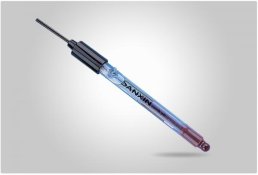
It was ground glass sleeve type junction (image enclosed).

Unfortunately, none of the double junction electrodes even from the top brands could stand firm in any seasoned chemistry.
With new chemistry more or less OK with constant HCL cleaning, but as soon you put it in 38C 10.25 developer you have to see its drift right away.


2. It seems to me that with C41 pH there is sense. pH drifts in 0.01-0.02 are clearly saying that the developer needs more/less replenishment.
Comparing with CI plots I see almost the same trends. Time to make / process/measure / analyze step target is 10 times more than measure pH in the tank at 38C and compare to the plot.
Unfortunately, replenishment drifts all the time as sometimes there are days with zero porta/ektar and some days with 0 Gold/ColorPlus. I tend to think that these films load chemistry different.


3. Bleach and pH really help. And with big loads of Portra160 and Ektar100, we sometimes not only use help from pH levelling our Bleach at 4.30 but instead strengthen tank with 20% of replenisher (about twice a month) and levelling pH after that on 4.30.
I don't know what is wrong with our bleach or these films but retained silver problems in Dmax areas sometimes are appearing.

Unfortunately, with pH plots, we are still can't predict them (with densitometric sometimes could sometimes not) but fix them without reliable pH metering or checking general Bleach health appeared impossible.


4. Chemistry producer made his own tests and agreed with us that mixing developers (at least c41, ECN2 ...but with see with all other too) on distilled water (as we do in the lab) makes working solutions about +0.06 pH more than on tap water.
When in replenished machines that is not a big problem as a system stabilize on the right pH after some time. But with Jobo processing that makes worries. So having some trusted pH equipment let you at least see and know this (and then decide how to go with it).


5. 25C or 38C. I have tried both ways. With single/double combined and even separate reference electrode with not ceramic but cloth junction better worked 25C as electrode had more time to live with calibration in his heart before drifting away.
With trusted and firm electrode I found it is more reliable to ask personal measure chemistry right in the machine heated to work temp and plot that way (and have tests of how much different pH of this solution is from 25 to 38).
For example, for seasoned tank c41 developer pH at 38C is +0.02 from the 25C.

But I have found that calibration of the meter is important at as much 25C as possible for the 10.01 buffer (for 7 it is not that critical 20 to 26C with ATC showed +/-0.01 in final measurement accuracy of developers 10-10.75 pH).
And ATC worked somehow tricky with 10.01 calibration buffer - making 0.05 and more deviations in final measurements of 10.25 to 10.75 solutions).

6. Thank you Mr. Bill. I think only now after half a year of practical pain in the ass and rereading manuals and FAQs by Toledo/Hanna/InLab/Yokohawa.. I have reread and understood every your word now.
Half a year I was rereading it and couldn't understand any. Looks like practice makes the theory to diffuse the skull. We had this story with +0.06 pH with distilled water vs tap and before I pushed chemist to try himself
I tried to remeasure solutions in a few different universities and medical labs. The best exp was a lab on the question of how often do you calibrate and change buffers answering we give out pH equipment once a year to the metrological institute for calibrations.

And yes - we also tried to stir sample with a magnetic stirrer as we found impossible to calibrate high precision lab ph meters another way (with disp.resolution of 0.1mV and probably sensing even 0.01). If you do not stir it - it never gets to the state of firm 0.1 mV during few seconds so never allowing to use reading for calibration done. Stirring sample always gives us +0.02/+0.03 pH to readings (depending on magnet speed). But not I reread your words and see logics = as we did the same for the buffers we had compensation.


PS writing this I can't get my eyes dry (getting in mind every time that PE is not here anymore).
Thank you, PE, for everything.
 

Attachments

  • model_2503_c_ph_glass_probe.jpg
    model_2503_c_ph_glass_probe.jpg
    14.7 KB · Views: 130
Last edited:
Photrio.com contains affiliate links to products. We may receive a commission for purchases made through these links.
To read our full affiliate disclosure statement please click Here.

PHOTRIO PARTNERS EQUALLY FUNDING OUR COMMUNITY:


Ilford ADOX Freestyle Photographic Stearman Press Weldon Color Lab Blue Moon Camera & Machine
Top Bottom