• Welcome to Photrio!
    Registration is fast and free. Join today to unlock search, see fewer ads, and access all forum features.
    Click here to sign up

Notes from your exposes

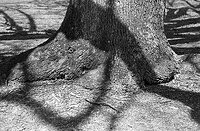
Tree with Big Shadows

Tree with Big Shadows

  • 2
  • 0
  • 65
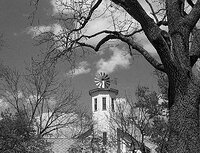
Everal Barn

A
Everal Barn

  • 3
  • 1
  • 73

Forum statistics

Threads
203,455
Messages
2,855,012
Members
101,851
Latest member
Si_Voltage
Recent bookmarks
0

OMU

Member
Allowing Ads
Joined
Oct 23, 2007
Messages
743
Location
Norway
Format
Multi Format
:confused:
Hi,
I have until now registered my exposures notes in a small notebook, and later tried to scribble down my development times in red on the pages. But this is’ n good enough!

I have the form that Ansel Adams used which is copied in “The negative” – but I find it too complicated.

Could you show me your form?

I shoot 35mm, 120 and 4x5.

Regards
- OM -
 
I put post-it notes on my film holders or around my rolls just to remind me what to do when I develop. Other than that, I sometimes make notes on contact sheets if I've pushed or changed dilutions or whatnot. I don't have any notes beyond that.
 
I don't actually make notes of my exposures but attach labels on my film casettes and camera backs. All I need to remember from my measurements
is how does the scene luminance compares with the way I envision the subject. In other words how do I need to develop the film (normal, expansion or contraction) in order to get where I want.
I use enclosed templates to print a full page of Avery labels. The reason I do it is because I load my own cassettes with 8-10 frames which is enough for me to cover a subject. This alows me to develop each casette based on my light measurements N, N-1 or N+1. I do this for my 35mm and 120 films. I have not dived into LF yet. I hope this helps
 

Attachments

  • Film casette Labels-AGFA.doc
    33.5 KB · Views: 237
I shoot with a F5 w/the data back & F6. Both allow me to download the shooting data and then add notes on each shot such as subject, any filtration, etc. When out shooting I take a small spiral bound note pad and record the information for each shot or series so I can then translate that to the individual rolls when them come back from the developers. It has worked pretty well so far.

I don't develop my own film. I usually send it out to A&I in California. Some times I will request a CD at the same time but usually I will wait to get the film back and then scan any frames I want.
 
When I was young.....

(Don't you hate posts that start this way :smile:).

Anyways, a long time ago, while focussing on other more academic pursuits, I also trained as a graphic arts printer.

This meant I had full run of a very well equipped offset printing shop.

I designed a form that fit perfectly on the back of the base of the (n)eveready case for my Olympus OM1, while still permitting me to close the top of the case, if I needed to do so.

It gave me a place to record the exposure data for every frame of each roll I shot on that camera, providing I used a new form for each roll (there was room on the form for other data too, like date, film, and development info).

I printed up and trimmed to size a few hundred of the forms, and used them for a while. I became lazy, however, because I found that in most cases, if I had paid close attention to my process of determining exposure, I could remember that process and the results for quite some time after.

Even now, I am still likely to remember my thought processes, and the results, days or sometimes weeks after I make the exposure.

This skill/affliction probably inhabits the same portion of my brain that allowed me to recall a phone number this last weekend that I probably haven't called in the last 5 years.

Now if only I was better at remembering the names of those people I met last week :smile:.

Matt
 
omu,its rely hard to take time to write full and complete notes for me shooting with med. format, but I try.Large format has that great ability to deve. neg separately where note taking seems alot more meaningful .35mm is fast and a bit generalized as well as 120 to me.
mike
 
Thanks to all of you for your ansvers.
It’s time consuming to make notes on every frame I take. But I’m trying to refine my exposing teknikk and my development skills and find it useful to take notes for a while. Notes both from the exposing and the development kept together with the negatives. In that way I hope my abilities to make good negatives will improve and my photographs better.

“I’ll rather bee a god craftsman then a bad artist”

- OM -
 
I don't develop my own film. I usually send it out to A&I in California. Some times I will request a CD at the same time but usually I will wait to get the film back and then scan any frames I want.

Don't you love a and I? They've gotten a bit too expensive for me so I've had to stop and they were beginning to take too long but their service has been excellent.
 
I remember everything. Then forget it. Then I cuss.

But seriously....

I do have a small notebook (a bit bigger than a 6x9 frame of film) with a built-in rubber band that I try to always have in my jacket's inside pocket. When I am shooting on a tripod with a meter, I take notes when I can. When I am using film holders, I put a piece of blue painter's tape on them and number or letter each one. if I have time, I write extra info on the tape as well.
 
Not a great note taker. If I am making final exhibition prints which will be for sale I will take quite detailed notes regarding the making of the prints in the vain hope I will sell more than one. Has only happened once so far!!
On top of plastic negative sleeves I will write notes on developer, dilution, time, temperature, agitation method but that's about it.
 
I have developed the habit of writing exposure notes down in a notebook that I always keep in my shooting backpack. Roll number based on the date, film used, subject(s), f/stop and shutter speed, object in scene placed on Zone III, Zone on which important highlight falls, filter used if any. Seems like a lot to write, but I use a shorthand that works for me. The most important frames on the roll dictate the development to be used, which I also write on the note page, which follows the film to the darkroom and gets stapled to the file in which the negatives, contact sheet, and any pilot prints from the roll are stored.
 
FirePhoto
It sounds that your habit is something like I have thought about.
I have thought about making a consistent form to use, to keep order of the notes. Would it be too much to ask for an example of your notes?
 
For me what I find is the easiest thing to do is use a piece of masking tape at the top of each of my film holders. I shoot 4x5,8x10,11x14 & 8x20. Each holder has a piece of tape with the film and what speed I shoot it at the date and scene and my zone info the lens ,speed , f-stop and filter if used. I then transfer this info to the negative storage sleeve. I also indicate development info on the tape. Usually almost everything is a plus situation for carbon transfer printing. When I print I put the print info on the negative sleeve along with the densitometer readings for future printing. Not all that hard to do and the holders that have no info on them are unexposed and ones with no tape have no film.

Jim
 
Thanks to all of you for your ansvers.
It’s time consuming to make notes on every frame I take. But I’m trying to refine my exposing teknikk and my development skills and find it useful to take notes for a while. Notes both from the exposing and the development kept together with the negatives. In that way I hope my abilities to make good negatives will improve and my photographs better.

“I’ll rather bee a god craftsman then a bad artist”

- OM -

Pick up a pocket recorder and tape your notes in the field. You can then transcribe them back home onto paper or into a spredsheet or database if you are so inclined.

Best regards,

Bob
 
FWIW - I got a voice adaptor for my iPod so I can use it as a voice recorder. I don't use it for every exposure - just for specific notes I want to remember. For example where I "over-ride" meter recommendations and why. I used to try and take notes on everything - but I hardly used them and they slowed me down so much. I find my proof sheets tell me all I want to know - too little DoF, too slow or fast a shutter speed. And, to be honest, the shutter speed / f -stop info was useless without knowing what the prevailing light levels were. Once you test for and establish your EI with your meter you only need to know when you over-ride and why. The rest is evident in your prints.

I do use the iPod a lot to record potential subject matter when I'm out so I can build a log of images to be taken - I've found that much more useful than going out, gear in hand, hoping to find something to photograph. That's when I make my absolute worst images. (With the exception of street-shooting, of course.)

Bob H
 
I like the eyepod idea Bob, half to get one.When you get back to the dark room are the little messages hard to follow or understand,thats thing I have with writing down notes is trying to understand my scrupling.
 
I like the eyepod idea Bob, half to get one.When you get back to the dark room are the little messages hard to follow or understand,thats thing I have with writing down notes is trying to understand my scrupling.

Yep Mike - I always have my iPod with me anyway and I just happened on the voice recorder adaptor so it was much more convenient than a separate unit. I never took a large notebook into the field and quick notes in a small book were almost illegible when I got back in the dark.

Sometimes I'll transcribe the recordings - particularly the "ideas" for photos. Then I develop a book of things to be taken by season and time of day. That way, when I go out to photograph it's with a particular subject / object in mind -rather than rambling around hoping to come across something that grabs my fancy. (If you'll pardon the expression:D:D)

Bob H
 
My 35 records them for me, but I never look at them.
6x6, 6x7, 4x5 and 8x10 never. Velvia 50 with sun = f:22 at 1/15, works every time.
The only time I write something down is when testing my lightmeters, the Gossen ProfiSix is my reference and is acurate.

Peter
 
For 4x5, I use a small 'perfect bound' notebook. Previously, I used a spiral bound notebook, but found that the spiral would eventually be bent out of shape when it was stuffed into my camera bag, and the 'perfect bound' option worked better.

I note exposure and lens, choice of filter (if any), and whether I anticipate the need for compensating development. Also, if something about the experience triggers a phrase that might become the basis for a title of a print, that also goes into the notes.

Then, after processing the film, I transfer the notes to a page that gets filed in a binder along with proof sheets from the negative. This page is printed on 8.5x11" paper and includes both the original exposure information and printing notes, with space for information on four negatives per page.
 
View attachment Film og kopiskema II.XLS

View attachment MF eksponeringsskema.xls

Hi all,
attached are the two sheets that I use for MF - one to use in the field, recording exposure as well as compensation notes, the other for use in the darkroom, detailing development details, exposure, toning, dodge/burn, paper choice, paper developer choice information for each print made from the film in question.

This is fairly simple to use, gives end-to-end overview of each film's journey through life and is very low-tech (which is what I wanted).

I should note that I put together the field exposure sheet after watching one of Jason Brunner's youtube tutorials.
 
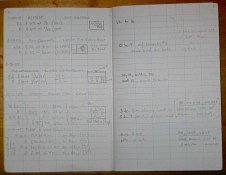
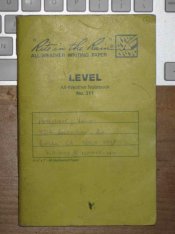
I don't worry about an actual "form". I use Rite in the Rain notebooks -- waterproof and I write in pencil.

And for fun, here is the image (8x10 platinum/palladium print) from the first entry on the page.

(there was a url link here which no longer exists)

Vaughn
 

Attachments

  • NotebookPageSample.jpg
    NotebookPageSample.jpg
    102.3 KB · Views: 158
  • IMG_0424.jpg
    IMG_0424.jpg
    62 KB · Views: 140
Last edited by a moderator:
One option is to take a digital snapshot with your cellphone and dictate notes attached to the photo. At home when you have the time, you can transcribe them as need be.

Designed for large format, the BTZS software is very good. I use that with my Palm or Palm phone for keeping track of each exposure.
 
I'm gonna look for an entry in one or more of my notebooks and TRY to explain what they are. It may be difficult. I am posting this now to be able to search for "my posts".

I don't bother much with exposure, etc. Did you note Saint Ansel's quote of Minor White? When AA asked MW for data the reply was "the camera was faithfully used". In that spirit, I record the reasons for the decisions I make. The f/stop and shutter speed, etc. are really not very important - unless it's going to stay the same and I need to go back. That sometimes happens indoors, but almost NEVER outdoors.
 
I normally only record information when using sheet film. I borrowed Jason Brunner's idea and designed my own book that I had printed on LULU. The first several pages have tables such as Filter Factors, Reciprocity Failure Compensation for the films I use, Exposure Time Conversion charts for my pinhole and zone plate cameras, and notes about exposure adjustments for my various lenses. The Exposure Record pages are a compilation of my own design, the Way Beyond Monochrome design, and probably stuff that I have seen others use.

I find it useful because I don't use my large format equipment often so, when I do, filling in the blanks helps me remember to include filter, extension, and reciprocity adjustments to refine my exposure. I also record any intended development adjustments. Being able to compare my developed negative with what I did in the field is a good learning tool for me.

Dan
 
Photrio.com contains affiliate links to products. We may receive a commission for purchases made through these links.
To read our full affiliate disclosure statement please click Here.

PHOTRIO PARTNERS EQUALLY FUNDING OUR COMMUNITY:


Ilford ADOX Freestyle Photographic Stearman Press Weldon Color Lab Blue Moon Camera & Machine
Top Bottom