

Gelatin dry plate photography dates from the 1870s when silver halide photographic emulsion was hand-poured onto glass plates and allowed to dry prior to use as a negative. The development of dry plate negatives made photography more convenient than the wet plate process of the Civil War era, which required the negative to be exposed and developed onsite. With dry plate photography, the need for a portable darkroom was eliminated, making photography more accessible and allowing more people to become amateur photographers. When Kodak started producing “modern” film by coating flexible celluloid in the late 1800s, the use of glass as a substrate was rendered obsolete. Dry plate photography faded out of common use by the late 1920s.
I make my own dry plates for my photography, and have been doing so for several years. I like the look of this basic emulsion so much that I decided to start selling them to share with other photographers interested in the process. Everyone has been very supportive and the results they are generating just look incredible!
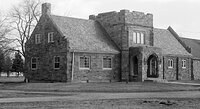
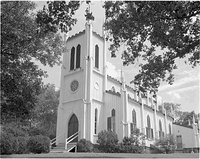
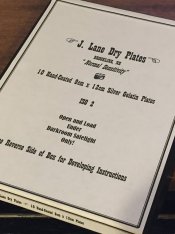
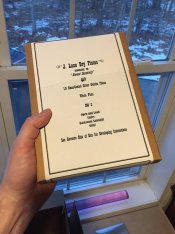
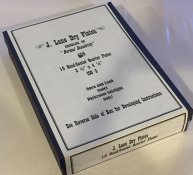
I've developed a recipe that I like, and when coated the plates come out beautiful. This is a "normal" emulsion, and responds solely to blue and UV. I shoot these at ASA 2 and develop for 5 minutes in HC-110 dil B per the recommendation included on the box. Others have had very good results with other developers...chances are what you have on-hand will work great, and the benefit of developing under safelight means you can develop by inspection (just like prints). See my photos in the media section for examples of the results. The results are beautiful and unique. In my mind, they bridge the gap between wet plate and film, and share characteristics of both media (perfectly in line with what happened historically, if you dig into the late-1800s literature).
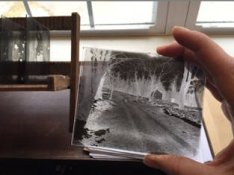
These plates are hand-coated onto hand-cut glass. The glass edges are ground for safety, but should be handled with care. I notch the edge of the plate very similar to how sheet film is notched, so you can orient by feel in complete darkness if you don't have a safelight or you just like hanging out in complete darkness. I visually inspect the emulsion after coating and screen out plates that didn't coat well. Even so, be aware that there might be minor flaws in the emulsion which will add character to the final product.
Either click on the footer ads that pop up here in Photrio, or follow this link to my storefront.
https://www.etsy.com/shop/Pictoriographica/
I've also set up a facebook group so dry plate photographers can share results: https://www.facebook.com/groups/1428512583937923/
Try them out. Dust off your plate camera, order a box or two of plates, and take a step back in time to the first popular photography craze of the late 1800s.
"Standard" offerings are:
4"x5"
5"x7"
8"x10"
9x12
Whole Plate
Half Plate
Quarter Plate
Sixth Plate
3A plate (or Postcard size)
120 format sizes (ask)
In addition, plates are available in *any* size. Measure your plate holder and ask. I've cut everything from 35mm size which turns your 35mm camera into a one-shot affair (great for loading up a bunch of cameras on your shelf and taking them *all* out at the same time lol), and on up into Ultra-Large Format. My "production process" is such that I can turn around custom orders in about 2-4 days. Sizes smaller than 12" on a side are cut from 0.050" thick glass. Larger sizes are cut from 3/32" thick glass or 1/8" (depending on the actual size).
Thank you and please don't hesitate to ask questions!
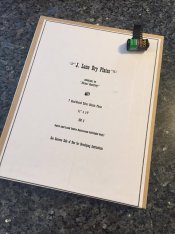
I make my own dry plates for my photography, and have been doing so for several years. I like the look of this basic emulsion so much that I decided to start selling them to share with other photographers interested in the process. Everyone has been very supportive and the results they are generating just look incredible!
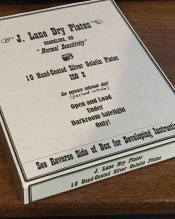
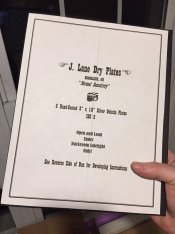
I've developed a recipe that I like, and when coated the plates come out beautiful. This is a "normal" emulsion, and responds solely to blue and UV. I shoot these at ASA 2 and develop for 5 minutes in HC-110 dil B per the recommendation included on the box. Others have had very good results with other developers...chances are what you have on-hand will work great, and the benefit of developing under safelight means you can develop by inspection (just like prints). See my photos in the media section for examples of the results. The results are beautiful and unique. In my mind, they bridge the gap between wet plate and film, and share characteristics of both media (perfectly in line with what happened historically, if you dig into the late-1800s literature).
These plates are hand-coated onto hand-cut glass. The glass edges are ground for safety, but should be handled with care. I notch the edge of the plate very similar to how sheet film is notched, so you can orient by feel in complete darkness if you don't have a safelight or you just like hanging out in complete darkness. I visually inspect the emulsion after coating and screen out plates that didn't coat well. Even so, be aware that there might be minor flaws in the emulsion which will add character to the final product.
Either click on the footer ads that pop up here in Photrio, or follow this link to my storefront.
https://www.etsy.com/shop/Pictoriographica/
I've also set up a facebook group so dry plate photographers can share results: https://www.facebook.com/groups/1428512583937923/
Try them out. Dust off your plate camera, order a box or two of plates, and take a step back in time to the first popular photography craze of the late 1800s.
"Standard" offerings are:
4"x5"
5"x7"
8"x10"
9x12
Whole Plate
Half Plate
Quarter Plate
Sixth Plate
3A plate (or Postcard size)
120 format sizes (ask)
In addition, plates are available in *any* size. Measure your plate holder and ask. I've cut everything from 35mm size which turns your 35mm camera into a one-shot affair (great for loading up a bunch of cameras on your shelf and taking them *all* out at the same time lol), and on up into Ultra-Large Format. My "production process" is such that I can turn around custom orders in about 2-4 days. Sizes smaller than 12" on a side are cut from 0.050" thick glass. Larger sizes are cut from 3/32" thick glass or 1/8" (depending on the actual size).
Thank you and please don't hesitate to ask questions!
Last edited:

