• Welcome to Photrio!
    Registration is fast and free. Join today to unlock search, see fewer ads, and access all forum features.
    Click here to sign up

Neopan 400 Recommendations

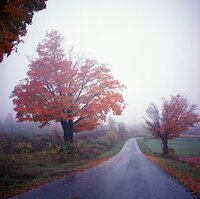
Rainy Day Trees

A
Rainy Day Trees

  • 1
  • 0
  • 16
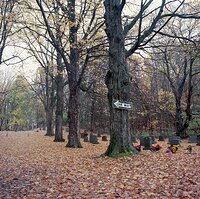
One Way

A
One Way

  • 0
  • 0
  • 12

Forum statistics

Threads
203,143
Messages
2,850,502
Members
101,695
Latest member
zzbao
Recent bookmarks
0

Richard Jepsen

Member
Allowing Ads
Joined
Jul 1, 2006
Messages
877
Location
Oklahoma, US
Format
Multi Format
I don't have time to test 135 Neopan so I'm reaching out for advice.

The last decade at Christmas I have been making an image record of my relatives. Shooting conditions are interior natual light. My favorite film is Tri-X rated at 200 developed in D-76 1:1 or 250 in XTOL. 200 is slow so I've wanted to try Neopan 400 rated at 320 developed in D-76 1:1.

Will Neopan have the same rich tonality as Tri-X?
To avoid empty shadows what is the recommended film speed?
 
Last edited by a moderator:
Richard, you will find Neopan 400 has less slightly grain than Tri-X but there is not much between the two. Neopan-400 also needs a bit of a boost in shadow detail, so exposing at 200 is normal for me, but I have run at 800 souped in ID11 1:1 with great results too. It is my go to 400 speed film most of the time.

Tonality wise, Neopan-400 is on par with Tri-X. Lovely glowing highlights and decent shadow rendering. Most of the time, I soup mine in Pyrocat HD and have had long subject brightness scenes rendered very well with really good tonal seperation. Similarly, with lower light conditions, it does well and the tones seperate out nicely. Like I mentioned before, it does need more exposure for shadow detail though.

As for being visually sharper than Tri-X at 5x7 enlargements. I would say that it would be hard to see a discernible difference at that small a size. Maybe if enlarged to 14x11, that would be easier to see, but even then it's likely nothing to sweat over. I think from a price perspective. It is the best value film for the money being so much cheaper than either Kodak and Ilford counterparts. Where I get my supplies from anyway, and every little savings helps get other needed consumable materials.

Try it, I think you will be pleasantly surprised.
 
Like Andrew, I also like Neopan 4oo in D-76 and Pyrocat. My D-76 times are 9.5 min, diluted 1+1 at an EI of 200.

For Pyrocat, I think I do 13 min, but it's right off the Massive Dev. Chart.

Good film.
 
I have been using Neopan for several years now, it is an excellent film when processed in D76 1+1.

I have been rotary processing in D76 1+1 for 10.45" @ 20ÂşC with a rating of 320 ASA. No pre-wet!

Your times will vary, but this should get you in the ball park

If you look at my gallery you will see quite a few prints using Neopan. There are few, if any taken indoors, but I have used this film mostly in natural light. Under tungsten I rate it at 250 ASA with the same development times and regime.

Mick.
 
I find Neopan 400 has a lovely smooth tonal range. It's not overly contrasty when developed properly.

I used to use Adox APX or DD-X with it.Although it seems to work fine with lots of developers.
 
I use HC110 Dil B and I have been toying with development for shadows. I like what about 10% additional developing and adding one agitation per agitation schedule (orig two agit. every thirty seconds, making it three every 30 now). Really seems to be filling out the negs well. Things can be done to make the Neopan 400 as rich in the shadows. If you don't mind spending the little extra, stick with the original. If you don't mind getting to play with your process, the Fuji would be a great option.
 
No time to test,
so you can either trust Fuji,
or to magic. Fuji suggests Xtol, use their time.

BUT
If you'd like to specify the results,
this is the curve that Apug Sponsor Foto-Imports
published based on their tests, with agitation every thirty seconds.
I've used it myself, and the results are wonderful.
Again, with one shot at this, you might add 20% to the development time to
cover any exposure errors. You iron out perfection later.

xtol-np400.gif
 
On a side note, one thing I loved about the Neopan films was their super clear base, such a beautiful and clear negative compared to that thick base of TX. Even though I stick to TX for other reasons, I do wish it'd clear up like Neopan, makes for an easier neg to work with imo. But, if I recall the downside to the Neopan also had to do with their base, in that they're more fragile and prone to "cat eyes" if you're rough, something nearly impossible to do with TX 35mm.
 
Thanks for the responses. Andrew, your post was especially helpful as it indicates I can not record the shadows properly without derating Neopan 400. DF the chart was useful. Other than a clear film base, it does not appear I would get a speed advantage using Neopan vs Tri-X. Thanks for the help.
 
Thanks for the advice. Andrew, your comments were especially helpful to confirm Neopan 400 needs to be derated similar to Tri-X. DF, the chart was useful.
 
Why not use TriX in DDX and get the full 400 out of it? I think it looks better than in D76 personally. You could also use HP5 at 500 in DDX.
 
I have recently started using Neopan 400 (historically I've used Tri-X 400), and like it a lot, so far. I have also noticed the seemingly very clear base, but when I checked it with my densitometer, I got readings like 0.28, which seems really, really high. What have some of your experiences/readings been?

Attached is a 35mm photo with Neopan 400 rated at 800. Window light, F4 1/125, Developed w/ XTOL 1:2, minimal agitation (Thanks DF Cardwell).
 

Attachments

  • L08-040-26 (1).jpg
    L08-040-26 (1).jpg
    59.6 KB · Views: 179
Photrio.com contains affiliate links to products. We may receive a commission for purchases made through these links.
To read our full affiliate disclosure statement please click Here.

PHOTRIO PARTNERS EQUALLY FUNDING OUR COMMUNITY:


Ilford ADOX Freestyle Photographic Stearman Press Weldon Color Lab Blue Moon Camera & Machine
Top Bottom