
• Welcome to Photrio!
    Registration is fast and free. Join today to unlock search, see fewer ads, and access all forum features.
    Click here to sign up

Need help with lith printing

Moment of Spin

A
Moment of Spin

  • 0
  • 0
  • 44
Bad patch

H
Bad patch

  • 1
  • 0
  • 33

Recent Classifieds

Forum statistics

Threads
203,101
Messages
2,849,826
Members
101,667
Latest member
zappy
Recent bookmarks
0

Dan Dozer

Subscriber
Joined
Dec 10, 2004
Messages
414
Format
Large Format
I'm new to lith printing. Matt Blais was over here a couple of days ago to show me the ropes so to speak. We were doing 16 x 20 prints on Ilford MGFB (both glossy and semi matt). I had some lith developer that we used (Rollie). Note that the developer concentrates had been sitting in a half full bottles for a couple of years. We mixed it up at about 1:25 dilution and the first 3 prints or so worked really well. However, after that, we got clumping of the grain as shown in the attached image.

We tried some other developer (Moersch) and got one good print, but the second one started doing the same thing. Matt hadn't experienced this before in his work and wasn't sure what was causing it.

So - what could be causing this? Is it:

- bad developer concentrate that had been sitting in the half full bottles for too long.

- bad water - we used tap water to mix the developer. Maybe I should use distilled water.

- couldn't have been the paper because we used sheets from 3 different packages.

- something else????
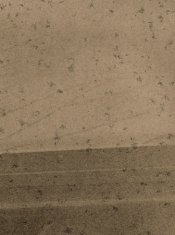
 

Attachments

  • lith print 10001.jpg
    lith print 10001.jpg
    151.1 KB · Views: 292
Do you use a separate developing tray for lith printing?

Leftovers from regular development may affect the lith printing process, and if you use the same trays for both processes, you have to scrub them clean religiously.

Your tray is the only common denominator.

One more, do you 'poke' your prints with your tongs to keep them submerged at all? Lith printing is very sensitive to this. But you'd have to have been pretty abusive to get this many marks from tongs...
 
The tray thing may be the issue. Since I've just started lith printing, I don't have trays dedicated to it. I know that Lith printing is more finicky than normal developer so I'll try to clean things better before trying it again.

We were very careful with the surface of the prints during developing (no poking at all).
 
Sounds like a plan. I have used Scotch Brite pads that are almost worn out to clean my developer trays in the past, with good success. A tray cleaner such as Edwal is a good product as well, but it is imperative to get all of 'whatever' chemistry remains are on the surface of the trays off before you start your process, since your developer is so dilute.

Good luck! I really hope this works out for you.
 
I would say, be glad you got any good lithing. Ilford has never been a good paper for me in lith, with the warm tone being an occasional performer. I often get the blotches you show here even with the warm tone, and this may indeed be a symptom of the poking that Thomas mentions.

This is not the solution to your problem, but it bears mentioning: if you haven't already done so, bleach and redevelop in hot lith--Ilford is much more dependable (warm tone especially). Fairly strong for the first time, bleach in either copper sulfate bleach or potassium ferricyanide bleach, then higher dilution but significantly warmer water for the second pass. Apologies, but I've never measured the temperature of the water for the hot pass.
 
I would say, be glad you got any good lithing. Ilford has never been a good paper for me in lith, with the warm tone being an occasional performer. I often get the blotches you show here even with the warm tone, and this may indeed be a symptom of the poking that Thomas mentions.

This is not the solution to your problem, but it bears mentioning: if you haven't already done so, bleach and redevelop in hot lith--Ilford is much more dependable (warm tone especially). Fairly strong for the first time, bleach in either copper sulfate bleach or potassium ferricyanide bleach, then higher dilution but significantly warmer water for the second pass. Apologies, but I've never measured the temperature of the water for the hot pass.

The Ilford Warmtone can be nice in direct lith printing too, but usually you have to tone it afterward. It is actually my primary lith paper. Takes a bit of work, but the results are rewarding, I think.

The second pass lith is an interesting technique. The trick is to make a standard print that's good, then over-expose it 1/2 stop in the enlarger (open up the lens 1/2 stop and expose for the same time). Then bleach it back almost to completion, and re-develop in hot and dilute lith bath.
The idea with the 1/2 stop overexposure is that you don't re-develop the print all the way, but stop before it's re-developed to completion, in order to retain more exciting color. Stop, fix, and wash again.
I agree that the Ilford paper is really very good for this process.
 
Simple fix, don't waste your time using Ilford MGIV FB for lith (unless you want to try the second pass technique mentioned above).

Get some Ilford MGWT, Fomatone, Fomabrom IV 123, Oriental Warm tone, Adox MCC or even Arista.edu ultra

You'll enjoy lith a lot more if you use papers that really lith well
 
Last edited by a moderator:
Simple fix, don't waste your time using Ilford MGFB for lith (unless you want to try the second pass technique mentioned above).

Get some Fomatone, Fomabrom IV 123, Oriental Warm tone, Adox MCC or even Arista.edu ultra

You'll enjoy lith a lot more if you use papers that really lith well

The regular Ilford MGIV doesn't lith well at all. But the warm tone version has been nothing but superb for me, and I will have to disagree with the 'wasting your time' statement. :smile:
I guess we can't all like the same things.
 
The regular Ilford MGIV doesn't lith well at all. But the warm tone version has been nothing but superb for me, and I will have to disagree with the 'wasting your time' statement. :smile:
I guess we can't all like the same things.

I was only referring to the MGIV, will edit my post to clear that up :smile:

Going to have to go buy some WT now and try it out
 
I have never had any problems with lith printing, using old trays for developing. But I guess I am born under a lucky star.
 
For what it's worth, the prints that did work look really beautiful - we were using warm tone paper.

So - Thomas, if I'm understanding you correctly,

One print I did looks really nice, but it's a little darker than what I wanted. From your description on the bleach and re-develop approach, this might actually be good to try for that process.

Part of me is scared to try it, because even though this print is a little darker than I planned for, it has a real moody look to it that I also like quite a lot.
 
For what it's worth, the prints that did work look really beautiful - we were using warm tone paper.

So - Thomas, if I'm understanding you correctly,

One print I did looks really nice, but it's a little darker than what I wanted. From your description on the bleach and re-develop approach, this might actually be good to try for that process.

Part of me is scared to try it, because even though this print is a little darker than I planned for, it has a real moody look to it that I also like quite a lot.

Yeah, it might work well, but before you spend time testing with a print you already like, try it with some test prints first to see how quickly things happen, learning snatch point for second pass lith, etc.
Half a stop is quite a lot.
 
Like Thomas I really like Ilford Warmtone for lith... there is a little trick that is required in my darkroom, I am not sure if this is the same in Thomas's.

I need to snatch the print when the blacks just start to emerge, I do not wait until they do..or disaster

I find that the contrast explodes in the fix using lith and therefore its a bit of a guessing game as to when to snatch to stop.
This explosion of contrast is the same with regular develop but not as dramatic, maybe about a half grade, I also notice with the Art 300 paper.

Funny this does not happen with any of the other papers.

As Thomas points out in his first post, not cleaning out the old developer within the tray then mixing lith chemicals will create problems.
 
Like Thomas I really like Ilford Warmtone for lith... there is a little trick that is required in my darkroom, I am not sure if this is the same in Thomas's.

I need to snatch the print when the blacks just start to emerge, I do not wait until they do..or disaster

I find that the contrast explodes in the fix using lith and therefore its a bit of a guessing game as to when to snatch to stop.
This explosion of contrast is the same with regular develop but not as dramatic, maybe about a half grade, I also notice with the Art 300 paper.

Funny this does not happen with any of the other papers.

As Thomas points out in his first post, not cleaning out the old developer within the tray then mixing lith chemicals will create problems.

My snatch point with Ilford Warmtone is definitely earlier too. It's as though the paper is heavily veiled until you put it in the fixer, and magically the undeveloped silver just clears and reveals a much higher contrast tonality, almost one full contrast grade.

I haven't tried the Art 300 paper yet.
 
No

It is a quirk about the paper... I suspect the sensitivity of the paper has been changed over the years ... the goal being to put this emulsion in a digital led enlarger..... :munch:
only happens with ilford warmtone, and I believe the art 300 is the same emulsion on a heavily textured surface from Hannamuhle.

Could this be some kind of "pepper" effect?
This is reduced by adding some potassium bromide to the developer.

I haven't experienced it myself yet though, so this may be something else.
 
Honestly, almost any paper can lith to some degree.....but I've tried MGIV and definitely don't bother if you are trying to learn. Personally, I recommend Fomatone to start out simply because it is a lot harder to screw up and it is easily manipulated by toners and freshness of developer. Thomas and Bob are great lith printers, but at least Bob, seems to appreciate the subtly of lith. Me, I want grain a color in my face so I only occationally use Ilfordwarmtone....it is my favorite straight printing paper. Others worth trying are Fotokmekia subtle beige tones. Realy beautiful with the right print. Fomobrom or arista lith like crazy. Fast infectous development and near neutral tone. Great for street work.

I'm not sure what people have in their trays, but I haven't seen any issues from that.
 
thanks for the kind words Mark- I keep a box of Kodak Elite around for heavily overexposed negs, this paper really is unique in its response and if you like pepper fog then its the one.
The smoothest paper for lith I ever found was Oriental 4 then it moved to Oriental 2.. .We called it the creamy look and was the paper of choice for Anton Corbins work I believe.

I have found the the paper recommended by a bunch of the workers here Fomatone 131 - to be a first class paper for lith.

Most worker use highly diluted dev,,,, and long times... and I am sure a lot of different looks are available... I prefer a very concentrated and quick snatch times 3 minutes.
Therefore I get a lot of differing looks with flash and papers .. maybe not as much as some but preditable.

Lately I have stopped printing lith and have concentrated on straight prints and solarizations. I ordered a tone of lith chemicals from Europe and hope to make a few murals this summer. My new favourite paper right now is the Art 300 so I am going to give this paper a go this summer and see how it performs.. I have used a few boxes lately and its great, but hard to wash.
 
Thanks Mark, for the nice comment! Bob is a much better printer than I will dream to be, but am flattered to be mentioned in the same sentence. :smile:

I too haven't printed in lith for a year or so. Not feeling inspired to do it, honestly, but in time it will come back. I have a nice stash of Kodak Ektalure to print on when inspiration strikes again.
 
Dan I really think it was the developer....not the tray, not the paper, as Ilford MGIV WT works superbly in lith.
 
Hi Matt,

I already have some new developer so hope to get time over the next few days to try it out. Prints we did that worked out well look pretty nice.
 
Dan if you are using Ilford Warmtone, try pulling the prints when the blacks are just starting to emerge, the whole print should look flat... the contrast will explode in the fix.

bob
Hi Matt,

I already have some new developer so hope to get time over the next few days to try it out. Prints we did that worked out well look pretty nice.
 
Photrio.com contains affiliate links to products. We may receive a commission for purchases made through these links.
To read our full affiliate disclosure statement please click Here.

PHOTRIO PARTNERS EQUALLY FUNDING OUR COMMUNITY:


Ilford ADOX Freestyle Photographic Stearman Press Weldon Color Lab Blue Moon Camera & Machine
Top Bottom
