• Welcome to Photrio!
    Registration is fast and free. Join today to unlock search, see fewer ads, and access all forum features.
    Click here to sign up

ND filter shopping advice?

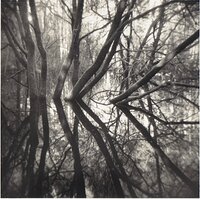
Flooded woodland

Flooded woodland

  • 15
  • 1
  • 103
Babylon

D
Babylon

  • 3
  • 1
  • 91

Recent Classifieds

Forum statistics

Threads
202,843
Messages
2,846,364
Members
101,561
Latest member
SBurns28804
Recent bookmarks
0

jay moussy

Member
Allowing Ads
Joined
Jun 10, 2019
Messages
1,315
Location
Eastern MA, USA
Format
Hybrid
I have no ND filter, and I feel like it is a tool I should have, for both 35mm and MF, and maybe some fooling around with box cameras and the like, all primarily with B&W.

What would be a versatile starting point?
 
I would start with a ND 2 and see how it works for you. I have very rarely needed more than that.
 
ND8 (3 stops) seems to be standard, which allows you to use an ISO 400 film as if it were ISO 50 (facilitating wider apertures or a longer exposure). If you're shooting primarily B&W you should also consider the utility of color filters which provide contrast attenuation in addition to lowering effective film speed. A red graduated filter for sky/cloud separation in landscape shots containing the horizon is useful for producing easier-printing negatives.
 
Get a polarisation filter - it is a two trick pony, circular if you use auto focus.
 
Get a polarisation filter - it is a two trick pony, circular if you use auto focus.

Actually I got a freebie one at a yard sale, recently.
I would need to learn how to use it in that fashion (or any fashion actually!)
 
Last edited:
Get a polarisation filter - it is a two trick pony, circular if you use auto focus.
A polarizing filter will only work well if the light is within a certain range of angles to the lens access, 90º is optimum. And it doesn't do much for overcast and night shots.
 
Actually I got a freebie one at a yard sale, recently.
I would need to learn how to use it in that fashion (or any fashion actually!)
Just use it as you would an ND filter. It blocks a lot of light.
Looking at reflective surfaces, water for example, while turning it will give you an idea of what it can do.
 
I mostly have all 77mm NDs and Polarizers, and use step down rings as necessary. Also look into square filters, I still have my Lee stuff that I used with my Pentax 6x7 and 4x5.
 
A polarizing filter will only work well if the light is within a certain range of angles to the lens access, 90º is optimum. And it doesn't do much for overcast and night shots.

A polarizer has a basic density, as it only transmits light within a small range of angles of oscillation. This character may lead one to call it "ND-filter".
However a polarizer typically is less neutral than a ND-filter. On the other hand, two polarizers, rotatable to each other can form a variable-density filter.


But the OP has not indicated which effect he is after with a ND-filter.
Though for playing around two polarizers rotatable to each other are a starting point.
 
I only use glass filters; never the plastic sheets which can tear, crease or stick together.
 
I only use glass filters; never the plastic sheets which can tear, crease or stick together.
ROFL Try folding a Lee or Cokin filter. If you are not careful with handling you may scratch them. Nobody has mentioned gels and I would think their use is almost extinct in this day and age, (even though I have a large collection of CC colour conversion filters given by an ex pro. Who the hell shoots Ektachrome under mixed daylight / tungsten / and fluorescent lighting these days).

A grey or coloured graduate can be very useful if you need to tone down skies where there is a high scene brightness range. Bonus with the coloured grad filters on B W film is improved sky contrast as outlined by Bronson in post #4 above.
 
Any way to make a DIY ND filter of sorts with some of my oddball box cameras, dunno, welding glass or such?
 
If you're using through the lens focus and viewing, SLR style or otherwise, remember that a strong ND filter in place is going to make things darn hard to see. Also, if color film is involved, mostly ND filters are not truly neutral, but tend to have a slight but distinct color bias. Only the really expensive ones approach real neutrality. You get what you pay for.

Polarizing filters are something else entirely, a whole different subject.
 
If you're using through the lens focus and viewing, SLR style or otherwise, remember that a strong ND filter in place is going to make things darn hard to see. Also, if color film is involved, mostly ND filters are not truly neutral, but tend to have a slight but distinct color bias. Only the really expensive ones approach real neutrality. You get what you pay for.

Polarizing filters are something else entirely, a whole different subject.

Many nd filters tend towards warm green (like a built-in CC05G to CC10G), even expensive mc-pro etc. ones.
I measured a lot of nd's for a microscope illumination project, the really neutral ones were from the
Hoya Pro-ND series (and the mirror coated Zeiss microscope filters).
 
Last edited:
Any way to make a DIY ND filter of sorts with some of my oddball box cameras, dunno, welding glass or such?

You will get what you pay for. As noted some ND filters have colors that effect the color emulsions in a non neutral way. If I were you, pick ND2 or ND3, and spend the money on a good glass filter. You will be able to use it for years so you will not be wasting your money.
 
A first consideration should be to ask if the cameras in question are modern 1000+ shutter speed kit or, if any of the MF (and 35mm) is limited to one five hundredths if a second?

I feel the slower the shutter is, the higher number of F-stops the ND filter should cover.

I.E., a Hasselblad 'V' series lens when using "normal" ISO speed films or faster, can really use such a filter if ISO 200 speed or greater is in the magazines you are using on a sunny day.

Stepping down to half that density, to five stops should cover the range for a basic set.

I do agree, smaller ND filters are needed, but for slow speed shutters, go big, (ten stops) or go home for a first step.

Colour films in general, IMO, do well enough with polarizers for most films, though F-stops choice may be limited.

Either choice for B&W or Colour, demand top quality glass or gel filters, but do no choose by price, B&W, of Heliopan multi coated filters may be pricey, but they perform at a top level and that's good enough.

Buy good used if you are able.

Forget variable NDs, they are poor choices for the dollar you spend and won't give you a full range of performance, based on other folk's reports.

Good Luck,
Eli

 
Last edited:
When possible I buy B&W or Heliopan multi coated filters and with a little searching I can find them used and in very good condition. Tiffen and Hoya are my next choices, also very good.
 
Any way to make a DIY ND filter of sorts with some of my oddball box cameras, dunno, welding glass or such?
You haven't specified what exactly you want to accomplish so just slap that Polarizing filter you already own in front of your lens and see where it gets you. How hard can it be?
 
You haven't specified what exactly you want to accomplish so just slap that Polarizing filter you already own in front of your lens and see where it gets you. How hard can it be?

As pointed out before polarizers depend on the angle of the light source and are nonlinear in the filtering. They should be considered separately and not confused with neutral density filters. DIY filters will not be calibrated and would be more useful if one if metering through the lens.
 
I have no ND filter, and I feel like it is a tool I should have, for both 35mm and MF, and maybe some fooling around with box cameras and the like, all primarily with B&W.

What would be a versatile starting point?
Why do you want an ND filter? What would you need it for? I've been shooting for over 60 years and never needed one. I'd rather have a hot fudge Sunday. :smile:
 
Why do you want an ND filter? What would you need it for? I've been shooting for over 60 years and never needed one. I'd rather have a hot fudge Sunday. :smile:

I cannot remember the last time I needed or used a ND filter although I have a few which I picked up used while I was shopping for various other filters.
 
Its occasionally useful, especially when you are using a camera with a limited top shutter speed, and you'd like to open your aperture a bit more than ƒ22. That said, I rarely use one, but now that ~80% of my shooting is large format, and many of the shutters on those lenses barely get to 1/125, if that, I find them a bit more useful.

I don't have any graduated ND filters, but I could see how they could be helpful with slide film to darken the sky and reduce the contrast range.

And finally there is the uncommon and very expensive center ND filter, for evening exposure with wide angle lenses. I do have a couple of them, but again, I don't use them too often.
 
Photrio.com contains affiliate links to products. We may receive a commission for purchases made through these links.
To read our full affiliate disclosure statement please click Here.

PHOTRIO PARTNERS EQUALLY FUNDING OUR COMMUNITY:


Ilford ADOX Freestyle Photographic Stearman Press Weldon Color Lab Blue Moon Camera & Machine
Top Bottom