
• Welcome to Photrio!
    Registration is fast and free. Join today to unlock search, see fewer ads, and access all forum features.
    Click here to sign up

Musings on format (aspect ratio I mean)

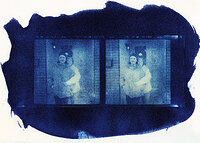
Cyanotype stereo card

A
Cyanotype stereo card

  • 0
  • 0
  • 0
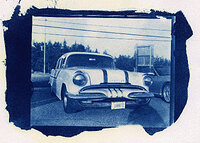
IMG_0025.jpeg

A
IMG_0025.jpeg

  • 0
  • 1
  • 0

Forum statistics

Threads
203,125
Messages
2,850,240
Members
101,690
Latest member
nisherii
Recent bookmarks
0

Sparky

Member
Allowing Ads
Joined
Jun 19, 2005
Messages
2,096
Location
Los Angeles
Format
Multi Format
I really didn't know what category to place this in - so I chose enlarging... as one can always crop, I suppose. This is an issue I've been grappling with lately. I shoot medium and 4x5 formats... and still have yet to be really SOLD on any ONE format... much as I would LIKE to be. So- I find myself very attracted to squares. I find square format really nice for a lot of reasons - I think it's easier in general to find subject matter which will work with this frame.

But also - an equal fave would be 6x12 (2xsquare). I find 6x9 ABHORRENT - though I AM aware it COULD be solely out of association with 35mm equipment. Beyond 6x12 is generally pretty okay too - as the ratios sort of break down and, to me, it all becomes just 'rather long', but very suitable for some subject matter. One's sort of limited to landscapes, quite naturally. As a sidenote, I find the golden section pretty awful too! - I don't buy into that (I'm suspecting that attractive ratios have ONLY to do with cognitive association).

So I'm wondering if anyone had similar (or opposing) views... and, more importantly, why they have these views... might be interesting if we can find some commonalities.
 
Sheer coincidence probably (or is it - a CONSPIRACY??*) - but I just realized that 4x10 and 8x20 are APPROXIMATELY the same ratio as the almighty american dollar.

* :smile:
 
Sheer coincidence probably (or is it - a CONSPIRACY??*) - but I just realized that 4x10 and 8x20 are APPROXIMATELY the same ratio as the almighty american dollar.

* :smile:

Clearly a conspiracy! (And there will be those whose sense of humour has been surgically removed who will now accuse us of anti-Americanism.)

Apart from that, I really like whole-plate and Linhof 56x72mm, both near enough 1.3:1. I often find 1.5:1 (2:3, whether 35mm, 44x66mm or 6x9cm) too long and thin, and 2:1 (6x12) is a really nasty shape, too stubby for a panoram and too long for anything else: I like 2.5:1 for panorams. This is of course 4x10 inch or 8x20 inch (CONSPIRACY!!!) though I'd rather crop 6x12cm on the long dimension for 45x112mm and blow it up 3x for 135x336mm or a bit over 5 inches by a bit over 13 inches. Do this right and you can't easily tell it from a contact print.

Ultimately, I suspect you can get used to almost anything, but some things will always be easier than others for some photographers and some subjects. For example, I regard 8x10 as an awkward shape for anything other than portraits (for which I love it), and from a hobby/fine art viewpoint I can't see the point of 4x5 inch at all: as far as I am concerned it has all the disadvantages of both roll-film and sheet film, and almost none of the advantages of either. I'd rather use either 56x72mm and a bit more effort or 13x18cm/5x7 inch/half-plate instead.

Cheers,

R.
 
It's an interesting question and one I've also pondered. My response depends on the orientation of the image too.

For portrait format landscapes I prefer 6x7 with 4x5 coming second. 6x9 is hideous for this type of image.

6x6 is attractive when done well and awful when it isn't.

For landscape format landscapes 6x9 actually works quite well. I find 6x12 very unpleasant to look at with a 2.5:1 or 3:1 ratio working much better. 6x7 isn't very successful for landscape orientation.

For portraits I think 4x5 works best.

It's interesting just how much of a bearing the image dimensions can have on our aesthetic enjoyment of an image!

Barry
 
I have recently been using 12 x 16 as I managed to get a selection of papers in this size for little cost. I really like the size and the format (1.33:1) and I can usually fit my RB67 6x7 images on it quite well.

One thing that surprises me though is that although I like the square format of my Rolleicord whilst taking the photograph, they usually end up looking better cropped to a rectangle when printing than keeping as a whole square frame.


Steve.
 
This is why I have no problem with cropping. No negative dimension is sacrosanct because there is no right aspect ratio for all things. I view 4x5 as having 4 and having 5 and I compose to use one or the other to maximum advantage.
 
I second MIchael. I see no inherent virtue to forcing an image into some arbitrary ratio. Mat cutting isn't that expensive. ;>)

Neal Wydra
 
5x7 or 6x9 are clearly the only true formats. All others are not worthy.

The only reason for square formats is so they can be cropped into one of the true formats.
 
Enh, I suppose it screws up those who like to print the rebates as a border, but I feel enlarging easels have adjustable blades for a reason! :D

That said, after 50 or so years of various rectangular formats, my latest toy is a 6x6 format and I find it has energized me a bit; a sort of new perspective on the old familiar. I have occasionally cropped, but have found quite a few where I believe the square works well as-is.

But this is probably just a point favoring variety!

DaveT
 
hi jon

i fall into 2 camps. i only include things that i want to photograph
in the frame when i photograph it, it doesn't matter the format - small or large.
i don't crop, enlarge/contact print the whole negative-frame ...
but only when i am in "mode - 1".

the other side of the coin is that when i am "mode-2 "
i don't care and i crop liek a fiend - to the aspect ratio
that fits the image. sometimes it is square,
sometimes a lozenge (thanks piet m. ! )
and sometimes a rectangle.

maybe this is just a phase/ lesson plan to help me see behind the camera better?
... i dunno, i just enjoy myself and don't worry about it too much :smile:

good luck!
john
 
For a couple of decades almost all of my photography was 35mm landscape mode Kodachrome for smooth slide shows. By cropping before tripping the shutter it worked well. Subjects that didn't fit the format could be composed until they did, or bypassed entirely. There are enough subjects to keep a photographer busy for a lifetime in any single format.
 
Okay screw you guys!! :smile: Now you're starting to actually convince me that I DON'T like 6x12!!! I think there's something there... but I was trying to 'settle' on 6x12 as an ideal pano format since it maxes out my enlarger (4x5 enlarger). But I agree with jstraw on the cropping issue I think. I DON'T MIND it - and I DO it... but I really would prefer getting the most 'clarity' (let's call it) out of my film and using as much neg as I possibly can. But I believe wholeheartedly in the supremacy of content over 'the technical'.

As for comparing 6x7 and 4x5/8x10... it's pretty much the same thing in my book vis-a-vis aspect ratio.
 
I guess I think of 8x10" as my home format when I want to make a serious photograph, but I definitely shoot more 4x5", just because it is usually more convenient, and I'm not always making serious photographs. 11x14" is still falling into place for me after using it occasionally for a couple of years.

5x7" and 6x6cm I use because I have SLRs in those formats. 5x7" is about as large an SLR as is practical, and produces a nice contact printable image. I like the square format of 6x6cm and find it handy for studio portraits.

I'm getting more and more comfortable with 6x17cm as a small panoramic format. I don't have a 5x7" enlarger, so I can't enlarge them, but on the other hand, it's not a bad small contact print size. It can be mounted to a card and sent in a business size envelope.

6x12cm has never attracted me that much as a panoramic format. If I really want to do it, I have masks for my 6x17cm back for it, but I've only done that a few times.

Between 56x72, 6x9 rollfilm, and 2-1/4x3-1/4 sheet film (which is really narrower and a hair longer than 56x72) I suppose I gravitate more toward 56x72. The film flatness on the Linhof Super-Rollex backs is really noticably good.

I've been restoring the bellows of my new 7x17" camera, which is a format that's been attractive to me for some time. I've just made a couple of test shots, still to be processed so far, but images that I've seen in this format are very appealing, and it's a more manageable camera than an 8x20".
 
David! You're SO spoiled! Just pick one format and stick with it!!! LOL.

So you like the Rollexes? I have 70mm 6x7 Rollex and some Graflexes, which are actually supposed to be QUITE superb in terms of flatness, etc... I was looking into having one of them re-machined for 6x12 (well - you can always crop to 5x12 which might be better...) but the rollers look like a real problem to me. Someone on Robert Monaghan's site (doesn't seem to be up anymore) suggested that conversion of an RH8 to 6x12 is a walk in the park... I've been looking into it. Doesn't look like any walk in the park that I've ever seen! Walk in the alps, maybe! But if there's a good candidate - I'd say it's probably the horseman - only because it was designed with a manufacturing option for 6x12 anyway - but at that point - you might as well just pay up the 500 and buy one. Oh well - maybe I'll just stick to sheet film. But it's a dream of mine to have a small pano I can use just as easily as my blad or my 6000 rollei (don't ask me why I have both - I can't part with either!!).
 
I like the Super-Rollexes with the lever wind. They're really better than the Graflex backs I've owned, and older ones with the tan leatherette are usually reasonably priced.

The older Rollex backs with the knob wind also have excellent film flatness, but they don't meter the film travel directly, and they were designed around films on a thicker base or perhaps with a thicker backing than modern films, so they have frame overlap problems with some modern films (there are various kludges like starting the film past the usual start point to deal with this).
 
5x7 or 6 1/2 x 8 1/2. 8x10 is too square, and as mentioned previously, 4x5 is just too small to start with. I would like to shoot 5x12 also, but that means INVESTING in another camera and holders. Which I will do someday. Just not soon. For the same reason, 4x10 is too small because it's too small for contact printing, and it is too big to enlarge without having a horse barn for a darkroom.
 
I don't see how a format can be good or bad -- just the way prople use them would determine that. The 4x5/8x10 format is a bit blocky, but it never stops me from making compositionally fine full-frame images with it.

I learned with a Rollei TLR, so I learned to compose with the square (at least after my first photoclass at college when I slowly came to the realization that I did not have to use the whole sheet of photopaper). It is a fun format, one is capable of creating beautiful internal movement within the square.

As JJ wrote..."There are enough subjects to keep a photographer busy for a lifetime in any single format."

This was the reason I happily used one lens per camera for many many years (besides not being able to afford more). I did not worry about the shots I was "missing" by not having a long or short lens, but just concentrated on the unlimited number of things/types of light I could capture with the lens I had.

Vaughn
 
I learned with a Rollei TLR, so I learned to compose with the square (at least after my first photoclass at college when I slowly came to the realization that I did not have to use the whole sheet of photopaper).

I wonder if that has anything to do with my predispostion for squares... my first camera was a yashica TLR...! hmm.
 
I like things in 1.6 aspect ratio. To do that, I crop a little bit on 35mm, and plan to get a 8X5 camera, which is exactly 1.6 aspect ratio.

Alex W.
 
Photrio.com contains affiliate links to products. We may receive a commission for purchases made through these links.
To read our full affiliate disclosure statement please click Here.

PHOTRIO PARTNERS EQUALLY FUNDING OUR COMMUNITY:


Ilford ADOX Freestyle Photographic Stearman Press Weldon Color Lab Blue Moon Camera & Machine
Top Bottom
