• Welcome to Photrio!
    Registration is fast and free. Join today to unlock search, see fewer ads, and access all forum features.
    Click here to sign up

More Fomapan Frustrations

Conversations.

A
Conversations.

  • 6
  • 3
  • 60
The Charm.

A
The Charm.

  • 1
  • 2
  • 47

Recent Classifieds

Forum statistics

Threads
202,042
Messages
2,834,340
Members
101,088
Latest member
PHXPhotoGuy
Recent bookmarks
0

Darkroom317

Member
Allowing Ads
Joined
Mar 2, 2009
Messages
653
Location
Mishawaka, IN
Format
Large Format
When my Plus-X supply ran out I decided that Fomapan 100/ Asrista.EDU Ultra 100 would be my new film along with the 400 version. I bought around 30 rolls and set off to Michigan. I have used these films before without problem and loved the tones it gives with Rodinal.

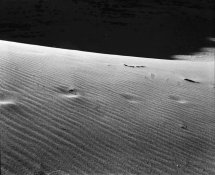
However, this time I have severely disappointed. Dark spots on some of my favorite frames from this last trip. Yes, they are on the negatives. I first noticed them when I hung the film to dry. At first I thought it was an issue with a lens until i saw it another roll of film from another camera. Also the edges of many of the frames are lighter. Though I am guessing this is from a lightleak.

I know some others have had issues with Fomas' films. Now I am afraid to use it on an upcoming trip. What could have caused these problems? Also, does anyone have some recommendations as to what I can use with similar tonality but with better quality control?

Camera: RB67 Pro-S
Film: Arista.EDU Ultra
Developer: Rodinal 1:50
 

Attachments

  • 120N001394Problem.jpg
    120N001394Problem.jpg
    80.8 KB · Views: 383
  • 120N001398Problem2.jpg
    120N001398Problem2.jpg
    95.9 KB · Views: 365

Ian Grant

Subscriber
Allowing Ads
Joined
Aug 2, 2004
Messages
23,418
Location
West Midland
Format
Multi Format
Foma films build up contrast far faster than any other make they need about 75% less development (time) to achieve similar tonality and about half the film speed. I've been using them for about 5-6 years with no issues like this, but Rodinal contains hydroxide so I'd use a good plain water rinse not a stop bath. Don't shake up developers, fixers etc before mixing as that can take particles settled on the bottom of a bottle into the working solution, Foma films are softer and they can lodge on the surface of the film. Ian
 

baachitraka

Member
Joined
Apr 6, 2011
Messages
3,651
Location
Bremen, Germany.
Format
Multi Format
I shot 8 rolls of Fomapan 100 when I was travelling to http://en.wikipedia.org/wiki/Königssee with 35mm Zuiko. All came really well.

Metering with K2(Yellow filter): 1/250 @f/8 and prints without filter on Adox MCP 310 when developed with Rodinal 1+50 for 15 mins with 3 agitations at every 5 minutes.
 
OP
OP

Darkroom317

Member
Allowing Ads
Joined
Mar 2, 2009
Messages
653
Location
Mishawaka, IN
Format
Large Format
Thank You Ian. I suspected the stop bath even though the website says you can use it. How do you do your water rinse? How long and how many water exchanges. I was surprised.I have used this film a few times without incident over the past two years.
 

Bertil

Member
Allowing Ads
Joined
Jul 23, 2007
Messages
182
Location
Northern Sweden
Format
Multi Format
The dark spots on the first picture, couldn't that be underdeveloped spots due to air bubbles?
Picture 2 looks to me not as light leak (necessarily), but rather over developed edges due to inproper agitation.

I have for many years used Fomapan 100 as 4x5/5x7 and 8x10 (unfortunately not in 35 mm or 120, but should be the same emulsion); the only problem I have encountered was some years ago when it was suddenly necessary to prewet (2 minutes) the film sheets bevore developing.
I have had no problem with ordninary stop bath, and my developers have been Rodinal (1+50), D-76 (konc or 1+1) and D-23 (konc or 1+1).

I would recommend quite vigorious agitation the first minute, and then the same vigorious agitation some 10-15 seconds each second or third minute.
(In my experience the most important thing with agitation is not that it is performed very often, but when it is performed it should be done vigoriously, in a random pattern, in order to get rid of the all the used chemicals, and for new fresh chemicals to enter the emulsion - it may work to agitate very cautiously but it's risky and my yield uneven development.)

Your problems may not necessarily be due to the film, give it another try!

Good luck!
/Bertil
 
OP
OP

Darkroom317

Member
Allowing Ads
Joined
Mar 2, 2009
Messages
653
Location
Mishawaka, IN
Format
Large Format
Ok, I was slightly more cautious in my agitation. I was told that too much agitation would yield overly constrasty negatives.

Tack så mycket, Bertil

Kris
 

piu58

Member
Allowing Ads
Joined
May 29, 2006
Messages
1,545
Location
Leipzig, Germany
Format
Medium Format
I had once similar spots too. The reason were tiny paper particles form the backing paper. Please clean your camera before using an other film. The particles were everwhere in the camera.

I stopped using foma film. If you shot 35mm you don't have this problem of course.
 

R.Gould

Member
Allowing Ads
Joined
Apr 22, 2010
Messages
1,752
Location
Jersey Chann
Format
Multi Format
I have been using Fomapan now for a number of years without problems, developing in both Rodinal 1/50 and D76, the only time I have had problems is when using a acid stop bath, plain water stop seems to suit this film, I use 3 changes of water, invert 15 times with each change, then fixer, if you do use stop then only 10 seconds max, with Rodinal develop anywhere between 11 and 17 minutes depending on the subject, if it is a high contrast then 11 minutes if low contrast then 17, agitate for the first minute, then two inversions every 30 seconds, which give negatives with lovely tonality,
Richard
 

John Austin

Member
Allowing Ads
Joined
Oct 2, 2010
Messages
519
Location
Southern For
Format
Large Format
Foma films build up contrast far faster than any other make they need about 75% less development (time) to achieve similar tonality and about half the film speed. . . Ian

My results half agree, or half disagree - I am using the Foma 100 in 10x8" size and find it works best at 40asa with ten minutes dev' in replenished D76d to achieve a similar curve

Before anyone says my dev' is knackered, Ilford D100, D400 and TriXipan require about, or less than, recommended dev' times in the same big old bath - I pre-soak Foma to remove the blue dye that otherwise makes the dev' a funny colour - I shall not be replacing my Fomapan when I run out

The D76d was mixed up in May 1985 and like me improves with age - Casting nasturtiums on my D76d is tantamount to kicking my dog, don't do it

John
Quinninup
 
Last edited by a moderator:

baachitraka

Member
Joined
Apr 6, 2011
Messages
3,651
Location
Bremen, Germany.
Format
Multi Format
Developer: Rodinal 1+50 (6ml + 300ml).

I invert the Jobo(35mm) tank 3 times every 5 minutes during 15 minutes of development. I get negs that print straight on MCP 310 paper.

Stop & Fix and vigorous rinse(10 times at-least) Finally Adoflo.
 
OP
OP

Darkroom317

Member
Allowing Ads
Joined
Mar 2, 2009
Messages
653
Location
Mishawaka, IN
Format
Large Format
15 minutes, that sounds like quite a long time. The published times I've seen range from 7-10 minutes for N development. What EI are you shooting at and what temperature is your developer? MCP 310 is the paper that I have just switched to.
 

baachitraka

Member
Joined
Apr 6, 2011
Messages
3,651
Location
Bremen, Germany.
Format
Multi Format
Temps: 20°C before pouring the developer. I never measured the temps after development.

EI: Box Speed, but I had K2(Yellow filter) so I set my incident meter ISO=50 and measured EV 14(It was sunny on top of the mountain). I had everything on that negative to print.

Yes, the meter was facing the camera. :smile:

Unfortunate I do not own a scanner, I will try to give it to the lab to get it scanned during weekend.

I am no expert in processing film but I follow this (there was a url link here which no longer exists) also I never tested with any other agitation methods so I cannot comment about other times.
 
OP
OP

Darkroom317

Member
Allowing Ads
Joined
Mar 2, 2009
Messages
653
Location
Mishawaka, IN
Format
Large Format
Ok, I have been using around 8-9 minutes with good results. I expose my film at EI 80. I am surprised that 15 minutes doesn't block up your highlights or lead to too much constrast.
 

baachitraka

Member
Joined
Apr 6, 2011
Messages
3,651
Location
Bremen, Germany.
Format
Multi Format
I presume you may agitate on every minute. I personally do 3 gentle inversions once in five minutes and on 15th minute I pour it down.

In that article author has explained the advantages of this method, further the comments that followed gives even more information.

More over the developing scheme is just a part of the entire system since you may have to consider the enlarger type, paper and so on.
 

Juri

Member
Allowing Ads
Joined
Nov 7, 2009
Messages
65
Location
Estonia, Eur
Format
35mm RF
15 minutes, that sounds like quite a long time. The published times I've seen range from 7-10 minutes for N development. What EI are you shooting at and what temperature is your developer? MCP 310 is the paper that I have just switched to.
I think there's a big difference whether you agitate every 30 seconds or every 5 minutes.
 
OP
OP

Darkroom317

Member
Allowing Ads
Joined
Mar 2, 2009
Messages
653
Location
Mishawaka, IN
Format
Large Format
Yeah, I misread that. It makes sense now. I am doing 10 seconds, every minute. Usually with just one full inversion each minute.
 

seadrive

Member
Allowing Ads
Joined
Aug 8, 2005
Messages
347
Location
East Marion,
Format
Multi Format
I am doing 10 seconds, every minute. Usually with just one full inversion each minute.
I'm trying to picture taking 10 seconds to invert the tank. 5 seconds on the way down, then 5 seconds on the way up? Would be like slow-motion, yes? :tongue:
 
OP
OP

Darkroom317

Member
Allowing Ads
Joined
Mar 2, 2009
Messages
653
Location
Mishawaka, IN
Format
Large Format
No I agitate other directions for that 10 seconds, only inverting it fully once during that time. But I figure now that this was a mistake as far as to the uneven development. Like I said, I was afraid of too much contrast.
 

Gerald C Koch

Member
Allowing Ads
Joined
Jul 12, 2010
Messages
8,131
Location
Southern USA
Format
Multi Format
If you you are unformfortable with the Foma film and the pictures you hope to take on your upcoming trip will be irreplacable may I suggest a first tier film such as Ilford FP4+. Regretably you get what you pay for.

Woooooooo. Pig. Sooie!
Class of 1968

Jerry
 

Bertil

Member
Allowing Ads
Joined
Jul 23, 2007
Messages
182
Location
Northern Sweden
Format
Multi Format
Agitation should NOT be vigourous.

Yes, it should (though not unnecessary violent, off course).
I will just give some hint of evidence:
1) My own experience with many years problem with uneven development and a lot of experimentation,
2) Scientific evidens about what happens at the film surface when the film is moving around in the developer, nicely explained by Gordon Hutchings in his "The Book of Pyro" (p. 20) where he explains the "laminar flow" which is part of the scientific explanation of why many "soft" agitain methods are inadequate,
3) "Use vigorious agitation at 30 seconds interval" is Kodak's recommended agitation method on the filmpack for T-max 400.

But as long as you get the negatives you want your method is the best!
/Bertil
 
OP
OP

Darkroom317

Member
Allowing Ads
Joined
Mar 2, 2009
Messages
653
Location
Mishawaka, IN
Format
Large Format
Update.

I started by cleaning the mouth of my bottle of Rodinal. Dried up Rodinal had coated this area. I also cleaned out the small beaker I measure it with. I often don't do this between films but I cleaning right after I mixed the developer with water. I also tapped the tank after the first 30 sec of development as well as before.

I then used water as stop instead of stop bath. I continued with the agitation time of 10 sec every minute but with far more vigorous agitation. So far all of these problems have resolved.

This has certainly made me more cautious when developing my film.
 

baachitraka

Member
Joined
Apr 6, 2011
Messages
3,651
Location
Bremen, Germany.
Format
Multi Format
If you have small tank: 300ml water + 6ml Rodinal will be sufficient for 1+50.

I do not understand why you want to agitate vigorously. Agitate 10 sec(gently) and give a hard tap at the end to dislodge air-bubbles if any.

I have developed an another roll on Yesterday and it came really well too. Soon, I will post some scans...
 

R.Gould

Member
Allowing Ads
Joined
Apr 22, 2010
Messages
1,752
Location
Jersey Chann
Format
Multi Format
When I use rodinal for any film agitate continuaoly for the first minute then 2 inversions every 30 seconds, as suggested by Agfa, a long time ago, and I get great negatives, there is no need for vigorous agitation with Rodinal, but it is essential that whatever you use to mix the stuff is wel rinsed out after using as Rodinal reacts badly to stale developer'
 
Joined
Jan 21, 2003
Messages
15,715
Location
Switzerland
Format
Multi Format
Update.

I started by cleaning the mouth of my bottle of Rodinal. Dried up Rodinal had coated this area. I also cleaned out the small beaker I measure it with. I often don't do this between films but I cleaning right after I mixed the developer with water. I also tapped the tank after the first 30 sec of development as well as before.

I then used water as stop instead of stop bath. I continued with the agitation time of 10 sec every minute but with far more vigorous agitation. So far all of these problems have resolved.

This has certainly made me more cautious when developing my film.

Good you got it worked out! The pre-rinse, and avoiding the acid stop bath seems to be strong contenders for the problems you've seen.
For what it's worth, most people saw problems with the Foma 200 film in 120 format, a few reports on the Foma 100, and I can't remember any complaints about the 400.

About agitation: The purpose of agitation is to bring fresh developer in contact with ALL of the film area in the tank, at the same time. If your agitation is too slow, then you run the risk of uneven developing, and if it's too fast, you could see edges of your negatives more developed than the center of the film.
A happy medium is best, where you need to make sure of the following:
1. Do NOT completely fill the tank, because if it's completely full, the developer will not flow inside the tank to properly mix the developer up before you set it to rest again.
2. Do full inversions, but do it fairly slowly, like one full inversion in about three seconds or so.
3. Do not shake the tank.
4. Tap the tank before you set it down to rid with air bubbles trapped on the film surface.

I had lots of problems with uneven development in 2008, and my actions above solved all of them.

Good luck!
 

Ronald Moravec

Member
Allowing Ads
Joined
Jan 17, 2005
Messages
1,355
Location
Downers Grov
Skip the stop bath. It`s purpose is to neutralize alkaline developer. Fix does the same thing at some loss to fix capacity. Since I do not use fixer more than one time, I don`t care. Normally I use alkaline fix so why go base, acid, base.

Always use fresh chemicals. Throw away old stuff. Silver precipitates in used fix and settles on the next film ( that is the black particles on the bottom of the bottle). Those are the white spots on the film.

Use an eyedropper or transfer pipette to get Rodinal from a bottle so you do not pick up the precipitate from the bottom.

Use glass bottles you can clean and always use the same chem in the same bottle. Label it.
 
Photrio.com contains affiliate links to products. We may receive a commission for purchases made through these links.
To read our full affiliate disclosure statement please click Here.

PHOTRIO PARTNERS EQUALLY FUNDING OUR COMMUNITY:


Ilford ADOX Freestyle Photographic Stearman Press Weldon Color Lab Blue Moon Camera & Machine
Top Bottom