• Welcome to Photrio!
    Registration is fast and free. Join today to unlock search, see fewer ads, and access all forum features.
    Click here to sign up

Mixing "old brown" lith...

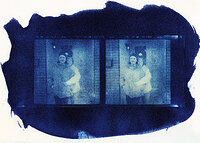
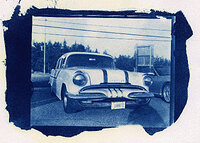
Cyanotype stereo card

A
Cyanotype stereo card

  • 0
  • 0
  • 0
IMG_0025.jpeg

A
IMG_0025.jpeg

  • 0
  • 1
  • 0

Forum statistics

Threads
203,125
Messages
2,850,234
Members
101,690
Latest member
nisherii
Recent bookmarks
0
The confusion reins with the last 5 years use of the term "lith".

If you mean 'real' lith developer like mix part A (usually developing agent and preservative) wih Part B (usally alkali - and a strong one at that) and use it within the first 15-30 or so minutes of combining the A+B before it goes brown, then we are talking Lith film with blacks black as can be and clear white - no greys. You can't reuse this developer.


If you mean the modern 'Artiste' meaning of the word Lith, where you massively overexpose a print, and then plunk it into weak, aged, mungy old developer, and yank it from the developer at just the precise moment that infectious development begins, and not a second too late, then, yes, it may be a reasonable prospect to combine aged developer.
Lith of this sort is usually never repeatable, so creating a unique and non repaetable developer mix should not be an impediment to trying the same thing later on.
 
The only reason I don't mix say Kodalith OB with LD20 developer is because when things aren't working the way I want, which is often, it's one less question mark to deal with.

Keep some expired non-DI paper around. And if you get a really good tray of developer, keep it all for later. Don't throw the good stuff away!
 
in general it is probably a bad idea to mix old brown of different formula with your working solution. The old brown addition should be purposeful, i.e. to initiate early color enhancement to your 1st few prints and or to help stablize the your working solution for more consistency. You might get lucky by trying using non matched lith developers but more likely you'll get a lot of "side effects" that won't be easily controllable. That being said you should experiment with lith and keep good notes. You may come up with something worth sharing here. BTW I did try this very thing with Moersch/LD20 nothing exciting happened except my tray of developer died pretty soon thereafter and I loss my ability to resuscitate it as I normally do. :smile: The expert say don't mix ....
 
I never worry about this, and have mixed two different old browns on many occasions with results I have expected.

I will say that if you are using the same tray for Dektol and Lith which I do , it is very important to rinse the trays well between developers. I have had real problems not rinsing Dektol out before lith printing.
 
I never worry about this, and have mixed two different old browns on many occasions with results I have expected.

I will say that if you are using the same tray for Dektol and Lith which I do , it is very important to rinse the trays well between developers. I have had real problems not rinsing Dektol out before lith printing.

Not rinsing well enough the tray. That just happened to me this week. Very frustrating !
 
Hey give me a call, I am in Germany, Poland, UK and Paris in November I need a couch to sleep on or a good bed with lots of food/wine served to me and my wife, You will need to translate for me as well as I can't speak French that well.
Not rinsing well enough the tray. That just happened to me this week. Very frustrating !
 
The confusion reins with the last 5 years use of the term "lith".

If you mean 'real' lith developer like mix part A (usually developing agent and preservative) wih Part B (usally alkali - and a strong one at that) and use it within the first 15-30 or so minutes of combining the A+B before it goes brown, then we are talking Lith film with blacks black as can be and clear white - no greys. You can't reuse this developer.


If you mean the modern 'Artiste' meaning of the word Lith, where you massively overexpose a print, and then plunk it into weak, aged, mungy old developer, and yank it from the developer at just the precise moment that infectious development begins, and not a second too late, then, yes, it may be a reasonable prospect to combine aged developer.
Lith of this sort is usually never repeatable, so creating a unique and non repaetable developer mix should not be an impediment to trying the same thing later on.

There should be no confusion in this post. When someone says "lith" developer, especially with "old brown" as part of the post, it is very clear what they are talking about.

Lithographic developer is called just that, or, more often, "A/B" or "A+B", or just "developer" if you are talking to fellow lithographic printers, in whose company it can be assumed you are not talking about any other sort of developer.
 
Last edited by a moderator:
I would not recommend it. I've done it in the past and had problems with what seemed like contaminated chemistry.

Instead of old brown, you can season your lith developer with a couple of sheets of old paper with the room lights on. Gives about the same effect as adding old brown.
 
There should be no confusion in this post. When someone says "lith" developer, especially with "old brown" as part of the post, it is very clear what they are talking about.

Lithographic developer is called just that, or, more often, "A/B" or "A+B", or just "developer" if you are talking to fellow lithographic printers, in whose company it can be assumed you are not talking about any other sort of developer.

He knows!!!! Two! unnecessary postings
lol
 
The confusion reins with the last 5 years use of the term "lith".

If you mean 'real' lith developer like mix part A (usually developing agent and preservative) wih Part B (usally alkali - and a strong one at that) and use it within the first 15-30 or so minutes of combining the A+B before it goes brown, then we are talking Lith film with blacks black as can be and clear white - no greys. You can't reuse this developer.


If you mean the modern 'Artiste' meaning of the word Lith, where you massively overexpose a print, and then plunk it into weak, aged, mungy old developer, and yank it from the developer at just the precise moment that infectious development begins, and not a second too late, then, yes, it may be a reasonable prospect to combine aged developer.
Lith of this sort is usually never repeatable, so creating a unique and non repaetable developer mix should not be an impediment to trying the same thing later on.

Oi vey! :rolleyes:

You can but why? If you want to get anywhere repeatable results, then no. If you want to even know where you are during the changing of the dev. due to the by products left after each print is run through, then no. If you are only doing 1 print, don't care ever to even get close to the same result, or care the color, peppering or other artistic beauty this technique produces, the by all means, please do so.

Alexis
 
The best way to get consistent results with lith printing is to use lots of chemistry. In the beginning I used Fotospeed LD20 and then Macolith. They are both fairly expensive.
I then started using Arista Liquid Lith, which is inexpensive, and subsequently allowed me to use a lot of chemistry each printing session. 200ml PtA, 200ml PtB, 2600ml water, and then 800ml of old brown to make an entire gallon, in a 16x20 tray. Put two sheets of expired paper in the bath with room lights on until they turn black, and now start printing.
Now comes the challenge of temperature control. I try to keep my tray volume at 80*F +/- 1*F.
This way it becomes repeatable within the first five 11x14 prints.

The fault I saw with using old brown from a different developer was that I could not get contrast in the print; the developing agent became very weak. It may work, but it may also not work. Your risk.
 
Photrio.com contains affiliate links to products. We may receive a commission for purchases made through these links.
To read our full affiliate disclosure statement please click Here.

PHOTRIO PARTNERS EQUALLY FUNDING OUR COMMUNITY:



Ilford ADOX Freestyle Photographic Stearman Press Weldon Color Lab Blue Moon Camera & Machine
Top Bottom