
• Welcome to Photrio!
    Registration is fast and free. Join today to unlock search, see fewer ads, and access all forum features.
    Click here to sign up

Metalchrome, A Lost Print Coloring Process

between takes

H
between takes

  • Tel
  • Mar 21, 2026
  • 2
  • 0
  • 21
Tompkins Square Park

A
Tompkins Square Park

  • 9
  • 1
  • 95

Recent Classifieds

Forum statistics

Threads
202,862
Messages
2,846,735
Members
101,574
Latest member
JRSCollection
Recent bookmarks
0

Gerald C Koch

Member
Allowing Ads
Joined
Jul 12, 2010
Messages
8,129
Location
Southern USA
Format
Multi Format
I recently stumbled across the following article after searching for years with abysmal search engines that never once produced a hit. I have used this process and in my opinion it produces the best colorized B&W prints. The secret is in using a sulfide toner and afterwards gold chloride to produce beautiful skin tones. The method is a bit more involved than say using Marchall's oils but worth the extra effort.

http://web.archive.org/web/20060502053033/http://www.psa-photo.org/psajarc2.htm

For those wishing to try the process a bit of advice. The formulas are given using the English system so "grs" stands for grains and not grams. The article uses aniline dyes but Marshall's paints can be used for anything other than skin tones. Always remember that less is more.
 
Last edited:
Your post has gotten me looking for more information about the process. I hadn't heard of Mortensen before and his work is fascinating. I appreciate your bringing this process and the photographer to the forum's (and my) attention.
 
There is an error in the article. Photo oils are not opaque. They're transparent.
I also don't see why it has a special name. It's simply a multiple toner technique, with hand coloring added.
 
There is an error in the article. Photo oils are not opaque. They're transparent.
I also don't see why it has a special name. It's simply a multiple toner technique, with hand coloring added.

Well we could call it "That Double Toners Followed By Oil Paints Thingybob." But that just doesn't really have that ring. :smile:

Actually the reason is that Mortensen taught the technique. He also charged for the information. The technique needed a name that was easy to remember.
 
Last edited:
I get a "Oops, something went wrong. Please try again" when I click on the link as of 8:45pm British Summer Time tonight.

Is anyone else having problems with the link?

Thanks
 
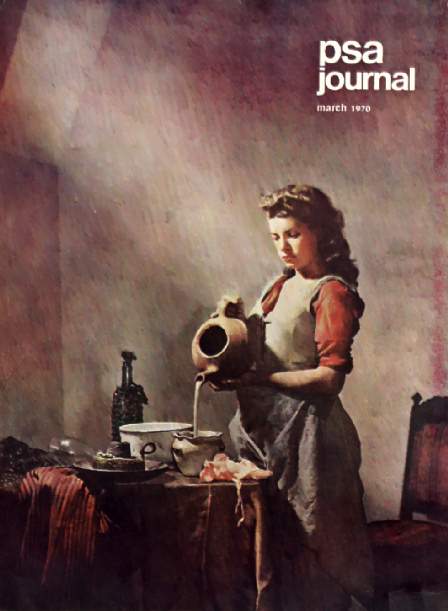
Works for me. But since you can't see her here is milk girl

metchrm1.jpg
 
Well we could call it "That Double Toners Followed By Oil Paints Thingybob." But that just doesn't really have that ring. :smile:
I wish I had come up with it first. Could have been Eddiechromes... :cool:
It should be pointed out (probably unnecessarily) that different papers react differently to the sepia- then -gold technique. Tim Rudman covers it well, in his toning book.
 
Not really a secret - the orange effect of Gold toning after sulfide toning is well documented in the toning literature ...

Well in a way it is. The most straight forward method would be to just use dyes to tint the entire print skin included. Obviously Mortensen didn't like the results that this produced.
 
Photrio.com contains affiliate links to products. We may receive a commission for purchases made through these links.
To read our full affiliate disclosure statement please click Here.

PHOTRIO PARTNERS EQUALLY FUNDING OUR COMMUNITY:


Ilford ADOX Freestyle Photographic Stearman Press Weldon Color Lab Blue Moon Camera & Machine
Top Bottom