• Welcome to Photrio!
    Registration is fast and free. Join today to unlock search, see fewer ads, and access all forum features.
    Click here to sign up

Mad Science: Tri-X @ 12,500

Forum statistics

Threads
203,265
Messages
2,852,079
Members
101,752
Latest member
Frederic CHICHE
Recent bookmarks
0

Leighgion

Member
Allowing Ads
Joined
Jun 20, 2009
Messages
357
Location
Orcas Island
Format
Medium Format
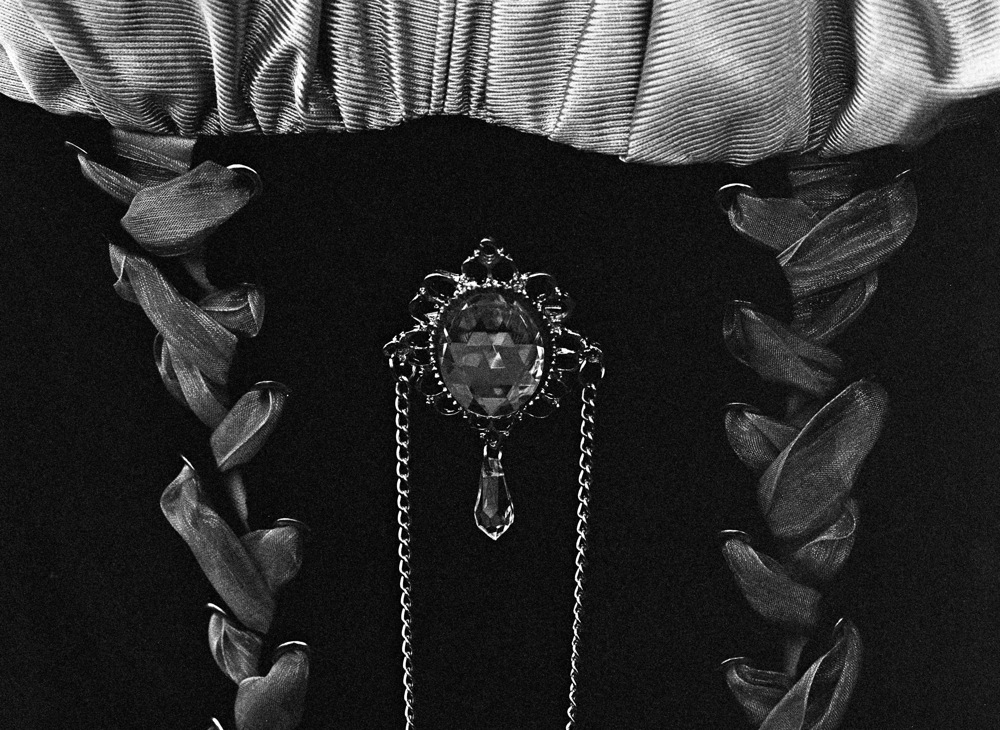
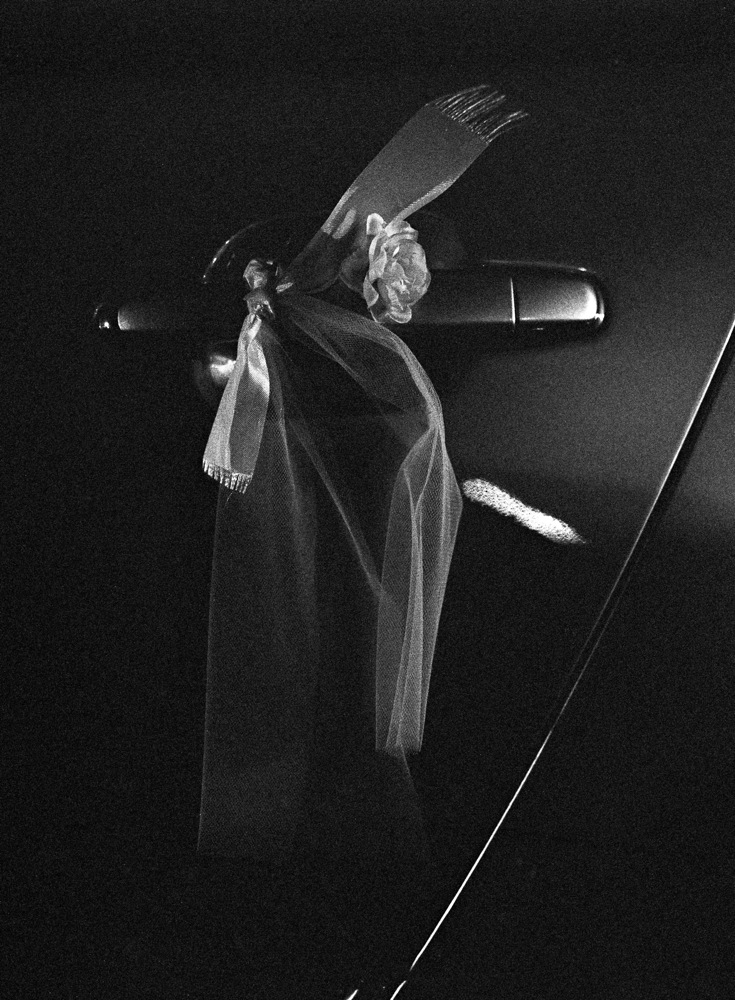
I went and did it with Rodinal 1+50 for 51min semi-stand. Shot with a Mamiya 645 Super.

Was a little disappointed that some frames were so dark as to essentially be a clear negative, but opinions I've gathered thus far largely agree that what I got wasn't bad considering the insanity of the push. Here's the stuff that worked.
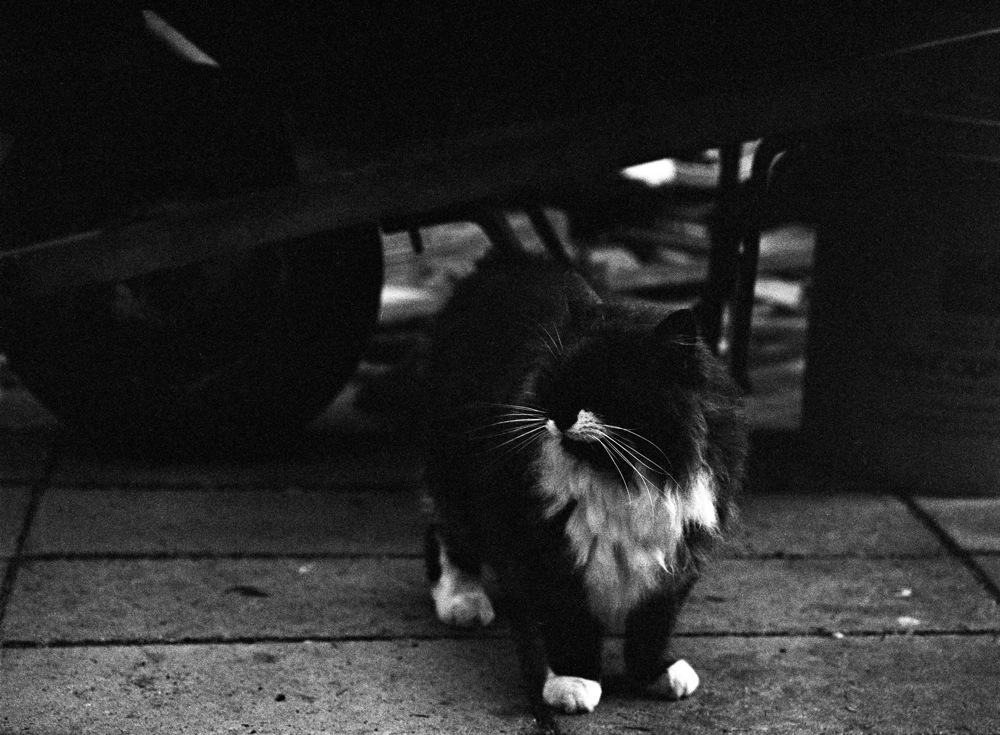
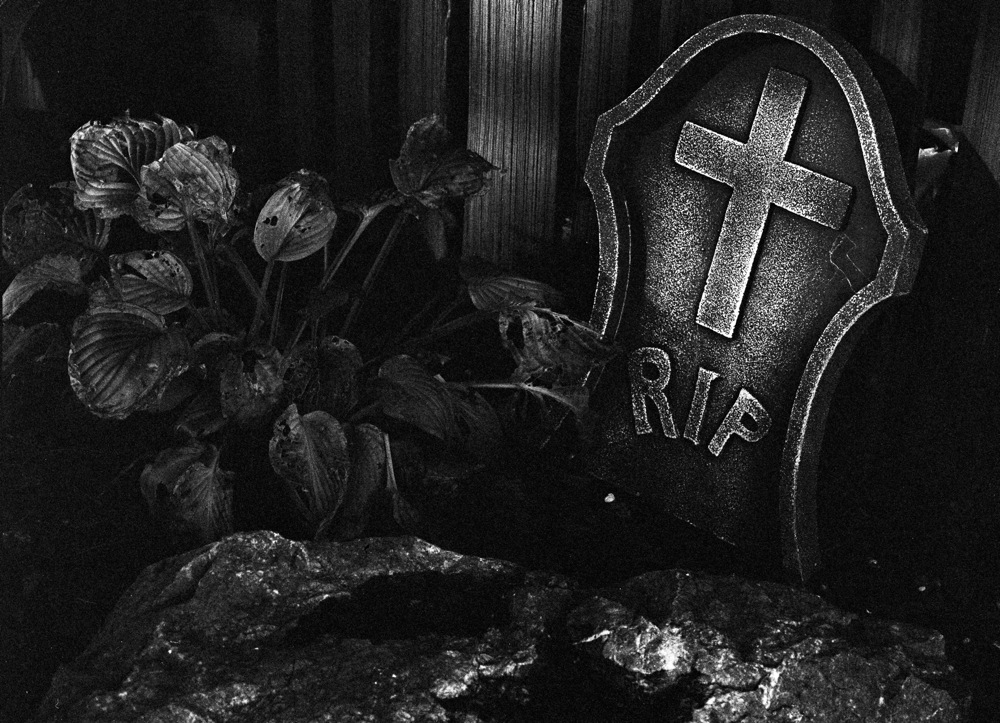
4134497990_6434843913_o.jpg

4134499224_5c8236e89e_o.jpg

4133737545_d116d76d3b_o.jpg

4134500906_8c0eb09e29_o.jpg

4134501766_31c3e533cb_o.jpg


If anybody has suggestions to offer for future mad science of this nature, I'd be glad to hear it.
 
Last edited by a moderator:
interesting! never seen this kind of a push before in person! are these straight scans?

-Dan
 
I'm no expert at this method of developing, or of such incredible pushing, but the results look good. What format was this?
 
Thanks! I went to your Flickr page, the info is there as well. I'm going to have to try stand developing sometime; I shoot at night fairly often. I doubt I'll push anything to 12,500 but still thanks or the idea!
 
I've pushed Tri-X that far but with a low contrast developer, Acufine or Ethol. Results were open shadows and much contrast but I was getting a little more shadow detail than that. If you like to mix developers try D-23 for contrast control. I've never tried it with stand or real pushing though and can't really tell you how good it will work.
 
These look good. I've done this with a Frankensteinian developer formulated by Donald Qualls---basically HC-110 Dil A mixed with Dektol stock instead of water, with some vitamin C added because why not---and I'd say the amount of shadow detail is roughly comparable, but you're getting less grain than I do at that speed. Very nice!

-NT
 
Nice pictures Welcome to 1968.

If there is strong light on the subject,
and a strong background, you can do this.
It isn't mad science at all, it is simple image control.
You exposed your highlights as midtones, and lifted them back to where they belong.
Your midtones were exposed as shadows, and they came back a bit darker than normal.
And your shadows were dropped out completely because the film never saw them.

If you DO want to record deep shadows, use Xtol (which is 2 stops more efficient recording shadows than Rodinal).

But these are cool, and you ought to keep working with it.

Sigh. Back in the day, we had a limited tonal range in newsprint: Black, White (well, whiite-ish), and 3 steps of gray.

Since you couldn't print shadow detail and highlight detail in the same picture,
'pushing' film actually compelled you to compose simple images and to see clearly.

Your technique would work very well shooting fashion on a totally overcast day, not that you'd ever have THOSE in your part of the world. Oh, and using minimal agitation kept bright highlights from running away, and probably gave you pretty, pretty grain.

.
 
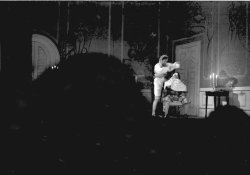
When TriX was new I read an article about pushing it to 12000. I tried it at the opera (The Barber of Seville) hand held Retina 1A wide open @ 2.8 and as slow as my hand could manage. I 'was' a lot younger then!:mad:
Cannot remember the soup but it would have been simple like ID-11 or D-76 and times of course are long gone. The other shots were a bit more blurry but it was fun.
The shutter was so quiet I doubt anyone noticed. It was 1954.
Murray
 

Attachments

  • 1954057.jpg
    1954057.jpg
    210.2 KB · Views: 230
I love these... and I love the look of pushed Tri-x. And I'm a wimp. I've only pushed it to 800! :D


Suzanne ! That's not a push, it's a polite tap !
 
Nice pictures Welcome to 1968.

If there is strong light on the subject,
and a strong background, you can do this.
It isn't mad science at all, it is simple image control.
You exposed your highlights as midtones, and lifted them back to where they belong.
Your midtones were exposed as shadows, and they came back a bit darker than normal.
And your shadows were dropped out completely because the film never saw them.

If you DO want to record deep shadows, use Xtol (which is 2 stops more efficient recording shadows than Rodinal).

But these are cool, and you ought to keep working with it.

Sigh. Back in the day, we had a limited tonal range in newsprint: Black, White (well, whiite-ish), and 3 steps of gray.

Since you couldn't print shadow detail and highlight detail in the same picture,
'pushing' film actually compelled you to compose simple images and to see clearly.

Your technique would work very well shooting fashion on a totally overcast day, not that you'd ever have THOSE in your part of the world. Oh, and using minimal agitation kept bright highlights from running away, and probably gave you pretty, pretty grain.

.

If I'm understanding you right, DF, you're saying that you feel the images were underexposed, even considering the push? If so, that'd explain a lot, including the frames that basically didn't register. Those were shot indoors.

Would you clarify a bit on why you say this technique would work well for fashion in overcast light? I think I've got an idea why, but I'd like to hear your reasoning.
 
Thanks, Suzanne. I must agree with DF, though. Tri-X at 800 is like a polite request to hurry up a little. :D

Murry, I like that shot and the situation you describe is the sort I was thinking of when testing my own push. Dark situation tackled by silent camera and mad science chemistry.
 
you're saying that you feel the images were underexposed

Let's start with the idea of PUSHING film.

If we are saying that we can somehow develop the film and somehow increase its sensitivity to light, that is impossible. Tri-X must be rated no higher than 400 in order to fully expose the lowest shadows.

Now, that is based on the special ISO developer that none of us actually use to take pictures. It is designed to test films, not take pictures. Kodak's XTOL is slightly more efficient than the ISO developer and gives us a little more shadow speed. Rodinal is actually less efficient developing shadows. But there is nothing that you or I can do to make Rodinal or anything else substantially increase the sensitivity of the film.

The least exposure you can give Tri X, developed in Rodinal, that will give you a printable tone lighter than pure black is 3 stops less than middle gray. So, meter at middle gray, subtract 3 stops and that tone will be dark, dark, gray.

Another way to say that is if you try to expose at 3200 instead of 400, and you aim for middle gray, you'll hit dark, dark gray. There is no way to develop the film that will raise that deep shadow to a midtone. Not enough photons hit the film to overcome its inertia. Develop it for a week, it is just going to lay there.

Wimpering.

WHAT PUSHING really does is to increase the density of a midtone by increasing the development time. You CAN generally increase the density of a 2 stop underexposure by a stop, and a 1 stop underexposure by two stops, and increase middle gray by three stops, lifting it to the point that it will print as a very light tone. It is oversimplifying it to say that 'pushing' simply increases contrast, but that is truer than saying that 'pushing' increases film speed.

But sometimes, when the scene has no shadows, like a foggy day, or very overcast day, you also have no distinct highlights. It is generally desirable to increase the development, giving you an effective mid tone exposure of 1600 or so. You aren't losing any shadow information because is none to lose,and the added development actually helps add a third dimention to the scene. Your midtones fall where they ought, and the highlights define shape and depth.

Exposing at 6400 or 12800 or so will move the midtones and highlights far up the scale that Rodinal can still handle, and in a flat and gray scene, you will get a range of tones from middle gray to pure white, and a full range of lovely grays. But anything below a midtone will be completely and totally black.

I probably have muddled this, but I'll blame it on too much turkey and potatoes and not enough wine. Feel free to PM me. And by all means, search APUG for threads and articles on the topic. There are brighter lights than me, for sure.

d

There will probably be a couple posts that talk about 'hypering',and weird things to do with dry ice and KY jelly. I'll check back for that myself because you can always learn something around here. But I think there's an unopened bottle Pappy nearby, and I want to find it.
 
I'm interested in hypering techniques and preflashing techniques that can actually increase the speed of the film, especially in sheet film.

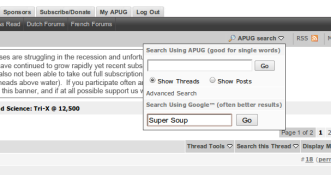
I read in an old thread about a formula called "Super Soup" that supposedly does a great job of maintaining shadow detail in insane TriX pushes. I've never tried it though because I don't have HC110.
 
I read in an old thread about a formula called "Super Soup" that supposedly does a great job of maintaining shadow detail in insane TriX pushes. I've never tried it though because I don't have HC110.

I use it quite a bit. It's not magic, of course---shadow detail is limited, and there is a *lot* of grain at high EIs---but I'd say it's roughly comparable to the images posted in this thread.

Obviously, in a fundamental sense, the most you can do is develop the shadows to completion; the silver grains are either activated or they aren't, and once you've got all the ones that are, that's as far as you can go. But in general we don't develop film to completion---though IIRC Donald Qualls, who formulated Super Soup, conjectured that it might be doing just that---and I don't know how much speed could theoretically be gained by doing that (assuming real-world concerns like fog didn't interfere).

-NT
 
Try this:
 

Attachments

  • screenshot_008.png
    screenshot_008.png
    37 KB · Views: 184
I went and did it with Rodinal 1+50 for 51min semi-stand. Shot with a Mamiya 645 Super.

Was a little disappointed that some frames were so dark as to essentially be a clear negative, but opinions I've gathered thus far largely agree that what I got wasn't bad considering the insanity of the push. Here's the stuff that worked.


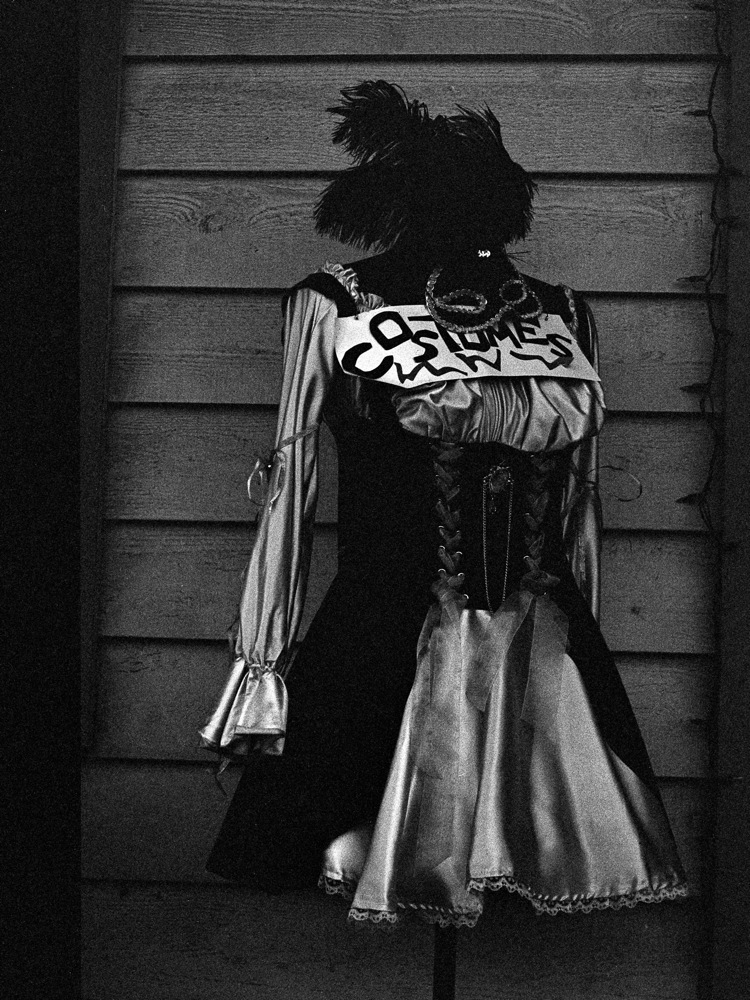
If anybody has suggestions to offer for future mad science of this nature, I'd be glad to hear it.


Well, I'll start by giving an example of HP5+, ei 3200, in Rod 1:100 for two hours. Note that this is the baby 35mm format.

4102419746_873cb11b45.jpg


and

4060395555_0a9a3a5eda.jpg


To see the full set and to look at the full size images go http://www.flickr.com/photos/peterbcarter/sets/72157622674774965/

They had nothing done to them and were made to prove am point; grain is under control and you *can* push with Rodinal. I love shutting people up. :smile:

My observation with what you have stated is that you need to letgo of an exact stand time. One of the nice things about stand is the developer get exausted and becomes forgiving of being forgotton about.. :smile: If your negs were that thin, I would feel safe and double the time. I used half the dilution and look what I have.

You are in the right direction, you just need to keep going.
 
Last edited by a moderator:
leigh

im late to the party as usual, but
beautiful images, i love dark brooding images ...

you might look into a glycin developer
called "mortenson's glycin varient"
and stand your film in it overnight :smile:

glycin likes film as much as it likes paper
and it might help you in your mad science ..

john
 
I don't understand why neg scans matter, especially here at APUG. Neg scans in PS can be adjusted from here to the moon and make almost anything eke out an image, but this isn't the hybridphoto site.
 
Well, I'll start by giving an example of HP5+, ei 3200, in Rod 1:100 for two hours. Note that this is the baby 35mm format.
There's fairly obvious bromide drag or other stand effects from the film sprocket holes along the left side of the rose stem image.

Lee
 
Photrio.com contains affiliate links to products. We may receive a commission for purchases made through these links.
To read our full affiliate disclosure statement please click Here.

PHOTRIO PARTNERS EQUALLY FUNDING OUR COMMUNITY:


Ilford ADOX Freestyle Photographic Stearman Press Weldon Color Lab Blue Moon Camera & Machine
Top Bottom