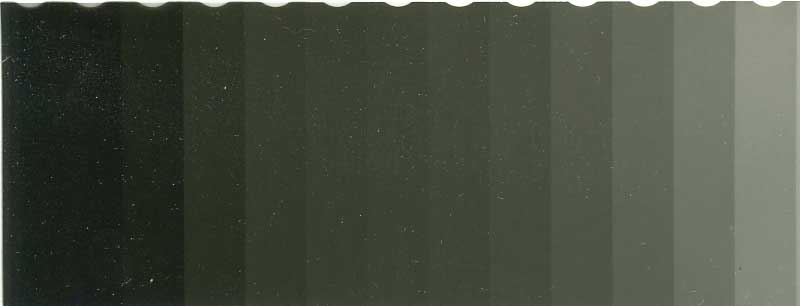
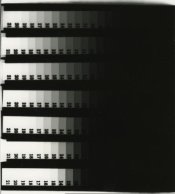
I recall the last time we looked at prints, I had some printed with 00 or 0 filtration. After we spoke I spent some time analyzing them based on a premise that the paper curve at 00 and 0 is 'much less than ideal.'
I concluded:
I still liked the prints
B&W is all about distortions in tonal scale, somehow the quite distorted scale either did not matter or added to the print's presentation
Perhaps the areas of zone convergence (adjacent zones printing the same density) were not so easy to detect because the flat areas only contained portions of a single zone (less than one stop in length) or, because there were more than 8 zones of negative density in the print, the effects of a complete adjacent zone convergence were more difficult to detect.
On a little different tangent, I would paraphrase that whole pdf as indicating that high-contrast negative development and low contrast MG printing is NOT the same as low contrast negative development and high contrast MG printing. Perhaps we are at the level that with the darkroom tools available, one could specify a low neg/high paper contrast or visa-versa at the time of negative exposure, based on an intended interpretation of the scene.