• Welcome to Photrio!
    Registration is fast and free. Join today to unlock search, see fewer ads, and access all forum features.
    Click here to sign up

Lith one shot

half stop lighter er.jpg

A
half stop lighter er.jpg

  • jhw
  • Jan 12, 2026
  • 7
  • 7
  • 102
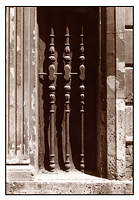
sentinels of the door

A
sentinels of the door

  • 4
  • 0
  • 84

Recent Classifieds

Forum statistics

Threads
201,716
Messages
2,829,002
Members
100,909
Latest member
SuninPisces
Recent bookmarks
0

MarkL

Subscriber
Allowing Ads
Joined
Jan 5, 2006
Messages
600
Location
Upstate NY
Format
4x5 Format
I'm trying to gain experience with the lith process and using Fotospeed LD20 and Fotospeed Lith paper. The biggest frustration for me has been getting consistency because of the changing activity of lith developer with each print. It's like shooting at a moving target! I realize you can replenish but that's an inexact science and you usually waste a print before you realize you need to replenish. So I've been using the developer one shot and it's great having it behave exactly the same with every print and seems to make perfect sense. But I haven't found much of any info on one shot lith and am wondering why. Am I missing out on any benefits of reusing a larger volume of solution?

I need to test to see if I can reduce the amount of fresh developer so that I don't waste it, but so far the following has been working.

8x10 print in 8x10 tray, 1+1+20 plus old brown, 270ml total solution:
A 10ML + B 10ML + Water 200ML + Old Brown 50ML

I haven't noticed agitation tide marks with the relatively low volume and the
8x10 tray.

Any insights appreciated!
Mark
 

Rich Ullsmith

Member
Allowing Ads
Joined
Jan 26, 2007
Messages
1,159
Format
Medium Format
That is interesting. Are the prints reaching infectious development?
 
OP
OP
MarkL

MarkL

Subscriber
Allowing Ads
Joined
Jan 5, 2006
Messages
600
Location
Upstate NY
Format
4x5 Format
Yes, they develop strong blacks, at least so far with the one print I've tried it on.
 

Gay Larson

Member
Allowing Ads
Joined
Dec 22, 2004
Messages
1,209
Location
Oklahoma
Format
Medium Format
Personally I like the individual differences you can only get by reusing the developer to almost exhaustion and then replenishing. I know that it would be nice to be able to make duplicates but I like that they are all unique.
 
Joined
Jan 21, 2003
Messages
15,715
Location
Switzerland
Format
Multi Format
Mark, instead of doing one shot, and get crap dull prints without color - mix up a lot of chemistry and use a strong solution.

I mix my chemistry up like this: Aristalith - 100ml Part A, 100ml Part B, 2,800ml Water, and 500ml old brown. That's 3.5 liters or a gallon almost. It gives me about 20 8x10 prints and the consistency is amazing.

- Thomas
 

Travis Nunn

Member
Allowing Ads
Joined
Jul 3, 2005
Messages
1,601
Location
Midlothian, VA
Format
Medium Format
Thomas has got it, when you have a large volume of developer you should be able to get quite a few prints that are nearly the same before the developer gets exhausted. I don't mix mine as strong as he does so I get fewer prints, but I like the results I get.
 

dancqu

Member
Allowing Ads
Joined
Sep 7, 2002
Messages
3,649
Location
Willamette V
Format
Medium Format
So I've been using the developer one shot and it's great
having it behave exactly the same with every print and
seems to make perfect sense.

But I haven't found much of any info on one shot lith
and am wondering why. Am I missing out on any
benefits of reusing a larger volume of solution?

I need to test to see if I can reduce the amount of
fresh developer so that I don't waste it, but so far
the following has been working. Any
insights appreciated!Mark

That's all I do, one-shot. The little lith I've processed
has produced some beautiful rich BROWN tones on one
paper and REDS on another. Color, if that is what you
are after, is no problem using very dilute one-shot
chemistry. My developer was a very easy non-
toxic Home-brew.

Test at greater dilutions and make some allowance
for time. Dan
 

Mark Layne

Subscriber
Allowing Ads
Joined
Jun 9, 2003
Messages
967
Location
Nova Scotia
Format
Medium Format
I'm trying to gain experience with the lith process and using Fotospeed LD20 and Fotospeed Lith paper. The biggest frustration for me has been getting consistency because of the changing activity of lith developer with each print. It's like shooting at a moving target! I realize you can replenish but that's an inexact science and you usually waste a print before you realize you need to replenish. So I've been using the developer one shot and it's great having it behave exactly the same with every print and seems to make perfect sense. But I haven't found much of any info on one shot lith and am wondering why. Am I missing out on any benefits of reusing a larger volume of solution?

I need to test to see if I can reduce the amount of fresh developer so that I don't waste it, but so far the following has been working.

8x10 print in 8x10 tray, 1+1+20 plus old brown, 270ml total solution:
A 10ML + B 10ML + Water 200ML + Old Brown 50ML

I haven't noticed agitation tide marks with the relatively low volume and the
8x10 tray.

Any insights appreciated!
Mark

You may get good results with even higher dilution, but essentially you need a larger volume, at least a litre
Mark
 
OP
OP
MarkL

MarkL

Subscriber
Allowing Ads
Joined
Jan 5, 2006
Messages
600
Location
Upstate NY
Format
4x5 Format
Thanks everyone. I guess there's a place for all the different approaches and I'll be sure to try them all. I will say that one shot would be useful when you're trying for a result with a new neg in shorter printing sessions and don't want to mix a large amount of chemistry. You can resume the next session and have the developer react the same as last time and you can better judge the effects of your exposure changes. This might be especially true for beginners (like me!). Once you know what you're doing, mixing up a large amount would be easier and more interesting!

Mark
 

Bob Carnie

Subscriber
Allowing Ads
Joined
Apr 18, 2004
Messages
7,735
Location
toronto
Format
Med. Format RF
Thomas hit it right .

I actually use 1000 A 1000 b and 8 litres water and 1 liter old dev.

Also a trick that I like, is to age the working solution.I expose 10 -15 8x10's of old paper to light and let them sit face up in the chems for one hour before printing. the paper reacts to the chems and activates the developer to the point I like.

Fresh chems will give a good brown colour but IMO the chems really mature after about 10-15 prints. There is a quality of tonality that starts coming out , that you cannot get with one shot.

I set up the dev first, then set my negatives up in the enlargers, mix all my other chems,,, sh shower and shave and then start printing.

With the volumes I am mixing , I can print all afternoon or day with minimal replenishment.. The dev only seems to get better.
 
OP
OP
MarkL

MarkL

Subscriber
Allowing Ads
Joined
Jan 5, 2006
Messages
600
Location
Upstate NY
Format
4x5 Format
Thomas hit it right .
Fresh chems will give a good brown colour but IMO the chems really mature after about 10-15 prints. There is a quality of tonality that starts coming out , that you cannot get with one shot.

Bob, in a pinch could you not approach that 10-15 print tonality by adding old brown to one shot?
 

Bob Carnie

Subscriber
Allowing Ads
Joined
Apr 18, 2004
Messages
7,735
Location
toronto
Format
Med. Format RF
Mark
I add old brown all the time, I have found that it is not enough for my taste.
 

jmal

Member
Allowing Ads
Joined
Oct 13, 2006
Messages
529
Location
Kansas
Format
35mm
Wow, Bob. That's a lot of volume (and a lot of paper). I wish I had the space and money for that. Just out of curiosity, what temp do you use for your lith sessions?
 

Bob Carnie

Subscriber
Allowing Ads
Joined
Apr 18, 2004
Messages
7,735
Location
toronto
Format
Med. Format RF
My clients pay for the session , therefore costs do not come into the equation, I run my lith at 70 degrees give or take.
Once started I only move forward and temp fluctuations are of no concern as I print fast and furious, in fact I will only turn on the lights to see my first test print and then make four or five variations on the enlarger,,, flash, exposure, dodge burn, tissue , soft focus, sharp focus different papers and not turn on the light till I am finished.
I only print lith for pure fun and do not get caught up in any rules or expectations. Each printing session is unique and I will never offer to match prints down the road, only match a direction/look/feel of a prior print
 
Joined
Jan 21, 2003
Messages
15,715
Location
Switzerland
Format
Multi Format
jmal, Bob plays in a different league than most... Both from darkroom size/equipment and print quality standpoints.

What you can do from your end, in my opinion, is to use developers that are inexpensive. AristaLith is a fine lith developer, and you can buy powder gallon kits for very little. 12x16 or 16x20 trays comfortably hold a gallon of developer, which is enough to give you consistency after you season the developer. Use one or two 8x10 sheets and leave them in the developer to develop fully while the light is on. Then start printing. With that volume you're using 100ml of A and 100ml of B. That is equivalent to about 50 cents worth of developer. That's not expensive. I know that Wolfgang Moersch has some whizzbango kits out there that are superior to AristaLith in every aspect. But it doesn't allow you to play around unless you're very wealthy. Darkroom economy can be had with lith printing. Just search out your alternatives.
There are also ways of mixing your own lith chemistry. I've seen Christian Nze do it, and he's making great lith prints.

- Thomas
 
Joined
Jan 21, 2003
Messages
15,715
Location
Switzerland
Format
Multi Format
I should have added that with the smaller volumes used by most, it doesn't take as many prints as Bob is doing to get the developer 'aged' and nice looking.

Bob, I really like your approach of fun and not worrying so much about exact color, but rather going for the mood of the scene. It totally reverberates with my own philosophy. I don't know if you agree, but I think perfect is kinda boring. Always knowing what to expect is like eating at McDonalds every day. Not very exciting.

- Thomas

 

Bob Carnie

Subscriber
Allowing Ads
Joined
Apr 18, 2004
Messages
7,735
Location
toronto
Format
Med. Format RF
Hi Thomas

thanks for the good plugs,

I was lucky to see some of Thomas and Andrew Moxams*sp* lith prints at photostock and they were really, really good.
I have seen Tim Rudmans live prints here at Elevator and all I can say they are all good and beautiful.

My paticular path follows the Mike Spry, Anton Corbjin style. I love this style ,the longer times higher dilutions route give's a complete different image / colour gamut than what I prefer. But for me the enlarger, focus, tissue effects always come into play,,, take some thick plexi lay on a blow torch melt it and add cut ups of nuetral density.. it all is good.

I tried for years to make the perfect print and really got caught up in the tone on paper game. In fact I was chasing magic bullets.

My eyes were opened up for me during a very troubling point in my life, 1998, I was two years into a very messy relationship, I started drinking and around that time I discovered Star Trax , a book by Anton Corbjin which was printed by Mike Spry from Downtown Darkroom in the UK.
It completley blew me away and I started lith printing.
A client of mine from California, sent me a set of twenty negatives and paid me up front to make a portfolio for her and there was no restrictions on what I sent back and she paid me double my going rate for lith prints.
As I said at that time I was drinking and just in a plain shitty mood, I took the negs into the darkroom, cranked up the volumne of heavy metal and basically drank and printed for 12 straight hours.. no test, no drydown inspection, just plain out crazyness.
five or six prints per image and each one totally different. lights were rarely on and at the end of the day had over 100 11x14 lith prints that to the purist would not have been washed.
Next day with a massive hangover, I spotted the prints, packaged the prints, sent them off via fedx and started praying that I would ever work for her again.

Well 10 years later she is still sending me work , in fact I printed lith for her last weekend, now she is in New York, doing very well.

Bottom line to this ramble, she loved the work, her portfolio was different, She went on to win Juno's and a Grammy for her photographic work, and I learned a valuable lesson. We do not print grey scales or wedges to hang on a wall , We print images, and a perfect print will never be made , because there is no such thing.

I like Thomas do not eat big macs unless your buying, but prefer a diet with variety. I think getting over the master print idea completely changed my printing life and I recommend everyone to play , play and play with their images and forget the stepwedges and microwaves to see .

Personally I am to itchyof a printer to wait the twenty minutes some of you do for your lith , but I compensate on a standard setup with bizarre enlarger work.
By the way I still drink, with moderation, but if ever the chance came again to go absolutely nuts on a big job you can bet I will.


I should have added that with the smaller volumes used by most, it doesn't take as many prints as Bob is doing to get the developer 'aged' and nice looking.

Bob, I really like your approach of fun and not worrying so much about exact color, but rather going for the mood of the scene. It totally reverberates with my own philosophy. I don't know if you agree, but I think perfect is kinda boring. Always knowing what to expect is like eating at McDonalds every day. Not very exciting.

- Thomas
 

jmal

Member
Allowing Ads
Joined
Oct 13, 2006
Messages
529
Location
Kansas
Format
35mm
Thanks to Bob and Thomas for the comments/advice. I too have never been terribly hung up on the "perfect print," but I do like prints that have a quality about them, whatever that quality may be. I'm very new to the lith process and look forward to playing with it for a long time. It matches my mental image of how I want photos to look. I don't like the look of high dilution of lith too much either. I respect those that learn to control the technique, but I prefer the shorter dev times and less wild colors of stronger concentrations.
 

dancqu

Member
Allowing Ads
Joined
Sep 7, 2002
Messages
3,649
Location
Willamette V
Format
Medium Format
I haven't found much of any info on one shot lith and am
wondering why.

I need to test to see if I can reduce the amount of fresh
developer so that I don't waste it, but so far the
following has been working.

8x10 print in 8x10 tray, 1+1+20 plus old brown, 270ml
total solution: A 10ML + B 10ML + Water 200ML +
Old Brown 50ML

I haven't noticed agitation tide marks with the relatively
low volume and the 8x10 tray. Mark

My compact darkroom became much larger after adopting
the single tray one-shot method. And that includes the fixer.
No stop needed and that goes for lith processing as well.

Actually the method is similar to rotary processing; one tube
+ the one-shot chemistry that some use. Of course lith
processing can not be done in a tube.

Your working solution volume is a little less than my 320ml.
A trick I've use with warped FB papers; pre-wet till flat.

I too do not like to see good chemistry go down the drain.
All in all, developer and fixers, the cost is some additional
time in processing. The MORE dilute and the LESS the
volume of lith developer the LESS time it may take.
Has to do with the oxidation of the sulfite. Sufite
retards infectious development. Dan
 
Photrio.com contains affiliate links to products. We may receive a commission for purchases made through these links.
To read our full affiliate disclosure statement please click Here.

PHOTRIO PARTNERS EQUALLY FUNDING OUR COMMUNITY:


Ilford ADOX Freestyle Photographic Stearman Press Weldon Color Lab Blue Moon Camera & Machine
Top Bottom