
• Welcome to Photrio!
    Registration is fast and free. Join today to unlock search, see fewer ads, and access all forum features.
    Click here to sign up

Lith-curious

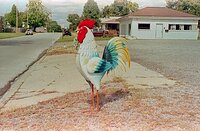
The Chicken

A
The Chicken

  • 1
  • 3
  • 29
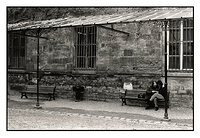
Amour - Paris

A
Amour - Paris

  • 1
  • 0
  • 56

Recent Classifieds

Forum statistics

Threads
203,236
Messages
2,851,876
Members
101,740
Latest member
mickthebrick
Recent bookmarks
1

cbphoto

Member
Allowing Ads
Joined
Aug 20, 2007
Messages
406
Location
NYC
Format
35mm RF
I'm thinking about trying lith printing, but have some preliminary questions beyond what I've turned up by searching. Of the currently available papers, which are going to give the most neutral tone? I'm not into warm tones or split tones. I read on an old post here that said you can bleach and re-develop to get a neutral tone, and that you can also get rid of the tone with selenium on some papers. With which papers does that work well? Bleaching and re-developing would be a last resort, as I don't want to complicate the process too much, but selenium is part of my normal process anyway.

Second question, possibly related to the first: I've read that the tone can be cooled off with some papers with longer development. Does this then mean that I could print on a very low contrast paper (or use a low filter, if there is a good vc paper for my purposes) and extend development to neutralize the warm tones? Does this work on the highlights as well?

Finally, any big differences in chemistry, like Arista vs Moersch?

Thanks.
 
Slavich Unibrom and Foma Fomabrom are both only somewhat warm, but very grainy (Foma being insanely grainy). If you use a stronger, fresher developer, though, even warm papers like Fomatone can be less warm. Toning in selenium works too, but make sure you be patient with the selenium. It will go through a series of color changes. You can pull it at any point. Try Slavich Gr 3 in something like Arista liquid lith mixed fresh.
 
Gold Toner will cool it down significantly...
(there was a url link here which no longer exists)

I like Fotospeed's Gold Toner.
 
Second question, possibly related to the first: I've read that the tone can be cooled off with some papers with longer development. Does this then mean that I could print on a very low contrast paper (or use a low filter, if there is a good vc paper for my purposes) and extend development to neutralize the warm tones? Does this work on the highlights as well?

Lith developing is not like regular developing -- once the image forms to a level of contrast that you like, you must pull it from the developer, otherwise it will keep on developing until you get nothing but black in your image. If you want longer development times, you should increase the dilution the developer. However, in my experience, extremely diluted developer with longer development times will give you much warmer colours. If you want cooler colours, stick with papers like Slavich and Fomabrom, and/or stronger developer dilutions. The developer doesn't matter as much as the paper and dilution I think.
 
Slavich Unibrom and Foma Fomabrom are both only somewhat warm, but very grainy (Foma being insanely grainy). If you use a stronger, fresher developer, though, even warm papers like Fomatone can be less warm. Toning in selenium works too, but make sure you be patient with the selenium. It will go through a series of color changes. You can pull it at any point. Try Slavich Gr 3 in something like Arista liquid lith mixed fresh.

Thanks. I like Slavich for regular printing, so that's good news.
 
Second question, possibly related to the first: I've read that the tone can be cooled off with some papers with longer development. Does this then mean that I could print on a very low contrast paper (or use a low filter, if there is a good vc paper for my purposes) and extend development to neutralize the warm tones? Does this work on the highlights as well?

Lith developing is not like regular developing -- once the image forms to a level of contrast that you like, you must pull it from the developer, otherwise it will keep on developing until you get nothing but black in your image. If you want longer development times, you should increase the dilution the developer. However, in my experience, extremely diluted developer with longer development times will give you much warmer colours. If you want cooler colours, stick with papers like Slavich and Fomabrom, and/or stronger developer dilutions. The developer doesn't matter as much as the paper and dilution I think.

Thanks. So would starting off with lower contrast paper help by allowing the increased developing time before the shadows block up, or does the contrast increase at the same rate as the color shifting? Or am I thinking about this the wrong way?
 
Gold Toner will cool it down significantly...
(there was a url link here which no longer exists)

I like Fotospeed's Gold Toner.

Thanks. Does it affect the whole image equally, or is there a risk of blue shadows and neutral highlights? I've only toned in selenium.
 
Thanks. Does it affect the whole image equally, or is there a risk of blue shadows and neutral highlights? I've only toned in selenium.

Gold toner starts in the highlights and then works its way on down into the shadows. It does cool off the shadows a bit if you leave it in long enough, but I've never achieved blue shadows. That's not to say you couldn't, but I haven't.
 
One warning about toning lith prints....they tone pretty fast. Also, I find the gold continues to tone after removal from the toning bath so I usually put it in for a while and transfer it to a water bath for awhile. I do this a few times until it looks good. I have a beautifully gold toned print from Travis and can attest that it can really look pretty amazing.
 
Thanks. So would starting off with lower contrast paper help by allowing the increased developing time before the shadows block up, or does the contrast increase at the same rate as the color shifting? Or am I thinking about this the wrong way?

Sorry, I can't help you here as I have always either used grade 2 or 3 paper, or VC paper. I don't use filters, as they are unneccessary in lith printing (they just increase exposure time). The general rule is, shorter exposure times and stronger dilutions tend to give a colder, higher contrast look, and long exposure times and dilute developers tend to give a warmer, less contrasty look. If you haven't already done so, please get a hold of Tim Rudman's book on lith printing, or check out his website.

In the end, I think it's best to just try it without trying to overthink it in the beginning. Try a different couple of papers (and/or grades), try different dilutions...you'll soon discover what you like and don't like. You may discover you like the warmer tones, or that higher contrast does something interesting to the image. Or not. ;-)
 
Paper contrast grade does not affect final print contrast with lith printing.

Exposure does. A normal neg that prints well on Grade 2 paper in standard chemistry will have higher contrast (and longer development time, and subsequently different color) if you expose for a shorter period of time.
The same neg will have lower contrast (and shorter development time, and subsequently different color) if you expose longer.

Some people prefer to control lith printing this way. Others like to use pre-flash as a tool by having two enlargers set up, and then have a standard developing time where the print is always pulled at, say 4 minutes.

There are a zillion ways to do lith printing. You will, like everybody else, develop your own way.

A good place to start is to expose a normal negative for 3x your normal exposure time for normal printing. Snatch when the print looks good under the safelight. That takes some practice.
Once you know all the controls you can heavily manipulate your prints as you see fit. Experiment with exposure time. Change only one thing at a time.

My favorite paper is Ilford MGWT matte. It is, to me, the by far most consistent paper for lith printing, and it tones wonderfully.

Good luck!
 
All other things being equal, it is my experience that a grade 4 paper is more responsive than a grade 2, in terms of shorter development times and stronger color. If you don't want color and splits, then I would do as has been recommended, starting with stronger developer and no bromide or old brown. You can always add.

And while the rule of "exposure controls contrast" applies, with VC papers it does make a difference if filtration is used. I print with a cold light which gives about grade 5 with no filtration, and about 2-2 1/2 with a yellow filter to correct, and it does indeed make a difference.
 
Thanks everyone. I think I get it now, and the process sounds basically like contrast control on film in terms of exposure and development time...but with the color thrown in. I can't wait to try it out.
 
Made my first lith prints last night. Overall, it was a good experience, and I got a feel for changing exposure and developing time. The only problem I had is a lack of strong blacks, even with very long development. I used Slavich Unibrom G3 in fresh Arista chems. I started initially with the recommended 1:24, and soon left a fogged print in there for flavor. I later dumped an unmeasured amount of additional A and B into the tray, hoping to speed up developing time (it made little difference). I worked the same image six times with exposures from 30 sec to 3 min, which served to alter the higlights and mids a bit, but no superblack shadows. Max developing time was probably in the neighborhood of 30 minutes, and it did not appear to be changing much anymore at that point. Any tips?
 
To get a strong black it's possible that you have to tone your prints after developing them.

Also, lith chemistry is highly sensitive to tray contamination. Just a smidge of regular developer from a previous session can wreck the results.
The blackest blacks you get when you use weak developer dilutions. It can take a very long time sometimes.
The only Slavich Unibrom that I have heard is recommended for lith is Grade 4.

Most darkroom users I know have some Ilford MGWT lying around. Try it. Then tone it in selenium when the print is done.

Lith hardly turns out perfect the first time. But I strongly suggest looking into using a different paper.

- Thomas
 
I'll try a longer time (maybe have two trays going at once so I get too bored or unproductive). The trays were brand new, as I usually use a slot processor for regular prints, so no contamination. That's sad about the Slavich - I'd read good things, but I didn't know it was restricted to G4. That's the one I would usually use for regular printing anyway, ironically. I though G3 would have a weaker color, which is what I want.
 
Well, about the Slavich - the only one I've heard recommended was G4. That doesn't mean that G3 won't work, but it could well be inferior.
The Ilford MGWT is definitely not a paper that will get that peach/orange color (which looks really nice for some things!), but rather a green cast, which you can neutralize in selenium toner. It is hard to do lith printing and not get any color, though.
You might wish to experiment with gold toning.

- Thomas
 
whoa! Found the black. It was hiding in the brown :smile:

I also found that amazing texture. I'm loving this.
 
Photrio.com contains affiliate links to products. We may receive a commission for purchases made through these links.
To read our full affiliate disclosure statement please click Here.

PHOTRIO PARTNERS EQUALLY FUNDING OUR COMMUNITY:


Ilford ADOX Freestyle Photographic Stearman Press Weldon Color Lab Blue Moon Camera & Machine
Top Bottom
