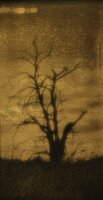
It would appear that Denis Olivier didn't do the tests, but rather published tests made by another. From the opening text:
"This project was initially published in 2017 by Jean-Baptiste MERILLOT, who unfortunately left us in 2021 following a long illness.
Thanks to
Nicolas BEJEAN, we can find this analysis and these results back online now."
I can imagine a scenario where films were scanned in batches according to type, and there was a fault in doing the particular film batches in question. That seems a far more logical explanation than that certain film stocks have 'motion blur' style grain. That would be a whole new category to sit alongside "T-Grain" (I'm joking of course!) The fact that the original author has sadly deceased within a few years and after 'a long illness' of the original work might also point to a non-final draft of results, the process sadly abbreviated. We are nevertheless indebted.
Elsewhere on Denis Olivier's site he has a very good article on DSLR scanning. Its very thorough and I concur with everything he says, except he makes an interesting suggestion to scan film, emulsion side facing the camera. I can see the logic, especially considering the original taking lens, and indeed the enlarger lens also face the emulsion side of the film. I've somehow been doing the opposite until now - using (like he does) an enlarger carrier with anti-newton glass - on a copy stand, except of course with Dslr scanning, the lens is not below the carrier, but above it. Super advice that I will employ.