
• Welcome to Photrio!
    Registration is fast and free. Join today to unlock search, see fewer ads, and access all forum features.
    Click here to sign up

Light streaks at end of the roll

Grill

H
Grill

  • 4
  • 0
  • 79
Cemetery Chapel

H
Cemetery Chapel

  • 4
  • 0
  • 101

Recent Classifieds

Forum statistics

Threads
202,789
Messages
2,845,586
Members
101,533
Latest member
maho
Recent bookmarks
0

madNbad

Member
Allowing Ads
Joined
Sep 25, 2020
Messages
1,402
Location
Portland, Oregon
Format
35mm RF
My stash of factory rolls of 36 exposure TMax 100 is just about gone but the last couple of rolls have left odd light streaks at the end of each roll. I don't think it's the camera, I've used bulk loaded 5222 without experiencing the same problem. I'm beginning to think the culprit is the lid on my developing tank because of where the streaks begin. Currently, I'm using a single roll 250 ML stainless tank with a plastic lid and Hewes reels. Any suggestions would be appreciated.
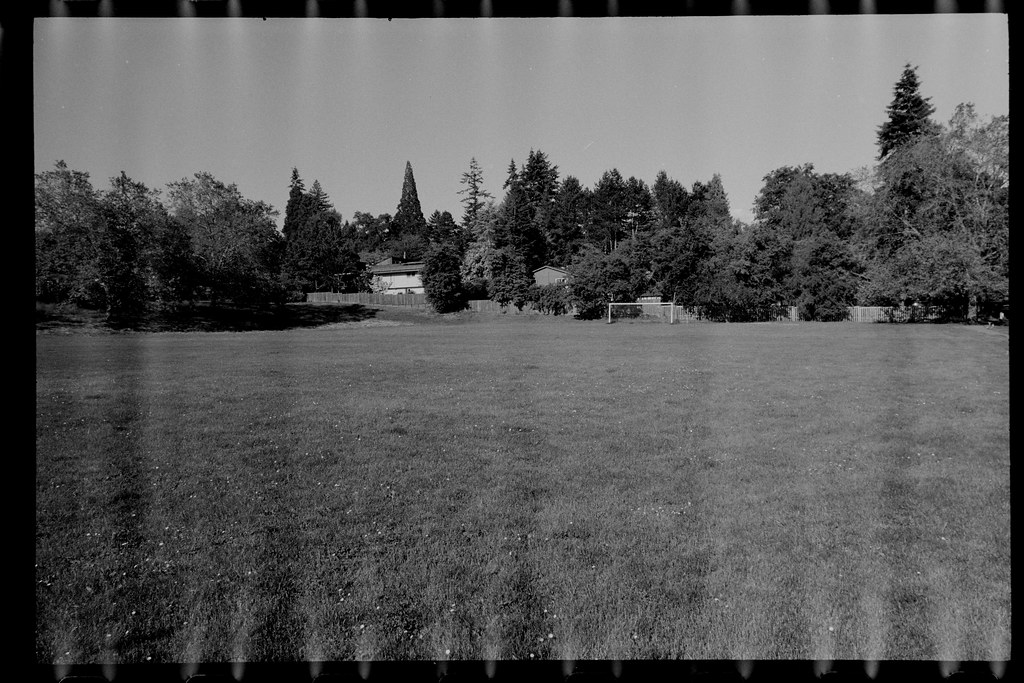


April Hill Park, Maplewood, Portland, Oregon

Here's one to show where it starts:
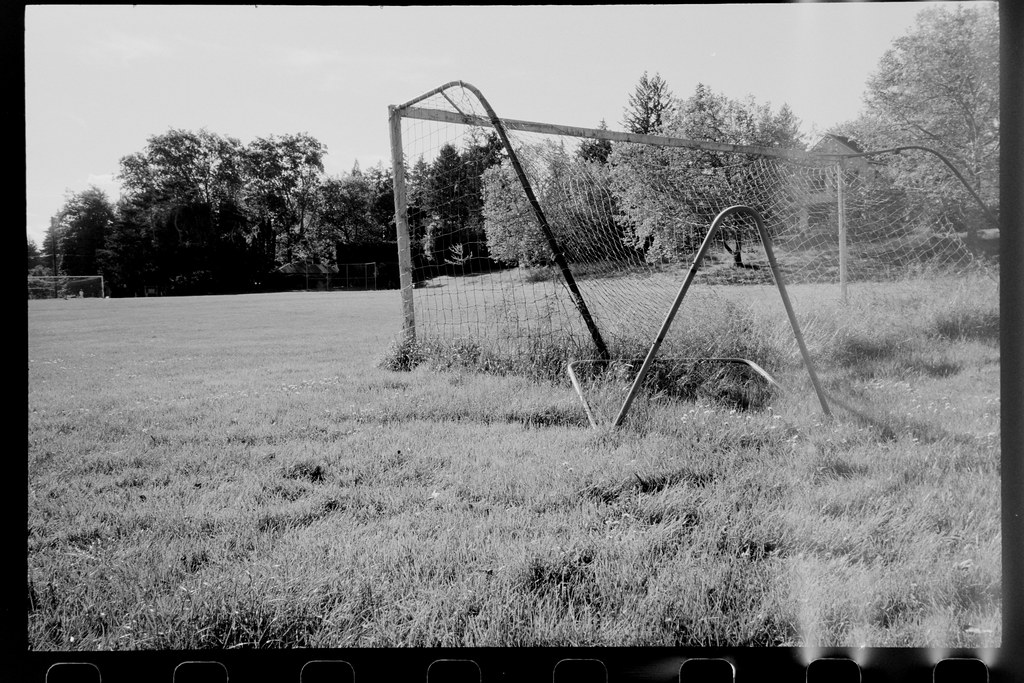


April Hill Park, Maplewood, Portland Oregon
 
Last edited:
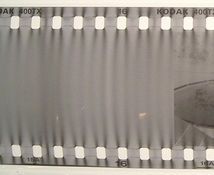
I just posted a second image to show where it starts, about frame 33. It looks like the last two loops on the reel show the effect.
 
Bingo! So these frames would be on the outside of the spiral, yes? I suggest it has something to do with the circulation of chemicals in your tank. What brew and agitation regime are you using? Be prepared: there are strongly held and disparate views among forum members about how to avoid uneven processing. This could run for several pages! 🙂
 
I've been using HC-110 Dilution B at 7 minutes for development. I start with fifteen seconds of agitation with five seconds at the thirty second mark. The other factor is, the last couple of rolls were balky when going onto the reel and I had to start over. I believe that was caused by not trimming the leader even and when the sprocket holes engaged the pins on the reel, making the whole roll slightly askew. Secondly, I made need to add just a bit more solution to the tank. I've been using 250 ML, I just need to ensure it's actually 250 ML. I least I know it's not the camera, it was service just a few years ago. Thanks!
 
Bingo! So these frames would be on the outside of the spiral, yes?

Usually, when I load 135 film into reels, the first frame goes in first.
However, I do know of some people who start with the other end.
So best to confirm :smile:
That doesn't look like surge marks to me, it looks like light leaks.
 
Usually, when I load 135 film into reels, the first frame goes in first.
However, I do know of some people who start with the other end.
So best to confirm :smile:
That doesn't look like surge marks to me, it looks like light leaks.

I just swapped out the lid from another tank. Going to load the M4 and wander out. Development by process of elimination!
 
The streaks are light leaks are through the sprocket holes. The question is where does the light leak occur. I suspect that it comes from the tank and how the lid is secured.
 
I guessed right, it was the tank lid. From the time I answered Matt, exposed a roll of 36 exposure TMax 100, developed it for seven minutes in HC-110 Dilution B, stop, Ilford Rapid Fix, modified Ilford wash, a little PhotoFlow and hanging to dry. I was careful about trimming the leader and the film went right onto the reel without a hitch. The thing that tipped me off was the last few times I used the tank there was a slight amount of leakage, None this time. Thanks for the help everyone, I'll post a few tomorrow.
 
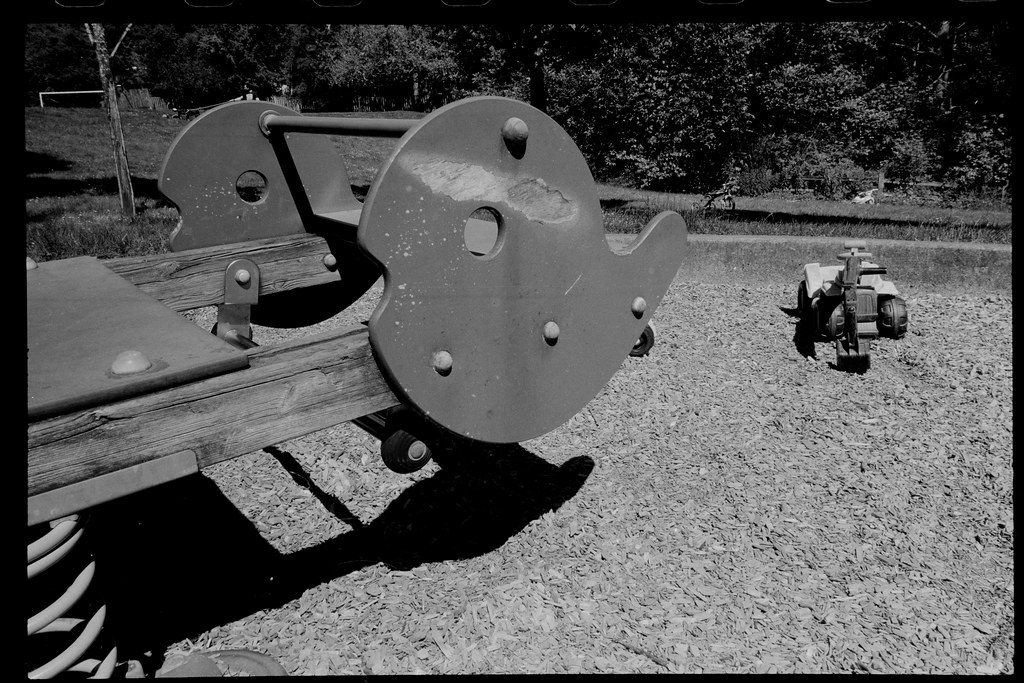
This is the last frame from the roll after replacing the lid for the developing tank. No light streaks to be seen!


April Hill Park, Maplewood, Portland, Oregon
 
Can you see any light leaks in the old top - most likely via cracks?
 
I just gave it the flashlight test in a darkened room and nothing obvious. It's very possible it wasn't fully seated on the tank, even though I do try to make sure by pressing my thumbs around the edge of the lid before taking it out of the dark bag. I'll put it on a double reel tank I only use occasionally and run a roll through it to see if the problem persist. Also, after the back surgery I hadn't done much photography for months and have just started up over the last month. It feels good to be putting some of this gear to use!
 
I'm almost positive those streaks were caused by agitation, it's the developer being swept through the holes and away from the film. Note the place where thngs are originating in the 2nd pic apove. Are you using one of those little sticks to spin the reel for agitation, vs using a tank inversion agitation? The former is what seems to cause this.
 
I'm almost positive those streaks were caused by agitation, it's the developer being swept through the holes and away from the film. Note the place where thngs are originating in the 2nd pic apove. Are you using one of those little sticks to spin the reel for agitation, vs using a tank inversion agitation? The former is what seems to cause this.
I'm using a Kalt stainless tank with the plastic lid and a Hewes reel. Agitation is by inversion, fifteen seconds to start and five seconds every thirty. Like I told Matt, I can chalk this one up to being out of practice. As I mentioned, the last two rolls gave me problems loading. I started wrong and it never got any better. There is a good chance the lid wan't seated all the way causing both liquid and light leaks. Mostly these were test images for a new lens, so nothing important was damaged or lost. It was a good learning experience and a reminder to be more careful going forward.
 
I've been using 250 ML, I just need to ensure it's actually 250 ML.

How can you dilute your developer accurately if you wonder about the amount? It's a strange thing to question.

I think it is surge caused by inversion and you are getting more surge around the outer negatives on the reel because that will be where the developer is moving fastest. Using the little stick to agitate, if your tank has one, removes the danger of surge, but if you still need to invert the tank do it gently.
 
I was questioning if I had misread the mark before adding the developer so I filled a beaker to the 250 ML mark with plain water, put the reel in an open tank and poured in the water just to verify it was enough to cover the reel with some extra. This type of tank doesn’t have a little stick to assist with agitation so it’s entirely by inversion. After going back to developing my own B&W several years ago this was a new problem most likely caused by a series of small mistakes on my part. My normal process for mixing developer is to fill a beaker to the 250 ML mark, use a syringe to draw out 8 ML of water, draw 8 ML of HC-110 and mix it with the water for a 1:31 solution.
 
If we could see the full negative, including sprocket holes and edge markings, it might be a help.

The OP mentioned that it was only the last few images that were affected. (starting at frame No. 33)
This would suggest to me that it could be caused by stress marks on the film. This can be caused by the film being wound too tightly and can occur at the end of a roll when trying to get the last frame wound on. It can also occur when the film is rewound in the wrong direction.

See these examples (from the net)

stress marks sample.jpgstress marks (2).jpg
 
In #9 the OP told us he had found what he thought was the problem so the question we and he have to ask ourselves is: What apart from a change of lid did he do that might also have accounted for his success

So far from what I can see from his answers to our theories, he has covered our points so isn't the best way forward to wait until he has once again developed another film with the previously successful change and wait to see if the issue recurs?

If it does then he and we can put our thinking caps on again at that point

pentaxuser
 
If we could see the full negative, including sprocket holes and edge markings, it might be a help.

The OP mentioned that it was only the last few images that were affected. (starting at frame No. 33)
This would suggest to me that it could be caused by stress marks on the film. This can be caused by the film being wound too tightly and can occur at the end of a roll when trying to get the last frame wound on. It can also occur when the film is rewound in the wrong direction.

See these examples (from the net)

View attachment 308682View attachment 308683

That's really interesting - not seen that before. Thanks for posting it.
 
If we could see the full negative, including sprocket holes and edge markings, it might be a help.

The OP mentioned that it was only the last few images that were affected. (starting at frame No. 33)
This would suggest to me that it could be caused by stress marks on the film. This can be caused by the film being wound too tightly and can occur at the end of a roll when trying to get the last frame wound on. It can also occur when the film is rewound in the wrong direction.

See these examples (from the net)

View attachment 308682View attachment 308683

Thanks, that’s good to know and another strong possibility. I did develop another roll, paid attention to my own advice and didn’t experience any additional problems.
 
If we could see the full negative, including sprocket holes and edge markings, it might be a help.

The OP mentioned that it was only the last few images that were affected. (starting at frame No. 33)
This would suggest to me that it could be caused by stress marks on the film. This can be caused by the film being wound too tightly and can occur at the end of a roll when trying to get the last frame wound on. It can also occur when the film is rewound in the wrong direction.

See these examples (from the net)

View attachment 308682View attachment 308683

The last frames of a roll are the least tightly wound onto the take-up spool, so I don't quite understand your point? I mean the roll has been wound up, and up, and up, and so the last frames are the ones that are least tight. And as for being rewound in the wrong direction being the cause of the effect you show, then yes it could, but spread over a wide area, not the tight repetitive pattern you show. You are wrong on every count.
 
I mean the roll has been wound up, and up, and up, and so the last frames are the ones that are least tight.

I expect that foc was referring to the film in the cassette, not the film on the developing reel.
An in camera problem, not an in development tank problem.
 
If we could see the full negative, including sprocket holes and edge markings, it might be a help.

The OP mentioned that it was only the last few images that were affected. (starting at frame No. 33)
This would suggest to me that it could be caused by stress marks on the film. This can be caused by the film being wound too tightly and can occur at the end of a roll when trying to get the last frame wound on. It can also occur when the film is rewound in the wrong direction.

See these examples (from the net)

View attachment 308682View attachment 308683

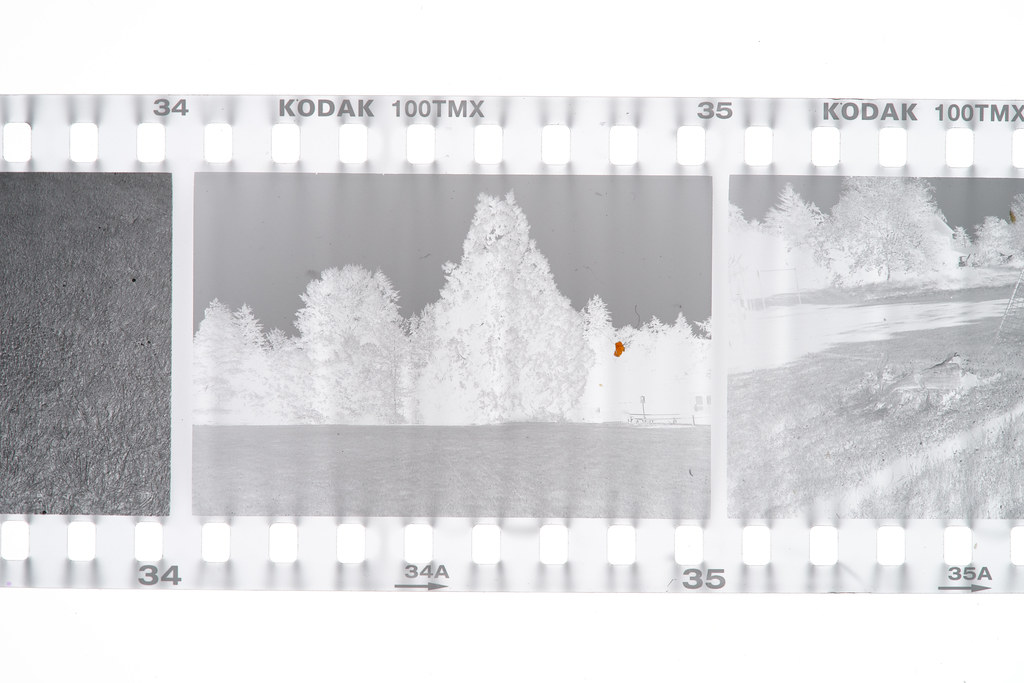
I think this is it! Here's an attached image of the negative and it shows the same marks. The roll was difficult to load on the reel and the last bit felt like it was bound to the spool. Thank you, I said before, I learn something new every time I visit this site!


Negative from 6/22/22
 
Sorry for the junk on the negative, I had to pull my Negative Supply setup apart so I could capture the strip and didn't notice how much stuff had fallen on the negatives.
 
I am glad that the OP is no longer having this problem. On the other hand, I am having problems visualizing how a light leak from a metal tank lid would effect only the outside of the loaded film and also affect the top-most and bottom-most parts of the film equally.
 
Photrio.com contains affiliate links to products. We may receive a commission for purchases made through these links.
To read our full affiliate disclosure statement please click Here.

PHOTRIO PARTNERS EQUALLY FUNDING OUR COMMUNITY:


Ilford ADOX Freestyle Photographic Stearman Press Weldon Color Lab Blue Moon Camera & Machine
Top Bottom